What Edge Profiles Are Most Common for Granite Countertops?
What Edge Profiles Are Most Common for Granite Countertops?
Why Edge Profiles Matter in a Granite Countertop Installation
When planning kitchen countertops, many homeowners focus on color and slab selection but overlook one of the most important design decisions: the edge profiles used on granite countertops. The question of what edge profiles are most common for granite countertops comes up often during remodel planning because this detail has a major impact on both style and long-term performance.
The edge determines how the countertop looks, how it feels in daily use, and how well it performs over time. Different edge profiles can completely change the appearance of granite countertops, shifting the style from sleek modern to traditional elegance.
In today’s remodeling market, edge profiles are a big part of design planning because they influence both durability and aesthetic appeal. A countertop edge profile is not just a finishing detail; it helps define the entire kitchen style and can turn basic granite countertops into a true focal point of the space.
What Is a Granite Countertop Edge Profile?
Definition and Purpose
A countertop edge profile is the shaped finish applied to the outer edge of granite countertops during fabrication. The edge profiles are created by shaping the stone into different forms, ranging from straight edge designs to fully rounded edge finishes. These edge profiles affect both the style and performance of kitchen countertops.
Functional vs. Aesthetic Roles
Edge profiles serve both practical and visual purposes. On a functional level, they help reduce sharp edges, improve durability, and prevent injuries in homes with small children. On a visual level, edge profiles define the overall style of granite countertops and should be considered alongside other kitchen countertop materials, influencing whether the kitchen feels modern, traditional, or contemporary.
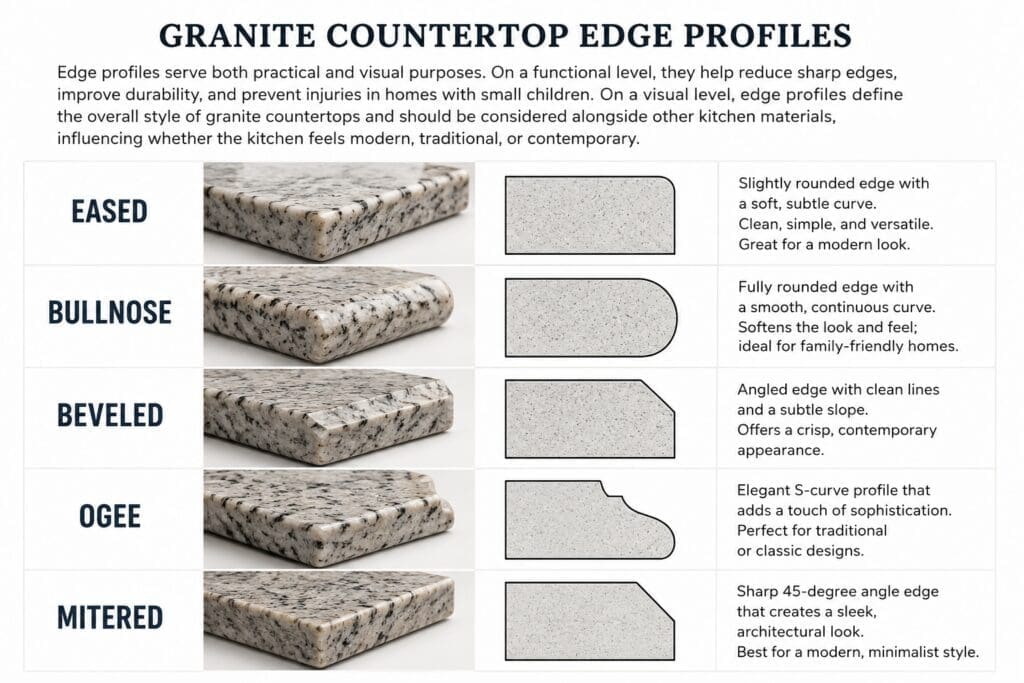
The Most Common Granite Countertop Edge Profiles (Industry Overview)
Eased Edge – The Modern Standard
The eased edge is one of the most common edge profiles for granite countertops. It features a slightly eased corner that softens the sharp edge without changing the overall square shape. This eased edge profile is often used in modern kitchens because it creates a clean and sleek appearance.
Many homeowners prefer the eased edge because it works well with different countertop material choices and fits both contemporary kitchens and modern spaces. It offers durability, reduces chipping, and keeps the countertop edge simple and practical.
Half Bullnose Edge – Family Friendly Favorite
The half bullnose edge is a popular countertop edge profile where the top is rounded and the bottom remains flat. This rounded edge is an excellent choice for families with small children because it helps prevent injuries from sharp corners.
The half bullnose edge is often used in granite countertops because it blends softness with structure. It is a popular edge profile that adds a smooth transition between the countertop edge and the cabinet line below. Many homeowners prefer this style because it balances durability with elegance.
Full Bullnose Edge – Soft Traditional Look
The full bullnose edge is a fully rounded edge profile that creates a continuous curved shape from top to bottom. This rounded edge is commonly used in traditional homes where softer design elements are preferred.
The full bullnose edge gives granite countertops a gentle appearance and reduces any sharp edges completely. It is often chosen for kitchen countertops where safety and smoothness are a priority. The rounded shape adds elegance and works well in rustic or traditional kitchens.
Beveled Edge – Subtle Design Upgrade
A beveled edge is one of the most recognizable edge profiles because it features a small angled cut along the countertop edge. The beveled edge adds detail without overwhelming the design, making it a great choice for homeowners who prefer subtle elegance.
Beveled edge profiles are often used on granite countertops to create a clean yet slightly decorative appearance. The angled surface catches light differently, adding visual interest and enhancing aesthetic appeal. Many homeowners choose beveled edges when they want something between modern and traditional styles.
Straight Edge – Clean Modern Aesthetic
The straight edge is one of the simplest edge profiles, featuring a sharp edge with a clean square edge finish. This straight edge is often used in contemporary kitchens where minimalism and sleek design are important.
The straight edge gives granite countertops a bold design presence, especially in modern kitchen countertops. While it looks sharp and clean, fabricators often slightly ease the edge to reduce chipping and improve durability. The sleek straight edge works well in modern spaces that emphasize clean lines and geometric style.
Ogee Edge – Decorative Luxury Option
The ogee edge is one of the most decorative edge profiles available for granite countertops. It features a complex curved shape that includes multiple transitions, creating a dramatic touch and high-end appearance.
Ogee edge features are commonly found in traditional kitchens where elegance and detail matter. This edge profile adds a strong focal point to kitchen countertops and is often used in luxury designs. The ogee edge requires more fabrication work, making it a premium option compared to simpler edge profiles.
Mitered Edge – Thick Slab Luxury Appearance
The mitered edge is a specialty edge profile that creates the illusion of thick countertops by joining two pieces of granite at a precise angle. This design makes granite countertops appear thicker and more substantial.
The mitered edge adds a waterfall edge effect when used on islands, where the countertop flows down the sides. This waterfall edge adds a strong focal point in modern kitchens and is often used in high-end designs. Homeowners considering this look should also factor in the cost of a waterfall kitchen island, as it can be a premium upgrade. It enhances beauty, durability, and visual impact, making it a bold choice for luxury spaces.
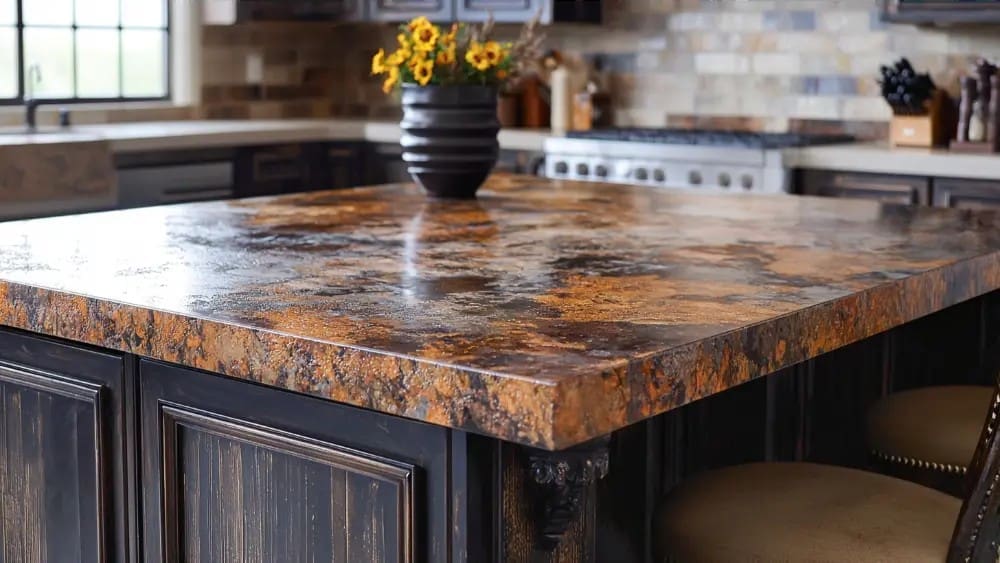
Comparison of the Most Popular Edge Profiles
Durability Comparison
Different edge profiles affect durability in granite countertops. Rounded edges like bullnose and half bullnose tend to offer better durability because they reduce sharp points where chipping can occur. Straight edge profiles can be more prone to chipping if impacted, especially in busy kitchen countertops.
Maintenance and Cleaning
Smoother edge profiles like eased edge and beveled edge are easier to maintain because they do not trap debris. More detailed edge profiles like ogee require more cleaning attention due to their curves and detail.
Style Compatibility Guide
Modern kitchens often prefer straight edge, eased edge, or mitered edge profiles. Traditional kitchens prefer bullnose or ogee edge profiles. Contemporary kitchens may mix beveled edge and eased edge options to create balance, especially when paired with two-tone kitchen cabinets that add contrast and depth.
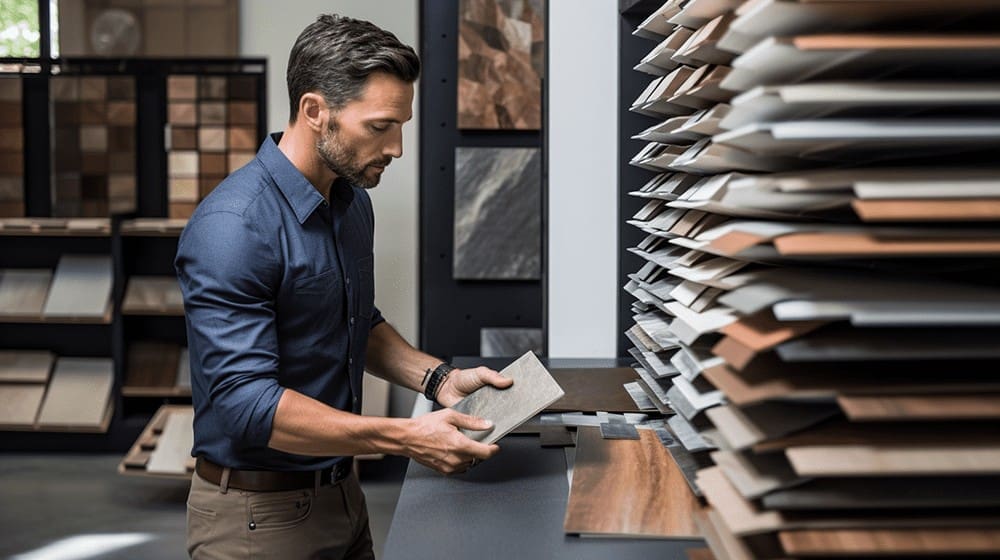
How to Choose the Right Edge Profile for Your Kitchen
Consider Your Lifestyle
When selecting edge profiles for granite countertops, many homeowners consider daily usage. Homes with small children often prefer rounded edges like half bullnose because they help prevent injuries. Busy kitchens benefit from durable edge profiles that resist chipping, and choosing the right kitchen counter height for your home further improves comfort and usability.
Match Your Cabinet Style
The right edge profile should complement cabinet design. Sleek modern cabinets pair well with straight edge or eased edge countertops, while traditional cabinets pair better with ogee or bullnose edge profiles. Coordinating with current kitchen cabinet trends for 2025 ensures your counters and cabinetry work together visually.
Think About Long-Term Maintenance
Edge profiles also affect long-term maintenance. Smooth edge profiles are easier to clean, while detailed edge profiles require more attention. Choosing the perfect edge profile depends on how much maintenance a homeowner prefers.
Budget and Upgrade Options
Edge profiles can also affect project cost. Basic edge profiles like eased edge are standard, while ogee edge and mitered edge options are more expensive due to fabrication complexity. Many homeowners choose upgrades based on style priorities and budget, and it helps to understand the full granite countertop cost breakdown when planning a remodel.
What Granite Fabricators Typically Recommend
Professional fabricators often recommend eased edge profiles as the standard option for granite countertops because they balance durability, style, and cost. Half bullnose is commonly recommended for family homes due to safety and rounded design. More decorative edge profiles like ogee are suggested for traditional luxury designs where appearance is a big part of the overall kitchen countertops style.
Common Mistakes to Avoid When Choosing a Countertop Edge
One common mistake many homeowners make is choosing edge profiles based only on appearance without considering durability. Another mistake is selecting overly decorative ogee edge profiles for modern kitchens where they may not fit the style. It is also important to consider how edge profiles interact with cabinets, backsplash, and overall kitchen design to ensure the right edge profile is selected, especially if you’re planning a statement feature inspired by modern kitchen backsplash ideas for 2025.
Granite Edge Profiles and Kitchen Remodeling Trends (2026 Outlook)
Modern remodeling trends continue to favor simple edge profiles such as eased edge and straight edge designs. Many homeowners now prefer sleek and minimal kitchen countertops rather than highly decorative styles. The waterfall edge trend continues to grow, especially in modern kitchen islands where the waterfall edge adds visual impact and a strong focal point, tying in with many of the latest kitchen island ideas for 2025.
At the same time, traditional ogee edge profiles remain popular in classic kitchen designs. However, most contemporary kitchens now lean toward cleaner lines and improved durability over heavy detail, often incorporating key kitchen remodel must-haves for 2025 like smarter storage and multifunctional features.
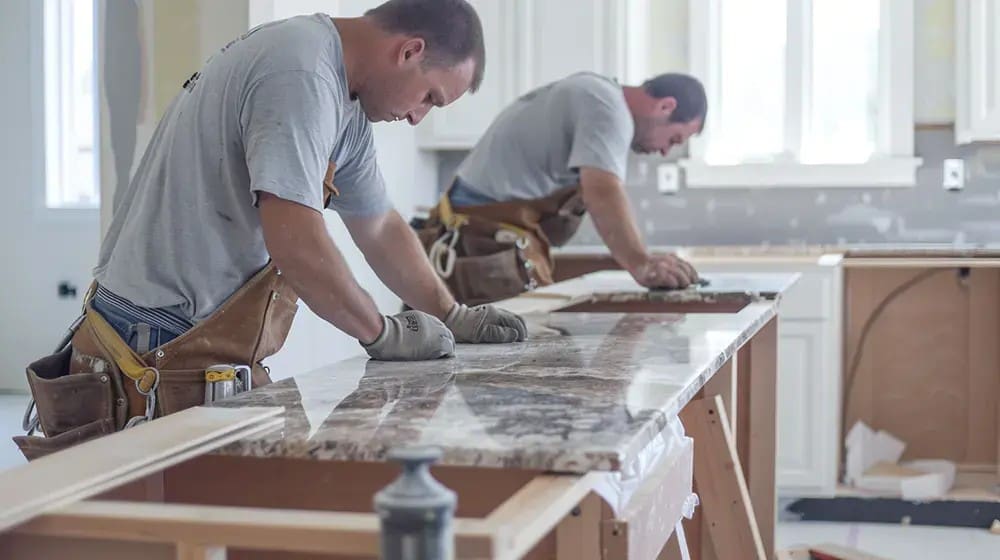
Why Professional Installation Matters for Edge Quality
The quality of granite countertops depends heavily on proper fabrication and installation. Even the perfect edge profile can lose its appearance if not installed correctly. Precision is important to ensure smooth transitions, strong durability, and clean finishes, especially where seams in stone countertops are handled between slabs. Professional installation also helps maintain consistent edge profiles across all kitchen countertops, ensuring the final result matches the intended design.
Frequently Asked Questions
What are the benefits of choosing a rounded edge profile for granite countertops?
Rounded edge profiles like full bullnose and half bullnose enhance safety by eliminating sharp corners, making them ideal for homes with children. They also tend to be more durable and less prone to chipping compared to sharp edges.
How different edge profiles affect the maintenance of granite countertops?
Simpler edge profiles such as eased and straight edges are easier to clean and maintain because they do not trap crumbs or spills. In contrast, intricate profiles like ogee can collect debris in their curves, requiring more frequent cleaning.
Can edge profiles influence the overall style of quartz countertops compared to granite?
Yes, edge profile options play a significant role in defining the style of both granite and quartz countertops. For example, a waterfall edge creates a modern, seamless look that works well with quartz countertops, while traditional profiles like ogee complement classic granite designs.
Is the half round edge profile suitable for all kitchen styles?
The half round edge, also known as the half bullnose, offers a smooth, rounded indent that blends well with both traditional and contemporary kitchen designs. It is versatile and practical, making it a popular choice for many homeowners.
How does the choice of edge profile impact countertop durability?
Edges with rounded indent or softened curves tend to resist chipping better than sharp, straight edges. Selecting an edge profile that balances aesthetics and durability is important, especially in high-traffic kitchen areas.
What is the standard edge profile for granite countertops?
The eased edge is often considered the standard edge profile due to its simplicity, durability, and compatibility with various kitchen styles. It offers a subtle rounded finish that is both practical and visually appealing.
Conclusion
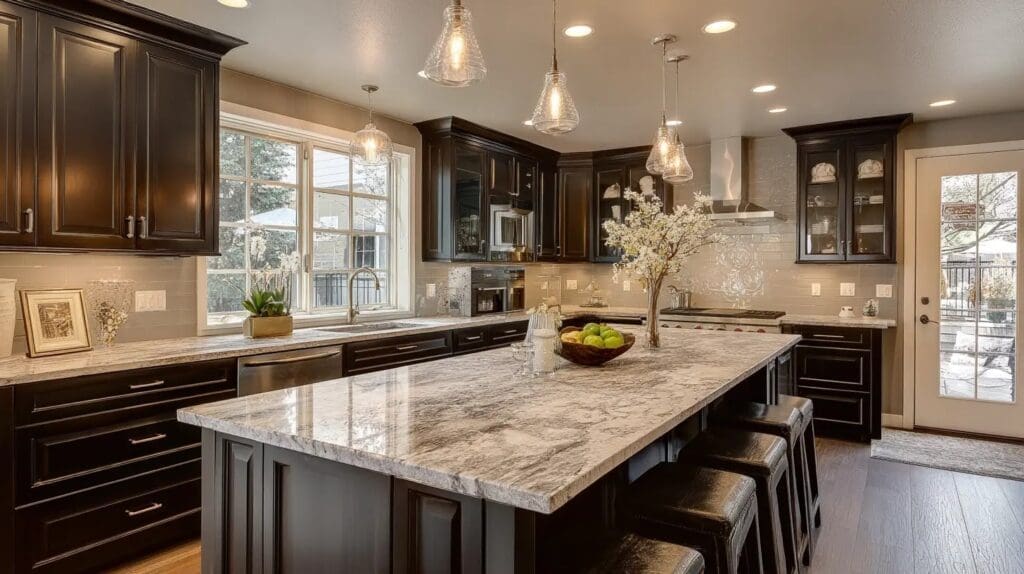
Choosing the right edge profile for your granite countertops is a crucial design decision that impacts both the look and functionality of your kitchen or bathroom. Common edge profiles like eased edge, half bullnose, and beveled edge offer a balance of style, durability, and ease of maintenance, making them popular choices for many homeowners. Rounded edges such as full and half bullnose provide safety benefits, especially for families with children, while more decorative options like ogee add a luxurious touch to traditional spaces. Considering factors such as lifestyle, cabinet style, maintenance preferences, and budget will help you select an edge profile that complements your space and meets your needs. Ultimately, professional fabrication and installation ensure the edge profile’s quality and longevity, turning your granite countertops into a beautiful and practical centerpiece of your home.