kitchen cabinets Archives - Page 2 of 2 - America's Advantage Remodeling

Посты с тэгом: kitchen cabinets

How To Repair A Lazy Susan: The Solutions for Common Problems

Опубликовано: February 2, 2025 в 10:39 pm

Автор:

Категории: Kitchen

Тэги: ,,

A lazy Susan is a convenient and functional addition to any kitchen, but over time, it can become misaligned or stop spinning smoothly. Repairing a lazy Susan might seem daunting, but with the right tools and a little guidance, it’s a straightforward process. This guide will walk you through the steps to restore your lazy Susan to perfect working condition.

9 Common Problems with Lazy Susans and How to Repair Them

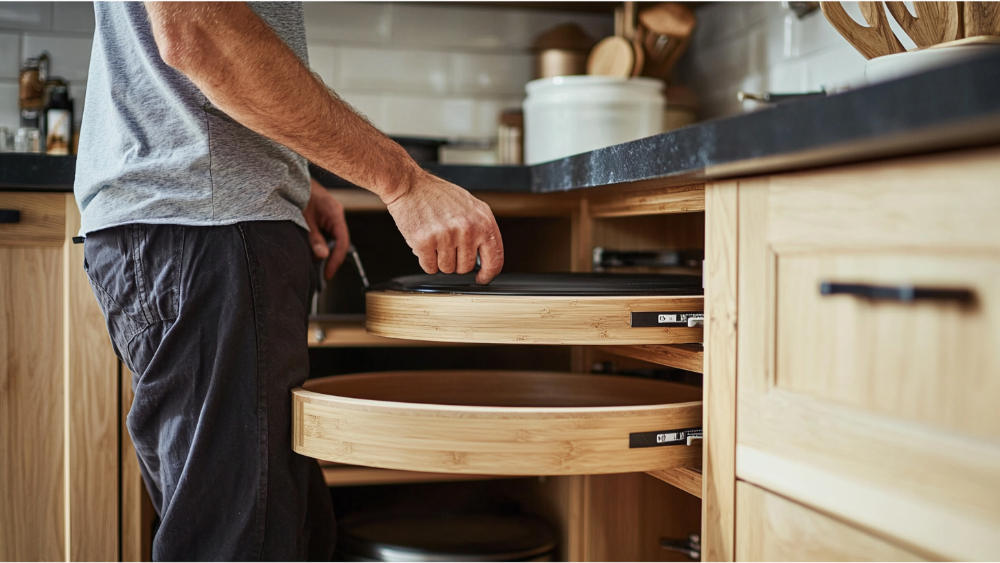
A man repairing a lazy susan

1 | Uneven or Wobbly Plastic Shelves

Over time, the plastic shelves of a lazy Susan may become uneven or wobbly, causing items to tip or slide. To fix this, start by checking if the shelves are properly secured to the center shaft. Tighten any locking screws holding the shelves in place, ensuring they’re level. If the plastic shelves have cracks or significant wear, consider replacing them with new ones. Always distribute the weight of items evenly to prevent future wobbling. If the issue persists, inspect the cabinet bottom for damage, as it could impact stability.

2 | Misaligned Upper Shelf

The upper shelf of a lazy Susan can sometimes become misaligned, making it difficult to spin smoothly. To address this issue, inspect the attachment point where the upper shelf connects to the center shaft. Loosen the locking screws slightly, realign the shelf, and then securely tighten the screws again. Ensure the shelf is parallel to the lower shelf to maintain proper function. Regularly check for misalignment, especially after heavy use.

3 | Loose Locking Screws

Locking screws that secure the shelves and mechanism can loosen over time, resulting in instability. Use a screwdriver or appropriate tool to check each screw securing the shelves and the center shaft. Tighten any screws that have become loose to restore stability. For stubborn screws, applying a thread locker solution can prevent them from loosening in the future. Regular maintenance of the screws will keep the lazy Susan functioning smoothly.

4 | Jammed or Stuck Center Shaft

The center shaft can sometimes jam or stick, making it impossible to rotate the shelves. First, check if any debris or items are obstructing the spinning mechanism. If the shaft itself is sticking, clean it thoroughly and apply a small amount of lubricant. Tighten or adjust the locking screws around the shaft to ensure proper alignment. If the shaft continues to malfunction, replacing it might be necessary. In cases where the issue involves damage to the cabinet bottom, it’s best to seek professional assistance for repairs.

5 | Difficulty Adjusting the Rod or Adjusting Mechanism

An adjusting rod is often used to modify the height or tension of a lazy Susan. Over time, the rod may become stiff or unresponsive. Apply lubricant to the rod and gently work it back and forth to loosen any resistance. If the rod remains unadjustable, inspect it for damage and replace it if necessary. Make sure to follow the manufacturer’s instructions for height adjustments to avoid further issues.

6 | Squeaky Bottom Shelf

A squeaky bottom shelf in a lazy Susan cabinet can be caused by friction between the shelf and the rotating mechanism. To fix this, first, remove the items from the shelf to access the mechanism. Clean any dust or debris from the bottom shelf and surrounding areas. Apply a small amount of lubricant, such as silicone spray, to the rotating mechanism and test the shelf by spinning it several times. Regular maintenance of the bottom shelf can help prevent squeaking and ensure smooth rotation.

7 | Issues in a Lazy Susan Corner Cabinet

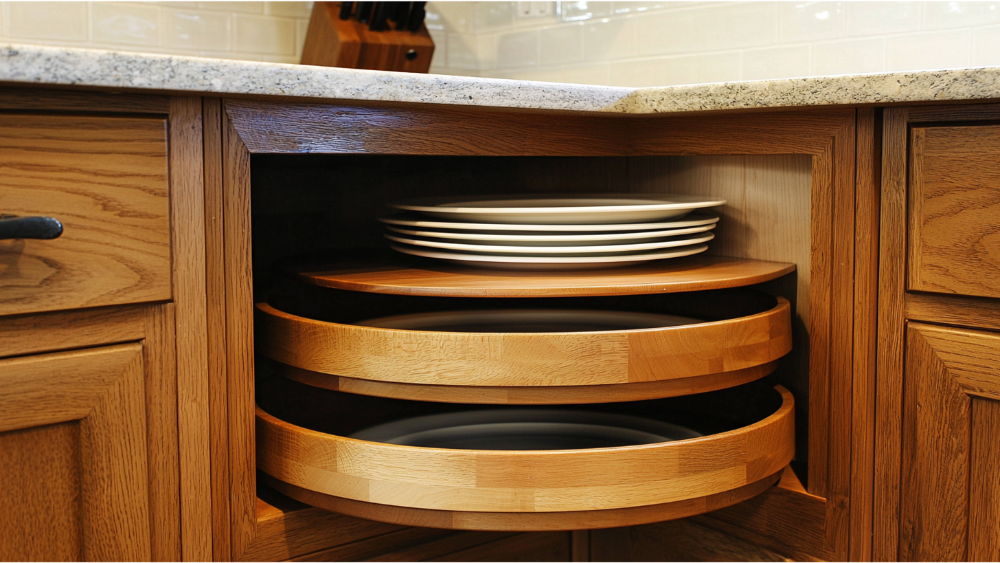
Lazy Susan corner cabinets are a popular solution for maximizing storage in tight spaces, but they can sometimes develop operational issues. If the shelves are not spinning freely or feel unstable, check the alignment of the rotating mechanism. Tighten any screws or bolts securing the lazy Susan mechanism to the corner cabinet. Examine the cabinet bottom itself for signs of damage or warping, which can affect the functionality of the lazy Susan. When performing lazy Susan repairs for corner cabinets, always ensure that the mechanism is securely attached and properly aligned for optimal performance.

8 | Broken or Cracked Spinning Mechanism

A broken or cracked spinning mechanism can severely affect the functionality of a lazy Susan. To fix this, first, remove the lazy Susan from the cabinet and inspect the rotating base. If you notice any visible cracks or damage, the mechanism may need to be replaced. Purchase a compatible replacement part from a hardware store or the manufacturer. Follow the manufacturer’s instructions to install the new mechanism securely. If the damage extends to the cabinet bottom, it may be necessary to seek professional help for a long-term solution.

9 | Rust or Corrosion

Rust or corrosion on the metal parts of a lazy Susan can lead to stiffness and improper functioning. Start by cleaning the affected areas with a rust remover or a mixture of vinegar and baking soda. Once the rust is removed, dry the parts thoroughly and apply a protective coating, such as a rust-resistant spray or paint, to prevent further corrosion. Regular cleaning and ensuring the lazy Susan stays dry can help avoid this problem entirely. If rust has compromised the cabinet bottom, you should seek professional advice to address the issue effectively.

Tools Needed for Fixing a Lazy Susan

A lazy susan

Screwdriver

A reliable screwdriver is essential for tightening or loosening set screws that secure the shelves, center shaft, or top bracket. Choose a screwdriver with the appropriate head type (Phillips or flathead) to ensure it works fine for your lazy Susan model. It is particularly helpful when adjusting alignment or replacing parts.

Lubricant

Use a silicone spray or similar lubricant to reduce friction in the rotating mechanism and loosen stiff rods or moving parts. This is especially useful for addressing squeaky shelves or a jammed center shaft. Apply sparingly to avoid over-lubrication, which could attract debris.

Thread Locker Solution

A thread locker can be applied to the set screws to prevent them from loosening over time. This tool is especially handy for prolonged stability when the lazy Susan is heavily loaded with items like canned goods. Be cautious to use only a tiny amount to avoid making future adjustments difficult.

Replacement Parts

Replacement components, such as a metal sleeve or top bracket, are sometimes necessary for addressing significant wear or damage. Always purchase compatible parts from the manufacturer or trusted suppliers. Following the manufacturer’s guidelines for installation ensures the new parts work fine with the overall mechanism.

Adjustable Wrench

An adjustable wrench is great for tightening bolts or repairing the metal sleeve on the central mechanism. This tool is particularly effective when dealing with a lazy Susan corner cabinet, where secure stability is crucial. Ensure the hardware is snug but not over-tightened to prevent damage.

Rust Remover or Cleaning Supplies

To address corrosion or general debris buildup, use rust remover or a mixture of vinegar and baking soda paired with soft cleaning cloths. Clean all metal parts, including the metal sleeve and spinning mechanism, before reassembling the lazy Susan. Proper cleaning helps maintain long-term durability and smooth rotation.

Drill (Optional)

A drill can be useful for replacing damaged components, especially when dealing with stubborn screws or installing a new top bracket. Select a drill bit that matches the screws’ size to avoid stripping them during removal or installation. Only use a drill when manual tools are insufficient.

Frequently Asked How To Repair A Lazy Susan Questions

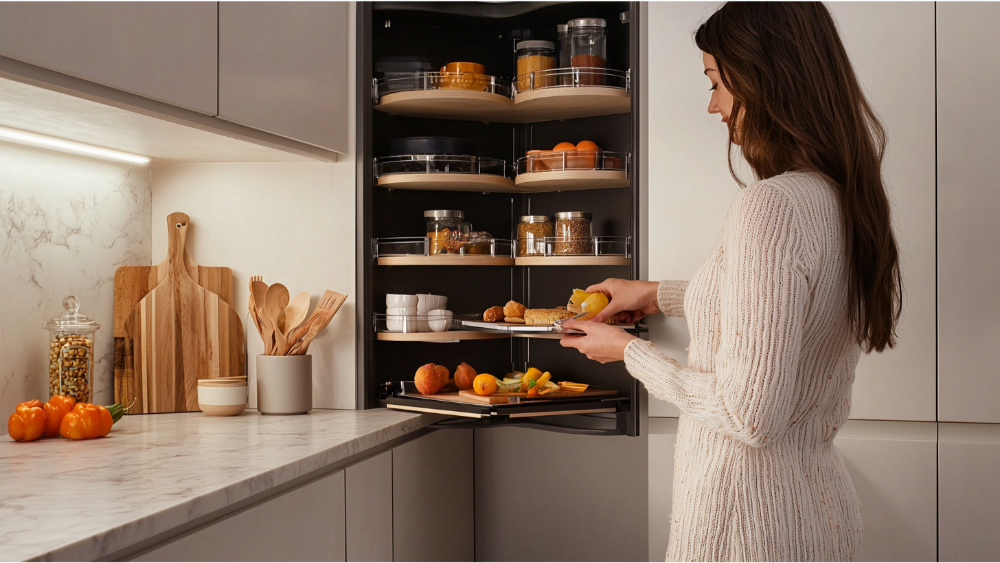
A woman using her lazy susan

Why is My Lazy Susan Dragging?

A dragging Lazy Susan is often caused by improper alignment of the rotating mechanism or shelves. Overloading the shelves with heavy items can also create excessive strain, leading to uneven movement.

Dust, debris, or grime buildup in the tracks or along the rotating mechanism may further contribute to the problem. To resolve this, clean the tracks thoroughly and check for misaligned parts or loose screws. Regular maintenance and avoiding overloading can help prevent dragging and ensure smooth operation.

Can You Use WD-40 to Lubricate Bearings?

WD-40 can be used as a temporary solution to loosen and clean bearings, especially if they are stuck or making noise due to debris and grime buildup. However, it is not recommended as a long-term lubricant because WD-40 is primarily a water displacement spray and does not provide adequate lubrication for prolonged use.

For proper maintenance, use a high-quality bearing grease or oil specifically designed for bearings to ensure smooth operation and durability. Applying WD-40 might also attract dirt and dust, which can worsen the bearing’s performance over time. Always clean the bearings thoroughly before applying the appropriate lubricant to maintain their functionality.

What is the Best Lubricant for Bearings?

The best lubricant for bearings is a high-quality bearing grease or oil specifically designed for this purpose. Silicone-based or lithium-based greases are excellent choices as they provide long-lasting lubrication and resist high temperatures. These lubricants reduce friction effectively, ensuring smooth rotation and preventing wear over time.

Always clean the bearings thoroughly before applying the lubricant to avoid trapping dirt or debris, which can impair performance. Regular application of the appropriate lubricant helps extend the lifespan of the bearings and enhances the overall functionality of the lazy Susan.

Conclusion

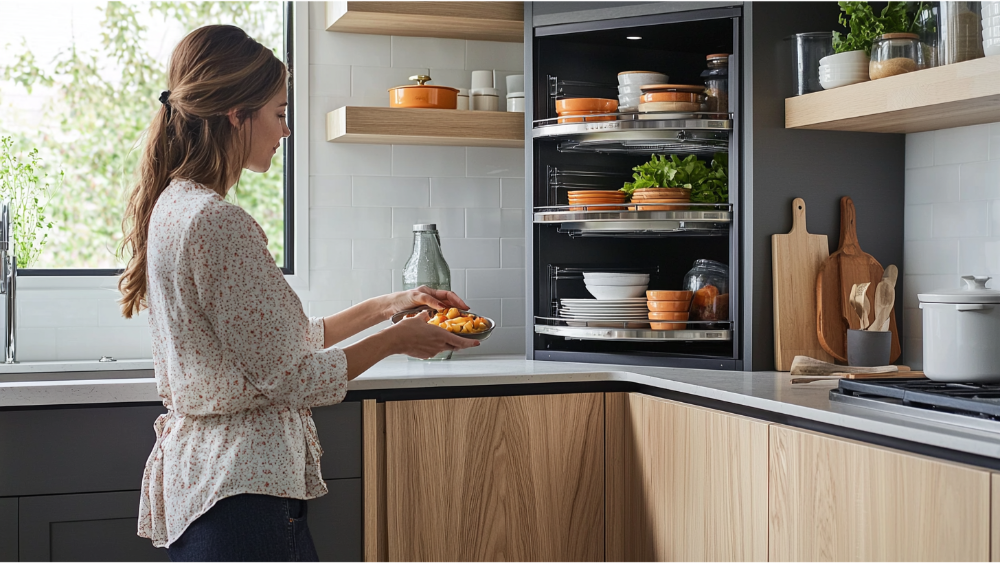
A woman using her lazy susan

Repairing and maintaining a lazy Susan doesn’t have to be a daunting task. With the right tools, regular cleaning, and proper lubrication, you can ensure it operates smoothly and lasts for years to come. Addressing issues like rust, misalignment, or worn-out components promptly can prevent further damage and restore full functionality. By following the guidelines and tips provided, you’ll not only fix common problems but also enhance the durability and efficiency of your lazy Susan. A little effort in upkeep goes a long way in keeping this handy storage solution in optimal condition.

How Deep Are Kitchen Cabinets? A 2025 Guide

Опубликовано: September 21, 2024 в 9:19 pm

Автор:

Категории: Kitchen

Тэги: ,,

When designing or remodeling a kitchen, understanding the dimensions of kitchen cabinets is crucial for optimizing space and functionality. We will delve into the standard depths of kitchen cabinets, both base and wall-mounted, and explore how these dimensions can affect your kitchen layout.

By providing insights into typical cabinet measurements and customization options, we aim to assist you in making informed decisions that balance aesthetics with practicality in your kitchen design.

Standard Depths of Kitchen Cabinets

Kitchen cabinets

Base Cabinets

Base cabinets, which rest on the floor, typically have a standard kitchen cabinet depth of 24 inches. This dimension allows for ample storage space while ensuring that countertops have enough surface area for food preparation and appliances. The depth of these cabinets can sometimes be customized to accommodate unique kitchen layouts, but 24 inches remains the most common choice for functionality and aesthetics.

Upper Wall Cabinets

Upper wall cabinets are generally shallower than base cabinets, with a standard depth of 12 inches. This dimension is designed to provide adequate storage for dishes and small kitchen items while maintaining enough clearance above countertops to create an open and ergonomically friendly workspace. Adjusting the depth of these wall cabinets may be necessary for specific kitchen designs, but a 12-inch depth is typically ideal for reaching items with ease.

Tall Cabinets

Tall cabinets, also known as pantry cabinets or utility cabinets, typically have a standard kitchen cabinet depth of 12 to 24 inches. These cabinets extend from floor to ceiling and are versatile, offering extensive storage space for pantry items, brooms, or even built-in appliances. The depth of tall cabinets can vary based on individual storage needs and available kitchen space, allowing for customization to fit both form and function.

Custom and Variable Depth Options

Kitchen cabinets

Custom-Built Cabinets

Custom-built cabinets provide the flexibility to deviate from standard cabinet dimensions, allowing homeowners to tailor the depth to fit unique kitchen layouts or to meet specific storage requirements. By adjusting the depth beyond the standard measurements, one can maximize space utilization, ensuring that every inch of the kitchen is optimized for convenience and practicality.

For instance, deeper base cabinets can accommodate larger pots and pans, while custom shallow cabinets might be designed for smaller kitchens to maintain a spacious feel. This adaptability makes custom cabinets an excellent choice for those who have specific items to store or for kitchen designs that demand exact dimensions for harmony and efficiency. Through thoughtful customization, these cabinets can enhance both the functionality and aesthetic of any kitchen space.

Small Kitchen Solutions

In compact kitchens, shallower cabinets with depths ranging from 15 to 18 inches can be a game-changer, providing a sleek and efficient use of space. These cabinets, often used as upper cabinets or filler cabinets, help maintain an open and airy kitchen layout by reducing the optical heaviness that standard-depth cabinets might create in smaller areas.

With these shallower upper cabinets, homeowners can still enjoy ample storage for essential items like glassware, dishes, and pantry goods without sacrificing valuable surface and floor space. Likewise, filler cabinets of similar depth can be strategically placed to utilize awkward spaces or gaps, ensuring no corner goes to waste. This approach not only maximizes storage potential but also enhances the overall flow and functionality of smaller kitchens, allowing for a more enjoyable cooking and dining experience.

Extra Deep Cabinets

Opting for extra deep cabinets, such as those, can be highly advantageous for homeowners who need additional storage space for larger appliances and bulkier items. These cabinets are particularly beneficial in accommodating oversized pots, large kitchen appliances like stand mixers, or stockpots that might not fit comfortably within standard kitchen cabinet dimensions of 24 inches deep.

Double basin sinks can be effortlessly integrated into these deeper cabinets, providing a functional and stylish solution. The increased capacity allows for more organized storage, reducing clutter on countertops and making kitchen spaces appear tidier and more efficient.

In larger kitchens, 36-inch deep cabinets can be seamlessly incorporated into islands or other areas where they enhance functionality without encroaching on movement or workflow. By integrating these deep storage options thoughtfully homeowners can enjoy both a spacious feel and superb utility, striking an ideal balance in their kitchen design.

Depth Considerations for Functionality

Kitchen cabinets

Storage Needs

The depth of kitchen cabinets significantly influences storage capacity and the types of items that can be housed efficiently. Standard wall cabinets, with their typical 12-inch depth, are ideal for storing smaller kitchen items like glassware, plates, and pantry essentials, ensuring they are easy to reach and organize. In contrast, deeper base cabinets, usually around 24 inches deep, are better suited for larger kitchen tools such as pots, pans, and baking dishes that require more space and can be cumbersome if stored elsewhere.

Opting for even deeper cabinets, up to 36 inches, allows the accommodation of oversized appliances and bulkier items, which can help keep countertops clear and maintain the kitchen’s neat appearance. Therefore, choosing the appropriate kitchen cabinet dimensions is crucial for optimizing storage while ensuring that frequently used items are conveniently accessible.

Accessibility

When it comes to accessibility, deeper cabinets often pose a challenge, especially in terms of reaching items stored at the back. This is particularly prevalent in corner cabinets, which can create awkward spaces that are difficult to access and organize. To address this issue, incorporating pull-out shelves and organizers can be a practical solution. These features facilitate easy access by allowing users to slide the contents toward them, minimizing the need to reach far back into the depths of the cabinet.

Pull-out organizers transform hard-to-reach areas into functional spaces, ensuring that every item remains within easy reach. They can help maintain order by providing designated spots for various items, which not only improves access but also maximizes the overall storage capability of corner cabinets. By integrating these solutions, homeowners can enhance both the functionality and convenience of deeper cabinets, making their kitchen experience far more efficient and user-friendly.

Countertop Overhang Considerations

Countertop overhang is another crucial factor in kitchen design, impacting both aesthetics and functional space. Typically, countertops extend over the base cabinetry by about 1 to 1.5 inches, providing a finished look and protecting the cabinetry below. The overhang also ensures that there is ample room for preparing meals without obstructing access to drawers and doors. When designing custom cabinets, the desired countertop hang should be considered alongside the kitchen’s overall layout and flow, ensuring ease of movement and accessibility for daily tasks while harmonizing with the kitchen’s aesthetic appeal.

Frequently Asked How Deep Are Kitchen Cabinets Questions

Kitchen cabinets

What is the Standard Depth of a Kitchen Cabinet?

The standard depth of kitchen cabinets varies depending on their intended use. For kitchen wall cabinets, the typical depth is around 12 inches. This depth is ideal for storing smaller kitchen essentials like plates, glassware, and pantry items, providing easy access while maximizing space.

For a base cabinet, the standard depth is generally 24 inches. These cabinets are designed to accommodate larger items, such as pots, pans, and baking equipment, offering ample storage capacity while ensuring that the countertops above remain clear and organized. It’s also essential to consider standard base cabinet widths when planning the kitchen layout to optimize both functionality and accessibility.

Are All Kitchen Cabinets 24 Inches Deep?

No, not all kitchen cabinets are 24 inches deep. While 24 inches is the standard depth for base cabinets, allowing enough space for larger kitchen items and ensuring a convenient work surface on the countertop above, kitchen cabinets come in various depths to suit different purposes and layouts. Wall cabinets, for instance, are usually around 12 inches deep, making them perfect for storing smaller items such as dishes and glassware within easy reach.

Some specialty cabinets, like pantry units or extra deep base cabinets, can be up to 36 inches deep to accommodate bulkier items or oversized appliances. Custom cabinetry can also be tailored to specific dimensions, providing flexibility to meet unique space requirements and storage needs. Therefore, the depth of kitchen cabinets is varied and customizable, depending on the specific needs and design of the kitchen.

How Deep Are Custom Kitchen Cabinets?

Custom kitchen cabinets offer a great degree of flexibility in terms of depth, allowing homeowners to tailor their kitchen storage solutions to their unique needs and preferences. While standard cabinet depths serve as guidelines, custom cabinets can be designed to deviate from these norms, accommodating specific items or architectural features.

A homeowner might choose to create custom cabinets that are 30 inches deep to provide additional storage for larger appliances or cookware. Shallower custom cabinets around 15 inches deep could be utilized in narrow spaces where a conserving room is necessary. The ability to specify exact dimensions means that custom kitchen cabinets can blend seamlessly with the overall kitchen design, enhancing both functionality and aesthetics while addressing any unique constraints or requirements of the space.

Conclusion

The depth of kitchen cabinets plays a pivotal role in determining the functionality and efficiency of a kitchen space. Choosing the right cabinet depth is essential for organizing kitchen items conveniently and ensuring a seamless workflow. While standard depths of 12 inches for wall or upper kitchen cabinets and 24 inches for base cabinets provide a general guideline, there are numerous options, including custom cabinet designs, to accommodate specific storage needs and preferences. Considerations such as accessibility, the use of pull-out shelves, and appropriate countertop overhangs further enhance the practicality and aesthetic appeal of a kitchen. By carefully selecting kitchen cabinet dimensions and features, homeowners can transform their kitchen into a well-organized, user-friendly space tailored to their lifestyle.

Tips on How to Organize Kitchen Cabinets [Updated September 2025]

Опубликовано: September 17, 2024 в 2:45 am

Автор:

Категории: Kitchen

Тэги: ,

Organizing your kitchen cabinets in 2025 isn’t just about decluttering — it’s about maximizing storage, creating a smooth workflow, and making your kitchen both functional and stylish. Whether you’re working with a small kitchen or a large space, these cabinet organization ideas will help you save time, reduce stress, and keep everything within reach.

Categorizing Items in Each Cabinet

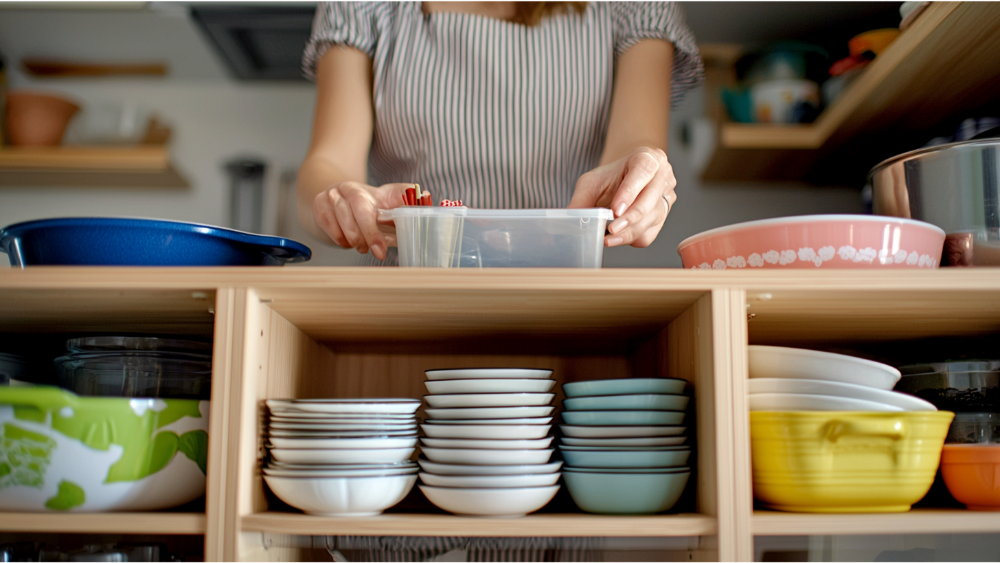
A women categorizing her kitchen cabinets

Pantry Staples

Pantry staples such as grains, pasta, and canned goods should be stored together in a designated cabinet space. Utilize storage space efficiently by using stackable food storage containers that allow you to see contents at a glance. Placing frequently used items in upper cabinets keeps them easily accessible while maintaining a neat and organized look.

Baking Supplies

Group baking essentials, including flour, sugar, and baking soda, into one area to make baking projects convenient and enjoyable. Consider placing them in clear food storage containers with labels for easy identification. Storing these items behind cabinet doors can keep kitchen surfaces clutter-free and visually appealing.

Spices and Seasonings

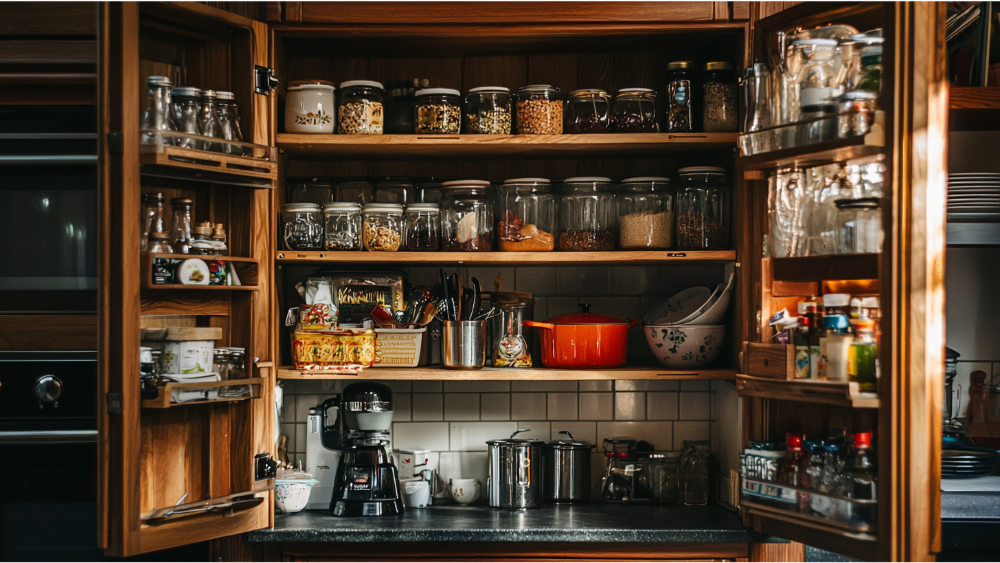
Organized spices and grains

Organize spices and seasonings in a dedicated cabinet space near the stove for quick access during cooking. Magnetic strips or tiered spice racks attached to cabinet doors can save storage space and keep everything visible at a glance. This method ensures that every spice is within reach when you need it.

Cookware and Utensils

Cookware, such as pots, pans, and baking sheets, can be grouped together in lower cabinets or deep drawers. Consider using adjustable dividers to keep items from shifting and maximize your storage space. Storing lids on the insides of cabinet doors can free up even more space, making it easier to find the right pot or pan.

Small Appliances

Store small appliances, like blenders and mixers, in a cabinet space that’s easy to access yet keeps counters clear when not in use. Upper cabinets are ideal if you have limited space elsewhere, but ensure they are sturdy enough to hold the weight. Keeping some of these must-have kitchen appliances behind cabinet doors contributes to a tidy kitchen environment.

Tips for Efficiently Utilizing Space and Organize Kitchen Cabinets

A lady organizing her kitchen cabinets

Maximize the Cabinet Door

Consider utilizing the inside of cabinet doors to add extra storage space. Adding adhesive hooks can provide a place to hang measuring spoons, oven mitts, or lightweight kitchen tools, keeping them within easy reach.

This approach not only increases storage options but also enhances overall kitchen organization by keeping items visible and accessible.

Double Your Space with Shelf Rises

Shelf risers are an excellent solution for doubling the available space within your cabinets. These handy tools allow you to stack items vertically, turning wasted air into usable storage. For instance, you can place a riser in your pantry to create separate levels for canned goods and dry ingredients, making them easier to access without having to dig through layers of products. Using shelf risers not only optimizes cabinet space but also enhances overall organization by keeping similar items grouped together, simplifying your kitchen routines.

Designate Spaces with Kitchen Drawers

Organizing kitchen cabinets

Designating specific spaces within kitchen drawers can significantly enhance organization and efficiency. Allocate different drawers for utensils, baking tools, and frequently used items to maintain a tidy and orderly space. Drawer organizers can be incredibly useful for separating items like cutlery, ensuring everything has its place and is easy to access. This approach minimizes clutter and streamlines your cooking processes, allowing you to find exactly what you need quickly and effortlessly.

Streamline Cleaning Supplies

Keep your cleaning supplies organized under the sink with bins or pull-out caddies. Group sprays, sponges, and scrubbers by type so they’re easy to grab. Vertical racks or stackable organizers are perfect for maximizing the tight space below the sink, keeping your kitchen both tidy and efficient.

Incorporate Creative Kitchen Cabinets and Drawers Organization Ideas

Incorporating creative kitchen cabinet organization ideas can greatly enhance the efficiency and aesthetics of your kitchen. Consider utilizing pull-out shelving or drawers for easy access to items stored in the back, eliminating the need to dig through cluttered spaces. Deep drawers are particularly useful for storing pots and pans, allowing you to stack them neatly without taking up too much vertical space.

Consider installing drawer dividers to keep utensils and gadgets organized, ensuring that everything has its place. Install lazy Susans in corner cabinets to make use of otherwise lost space, ensuring all items remain visible and within reach. Using clear containers and labels can reduce time spent searching for ingredients, making meal preparation more streamlined and enjoyable.

Maintaining Organization in Kitchen Cabinets and Drawers

Kitchen cabinets

Regular Decluttering

Set aside time each month to go through your kitchen cabinets and drawers, removing any items that are broken or not frequently used. Consider whether some items can be repurposed for storage or decor. Regular decluttering helps to prevent overcrowding, making it easier to maintain a tidy and manageable space.

Categorize and Label

Group similar items together, such as all baking utensils in one drawer and dining room serving pieces in another. Use clear containers and labels to keep everything identifiable at a glance. This system reduces the time spent searching for items and ensures that everything returns to its designated spot.

Use Drawer Organizers

Invest in drawer organizers to separate utensils, gadgets, and small kitchen tools. These dividers can also be useful in dining room drawers for organizing cutlery or napkin rings. Organizers maximize space and keep items from getting jumbled together, enhancing both functionality and aesthetics.

Rotate Seasonally

Similar to changing decorations with the seasons, periodically rotate your kitchen items. Move seasonal cooking tools to the front of cabinets when they are needed and store them away when they are not. This keeps your kitchen functional according to the current season’s needs and reduces unnecessary clutter.

Utilize Vertical Space

Just as you might with shelving in the dining room, maximize vertical space in your kitchen cabinets using stackable shelves or risers. This approach allows for more storage above and below existing items, ensuring that every inch of space is utilized efficiently without causing clutter.

Implement a First-In, First-Out System

Use the same strategy often applied in pantries, organizing items so that older products are used first. Keep newly purchased goods at the back and older ones at the front of cabinets. This reduces waste and keeps the flow of items orderly and consistent.

Establish a Weekly Maintenance Routine

Dedicate a short time each week to organizing and cleaning your kitchen cabinets and drawers, similar to the cleaning routine you might have for the dining room. Regular maintenance helps to quickly address any clutter build-up, ensuring your space remains organized and welcoming.

Frequently Asked How to Organize Kitchen Cabinets Questions

Kitchen cabinets

How Do I Decide Where to Put Things in My Kitchen?

Deciding where to place items in your kitchen is critical to maintaining an efficient and functional space. Start by assessing your cooking habits and which items you use most frequently. Keep everyday items like pots, pans, and utensils within easy reach, ideally near the stovetop or preparation areas. Consider storing lesser-used gadgets and appliances in higher cabinets or deeper storage spaces.

Group similar items together based on their use; for example, keep baking tools and supplies in one area, and designate another for dishware and cutlery. Take into account the flow of your kitchen work triangle—ensure that the refrigerator, sink, and stove are easily accessible and that necessary items are positioned in proximity to each for a smooth cooking process. Tailor the organization to fit your unique lifestyle and preferences, ensuring that the kitchen layout complements your daily routine.

Where Should I Put Glasses in the Kitchen

When it comes to storing glasses in your kitchen, accessibility and safety should be at the forefront of your organization’s strategy. Ideally, glasses should be placed in a cabinet that is within easy reach of both the dishwasher and dining area to streamline setting the table and unloading clean items. Consider assigning a cabinet near your kitchen sink or a hanging rack for easy access when grabbing a quick drink.

If space allows, organize glasses by type—such as everyday drinking glasses, wine glasses, and specialty glassware—to keep everything tidy and intuitive. For added security, especially if you have children in the household, position delicate glass items on shelves that are out of reach of small hands, but still within easy reach for adults or often-used areas. This ensures that you maintain a clutter-free and efficient kitchen environment where finding the right glass is always a stress-free task.

What Should I Not Store Above the Stove?

Storing items above the stove might seem convenient, but certain things should be avoided in this area due to safety and practicality concerns. It’s advisable not to store oils, spices, or other flammable materials above the stove, as the heat can cause these items to spoil or, in rare cases, lead to a fire hazard. Avoid placing heavier items like large pots or pans in overhead cabinets above the stove, as reaching for them could lead to accidents or injury.

Perishable food items should also be kept away from this spot since the heat can cause them to spoil faster. Electronics or appliances can suffer damage from the humidity and heat generated by stovetop cooking activities, so it’s best to keep these gadgets elsewhere. Maintaining a clear, organized space above the stove enhances kitchen safety and ensures that the area remains functional and efficient.

What is the best way to organize a small kitchen with limited cabinet space?

For small kitchens, focus on vertical storage and multi-use organizers. Use stackable bins, door racks, and shelf risers to double your storage. Pull-out drawers or baskets also make deep cabinets more accessible, preventing items from getting lost in the back.

Conclusion

Kitchen cabinets

In 2025, the best way to organize kitchen cabinets is by combining regular decluttering with modern storage solutions like pull-outs, risers, and labeled containers. A well-organized kitchen saves time, reduces stress, and makes cooking more enjoyable. By tailoring your system to your cooking habits and lifestyle, you’ll keep your kitchen functional, clutter-free, and welcoming year-round.