Granite vs Quartz Countertops: Which Is Right for our Sacramento Kitchen? (2026 Guide)
For most Sacramento homeowners, quartz is the smarter choice if you want a low-maintenance,
stain-resistant countertop that looks consistent and never needs sealing. Granite is the better
choice if you cook a lot (it handles high heat better), want a one-of-a-kind natural stone look, or
plan to use the surface outdoors. Both materials last 30+ years with proper care and both add
strong resale value.
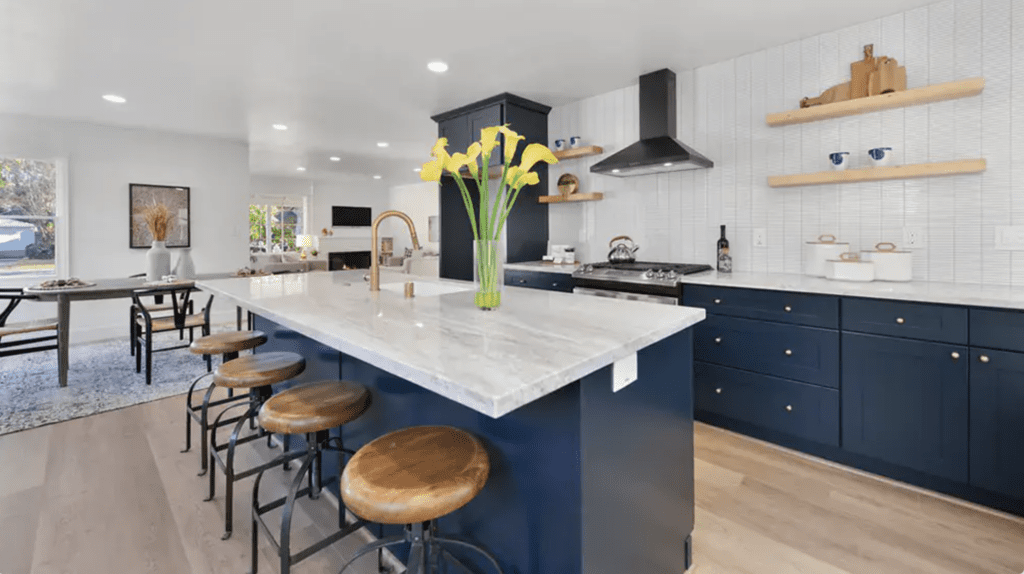
That’s the short answer. Below we’ll walk through everything that goes into that decision —
2026 Sacramento-area pricing, durability testing, maintenance differences, eco-impact, resale
value, and the scenarios where each material actually wins. If you’re weighing countertops for a
kitchen remodel, our team at America’s Advantage Remodeling has installed both materials in
thousands of Sacramento-area homes since 2001, so this guide reflects what we actually see in
kitchens every day — not just what manufacturers claim.
Granite vs Quartz At a Glance: 2026 Comparison
| Factor | Granite | Quartz |
|---|---|---|
| Cost Installed (Sacramento) | $70–$230 per sq ft | $50–$150 per sq ft |
| Typical 30 sq ft kitchen | $2,100–$6,900 | $1,500–$4,500 |
| Heat Resistance | Excellent (set hot pan directly) | Fair (use trivet above 150°F) |
| Stain Resistance | Good with sealing | Excellent (non-porous) |
| Sealing Required | Every 12–18 months | Never |
| Appearance | Unique natural patterns | Consistent engineered look |
| Color Options | Limited to nature’s palette | Virtually unlimited |
| Lifespan | 50–100+ years | 25–50+ years |
| Resale ROI | 70–80% of installed cost | 75–85% of installed cost |
| Outdoor Use | Yes (UV-stable) | No (resin yellows in UV) |
| Eco-Friendliness | Natural, but heavy to transport | Can include recycled content |
Pricing figures reflect current 2026 Sacramento-area installation quotes and include fabrication,
delivery, and labor. Your exact price will vary based on slab grade, edge profile, cut-out
complexity, and cabinet condition.
Granite Countertops: What They Are and What They Do Well
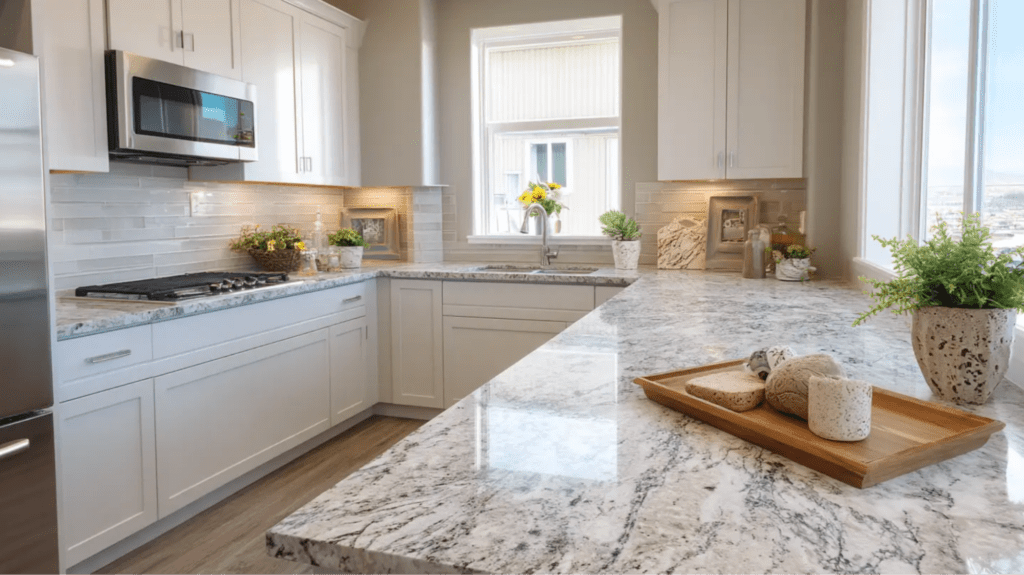
Granite is 100% natural stone — quarried from the earth in massive slabs and cut to fit your
kitchen. Because every slab forms over millions of years under unique geological conditions, no
two granite countertops are identical. The patterns, veining, and mineral flecks you see in your
kitchen exist nowhere else on earth. For homeowners who want a truly one-of-a-kind surface,
that’s granite’s biggest selling point.
-
Granite Pros
- Exceptional heat resistance — you can place a hot pan straight from the oven onto granite without damage. Serious home cooks love this.
- Long lifespan — a properly sealed and cared-for granite countertop will easily last 50 to 100+ years.
- UV-stable — granite can be used in outdoor kitchens without discoloration.
- High-end appearance — granite signals ‘natural stone’ and holds strong resale appeal in the Sacramento market.
Granite Cons - Scratch-resistant — harder than most common kitchen tools; you’d have to try fairly hard to scratch it.
- Requires sealing every 12–18 months to prevent staining from wine, oil, and acidic foods.
- Porous — unsealed granite will absorb liquids and can harbor bacteria in cracks.
- Heavy — a typical 3cm granite slab weighs 18–19 lbs per square foot, which means your cabinets need to be in sound structural condition.
- Limited color range — you’re working with nature’s palette, not a designer’s.
- Visible seams on larger kitchens where one slab can’t cover the full run.
2026 Granite Pricing in Sacramento
Installed granite countertops in the Sacramento metro range from $70 to $230 per square foot depending on slab grade. Level 1–2 granite (common colors, minimal pattern variation) runs $70–$120 installed. Level 3–4 (bolder colors, dramatic veining) runs $120–$170. Level 5 exotic granite (rare colors like emerald, blue, or red) can reach $200–$230+. For a full breakdown of current granite pricing by grade, see our granite countertops cost guide.
Thickness also affects the final price. Most Sacramento kitchens use 3cm (1¼ inch) slabs,
which don’t need plywood backing and are our preferred standard. 2cm (¾ inch) slabs cost less
but require reinforcement — which often erases the savings. Read our detailed breakdown of
granite thickness options for a full explanation.
Quartz Countertops: What They Are and What They Do Well
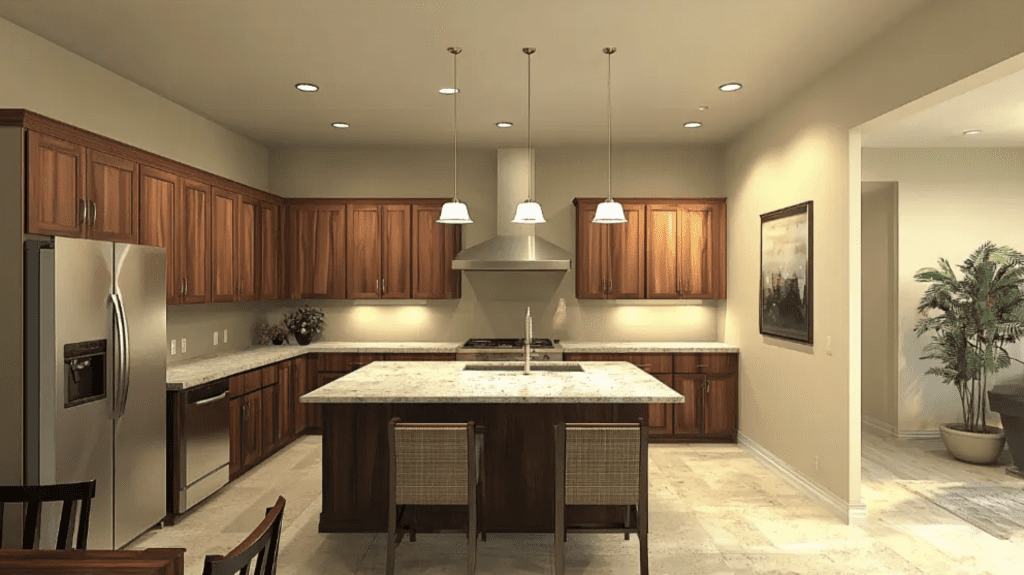
Quartz countertops are engineered stone — roughly 90–93% crushed natural quartz mineral,
combined with resins, binders, and pigments, then cured under heat and pressure into uniform
slabs. Because the manufacturing process is controlled, quartz has consistent color and pattern
throughout the slab, no variation from piece to piece, and a completely non-porous surface.
Major quartz brands include Caesarstone, Silestone, Cambria, Zodiaq (by DuPont), and MSI Q.
-
Quartz Pros
- Non-porous surface — stains don’t absorb in. Wipe up wine, coffee, oil, and tomato
sauce with soap and water. - Zero sealing required — saves you a service appointment every 1–2 years for the life of
the countertop. - Consistent appearance — what you see in the showroom is exactly what shows up in
your kitchen. No slab-to-slab surprises. - Virtually unlimited design options — quartz can mimic marble, concrete, soapstone, or
be solid colors not found in nature. - Bacteria-resistant — the non-porous surface is inhospitable to the bacteria that can hide
in unsealed natural stone. - Can include recycled content (some brands up to 42% recycled), which helps with green-building certifications.
-
Quartz Cons
- Not as heat resistant as granite — the resin binder can discolor or soften above
approximately 150°F. Always use a trivet under hot pans. - Cannot be used outdoors or in direct sunlight long-term — UV exposure yellows the
resin over time. - Slightly less prestige than natural stone in some luxury segments, though that perception
is fading. - Chip repair is harder than granite — damaged areas may need a full replacement piece
rather than a spot repair. - Lifespan of 25–50+ years is excellent but somewhat shorter than granite’s century-plus
potential.
2026 Quartz Pricing in Sacramento
Installed quartz countertops in the Sacramento metro range from $50 to $150 per square foot.
Entry-level quartz (simple colors, basic patterns) runs $50–$80. Mid-range quartz (more
convincing marble-look patterns, popular designer colors) runs $80–$120. Premium quartz
(Cambria, Caesarstone top tier, full-veining marble look) runs $120–$150+. Our full quartz
benefits guide covers the trade-offs between brands in detail.
Granite vs Quartz: The 6 Decisions That Actually Matter
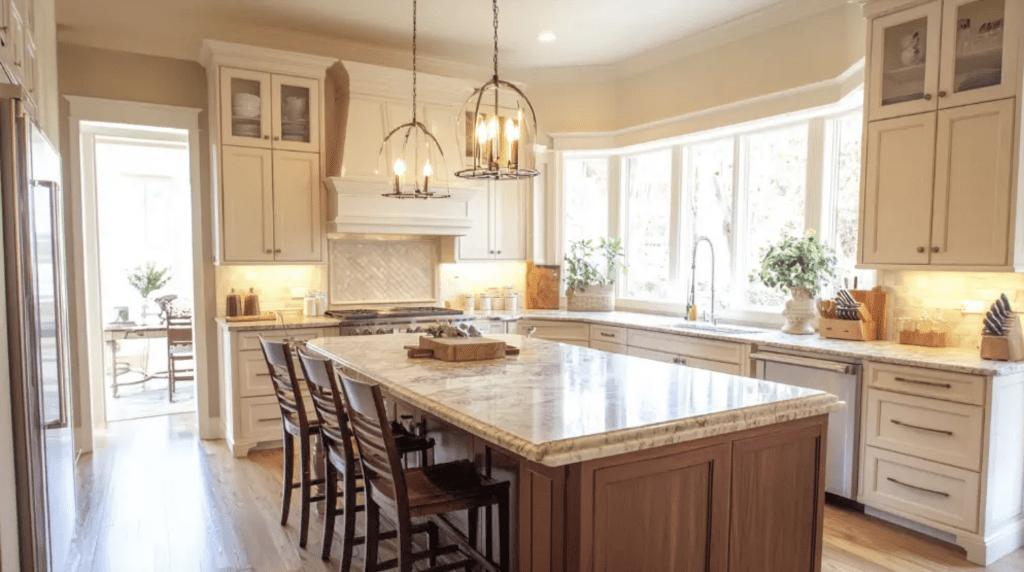
- Cost — Quartz Usually Wins
For equivalent quality tiers, quartz tends to come in 10–25% cheaper than granite in the
Sacramento market — primarily because quartz is manufactured with consistent supply and
granite has variable slab sourcing costs. The gap shrinks at the top end: premium Cambria or
full-slab marble-look quartz can cost more than mid-range granite. For budget-conscious
remodels, quartz offers more design options per dollar. - Daily Use — Depends on How You Cook
If you regularly take cast iron from the stove to the counter, if you bake a lot, or if you entertain
with hot serving platters straight from the oven, granite’s heat tolerance matters. Quartz doesn’t
handle 450°F+ pans gracefully — you’ll get discoloration rings from repeated contact. But in a
typical Sacramento household where trivets and cutting boards are the norm, quartz’s non-
porous stain resistance wins more daily-life battles than granite’s heat tolerance. - Maintenance — Quartz Wins Hands Down
Granite sealing is a 20-minute job that most homeowners can DIY with a $25 bottle of sealer,
but it’s 20 minutes you have to remember every 12–18 months. Miss a year and your granite
becomes vulnerable to oil stains and wine rings. Quartz requires no sealing, ever. Daily cleaning
for both is the same: mild soap, warm water, soft cloth. Skip abrasive pads and acidic cleaners
on either surface. - Appearance — Preference Wins
This is the most subjective axis and comes down to whether you want the unmistakable one-of-
a-kind look of natural stone (granite) or the controlled consistency of engineered material with a
broader color palette (quartz). Modern quartz has gotten remarkably good at mimicking marble
and other natural stones, to the point that many homeowners genuinely can’t tell the difference
from two feet away. Others insist that real stone has a depth and light-play that no engineered
product matches. Go to a showroom and look at both with samples of your cabinet color and
flooring to see how they actually pair in your home.
- Resale Value — Both Win, Slight Edge to Quartz
Real estate data from the Sacramento market in 2024–2025 suggests both granite and quartz
recoup 70–85% of their installed cost at resale — significantly better than laminate or tile but
slightly below custom cabinet upgrades. Quartz has been slowly pulling ahead in buyer
preference, especially with 30-somethings who value low maintenance. Granite remains the top
choice for high-end traditional buyers and luxury segment homes. If your neighborhood average
sale is $800K+, granite still signals ‘premium.’ Below that, quartz is increasingly the expected
choice. - Environmental Impact — Quartz Has a Slight Edge
Granite is a finite natural resource and has a significant carbon footprint from quarrying, cutting,
and shipping heavy slabs (often from Brazil, India, or China). Quartz is engineered and can
include recycled content — some brands use up to 42% post-industrial recycled material. Both
materials last decades and are not hazardous. If environmental impact is a priority for your
remodel, ask your contractor about recycled-content quartz specifically.
Which Should You Choose? Sacramento-Specific Scenarios
Rather than trying to declare an overall winner (there isn’t one), here’s the framework we use
with AAR clients during kitchen consultations:
-
Choose Granite If…
- You’re a serious home cook who uses cast iron, hot sheet pans, and high-temp
cookware daily. - You want a truly one-of-a-kind look that no neighbor’s kitchen can duplicate.
- You’re remodeling a luxury-tier Sacramento home ($900K+) where granite signals high-
end. - You’re building an outdoor kitchen or any countertop exposed to direct sunlight.
- You love the natural-stone aesthetic and are willing to seal every 12–18 months.
-
Choose Quartz If…
- You have young kids or a busy household and want true zero-maintenance.
- You care about consistent color and pattern — you picked a look and want it to look
exactly like that. - You want a marble look without marble’s maintenance (quartz mimics marble extremely
well). - You’re remodeling a rental, flip, or neighborhood where the expected finish is
contemporary. - Budget matters and you want the most design flexibility per dollar.
- You’re concerned about bacteria resistance (quartz’s non-porous surface is superior for
food safety).
4 Common Myths About Granite and Quartz
Myth 1: ‘Quartz is just fake granite.’
Incorrect. Quartz countertops are 90%+ actual natural quartz mineral — arguably the second
most common mineral on earth and harder than most granites. The resin binder is what makes
it ‘engineered,’ not its natural content. Calling quartz ‘fake’ is like calling reinforced concrete
‘fake rock.’
Myth 2: ‘Granite is outdated.’
Incorrect. Granite remains the #1 choice in luxury Sacramento segments above $900K and
continues to be specified in custom homes, especially with the resurgence of warm-toned
cabinetry. The ‘outdated’ label came from the 2005–2015 era when contractors used the
cheapest tan-and-brown granite in every tract home — a style issue, not a material issue.
Today’s granite selections trend toward whites, grays, and dramatic blacks that feel entirely
current.
Myth 3: ‘Quartz can’t handle any heat.’
Overstated. Quartz can handle moderate heat (a mug of coffee, a warm pan, a casserole dish
below 150°F) without issue. What it can’t handle is direct contact with a 450°F cast iron pan
straight from the stove. Use a trivet and you’ll never have a problem.
How AAR Handles Countertop Installation in Sacramento
Whether you pick granite or quartz, installation quality matters as much as the material itself. A
bad install — uneven seams, misaligned edges, inadequate cabinet support — ruins even the
best slab. At America’s Advantage Remodeling, our installers are in-house employees — not
subcontractors — which means the same team who quotes your project is the team who cuts,
templates, and installs. We produce a 3D rendering of your kitchen with your chosen countertop
before any demolition begins, so you can see the pairing of slab + cabinet + backsplash before
committing.
We also bring physical samples to your home for the final decision — not just 3-inch tiles but
larger cuts so you can see the pattern scale in your actual lighting. See our recent countertop
projects for examples of both granite and quartz installations in Sacramento and Roseville
homes.
Frequently Asked Questions About Granite vs Quartz
Is quartz better than granite for kitchens?
For most modern Sacramento kitchens, yes — quartz is the better choice because it requires no
sealing, resists stains perfectly, and comes in a much wider range of colors and patterns than
granite. However, granite is better for homeowners who cook at high heat frequently, want a
truly unique natural-stone look, or are remodeling a luxury-tier home where natural materials
signal high-end.
Which lasts longer, granite or quartz?
Granite lasts longer. A well-sealed granite countertop can last 50 to 100+ years with minimal
care. Quartz lasts 25 to 50+ years under normal kitchen use. Both timelines exceed the lifespan
of most kitchens themselves, so longevity rarely becomes a deciding factor unless you plan to
pass the home through multiple generations.
How much does it cost to replace granite with quartz in Sacramento?
Replacing existing granite with quartz in a typical 30-square-foot Sacramento kitchen costs
$2,200 to $5,500 installed, including demolition of the existing granite and disposal. If the
cabinets need any leveling or reinforcement, add $300 to $800. Full countertop replacements
are typically completed in one day of installation after template-to-fabrication lead time of 7 to 14
days.
Does granite or quartz add more value to a home?
Both add significant resale value — typically 70% to 85% of installed cost recouped at sale.
Granite has a slight edge in luxury segments ($900K+ Sacramento homes) and for traditional-
style buyers. Quartz has a slight edge in mid-market ($500K to $900K) and for younger buyers
who prioritize low maintenance. In neighborhoods where either is the expected finish, a high-
quality install of either material adds comparable value.
Can you put a hot pan on quartz countertops?
Briefly, yes — but we don’t recommend it. Quartz can handle temperatures up to about 150°F
without damage. A pan that just came off a 425°F oven will exceed that limit and can cause
discoloration or cracks in the resin binder. Always use a trivet or hot pad under hot cookware on
quartz. Granite, by contrast, can handle any direct cookware contact without issue.
Do granite countertops require sealing?
Yes. Granite is a natural porous stone and should be sealed every 12 to 18 months to prevent
oil, wine, and acidic foods from staining the surface. Sealing is a simple 20-minute DIY job with
a $20 to $30 bottle of countertop sealer, or your contractor can handle it as a service call.
Quartz, by contrast, never requires sealing — it’s a non-porous engineered surface.
Which is easier to clean, granite or quartz?
Quartz is slightly easier to clean because its non-porous surface means spills never soak in.
Wipe with soap and water and you’re done. Granite requires the same routine cleaning, but
unsealed granite can absorb liquids, and abrasive cleaners or highly acidic substances (lemon
juice, vinegar) should be avoided on both surfaces to preserve the finish.
Ready to See Granite and Quartz Samples in Your Sacramento Kitchen?
America’s Advantage Remodeling has been installing granite and quartz countertops throughout
Sacramento, Roseville, Folsom, and the greater metro since 2001. Our team includes in-house
designers, fabricators, and installers — no subcontractors. We bring large-format samples
directly to your home so you can see exactly how each slab pairs with your cabinets and
lighting, and we produce a 3D rendering of your kitchen with your selected countertop before
any work begins.
Book a free in-home consultation to see granite and quartz samples side by side. Or browse our
Sacramento countertop portfolio to see completed installations in homes like yours. Questions?
Call us directly at 916-507-0469.
About the Author
Eugene Chernioglo founded America’s Advantage Remodeling in Roseville, CA in 2001. AAR
has completed thousands of kitchen, bathroom, and whole-home renovations across the
Sacramento metro and holds a 4.9-star rating across 225+ Google reviews. CSLB License 1036517.
CONTACT US
Our Services
Areas We Serve
Certificate