When homeowners come to us planning a full home remodel, the question I hear almost as often as “what will this cost” is “where do we even start?” It’s a good question, because the order you renovate in actually matters done in the wrong sequence, you end up redoing finished work or living through more disruption than necessary. After 25 years managing full home remodels across the Sacramento area, here’s how I sequence a project.
Start With What You Can’t See: Systems First
Before any room gets its new look, the home’s underlying systems need attention: electrical, plumbing, HVAC, and structural issues. On a recent 14-week full home remodel we completed in Sacramento (zip 95819), we started by updating the plumbing and electrical systems and adding insulation and a new HVAC system, all before a single finish surface went in. Doing this first means you’re never cutting into a finished wall or newly tiled floor to fix something that should have been addressed earlier.
Then the Exterior
Once the home’s systems are sound, the exterior is typically next, roofing, siding, and any structural repairs. This protects everything you’re about to build inside from weather exposure during construction, and it also means exterior crews and interior crews aren’t tripping over each other on the same timeline. On that same 95819 project, we refreshed the siding, repainted the facade, installed a new roof, and updated the landscaping as part of this phase.
Kitchen and Bathrooms Next
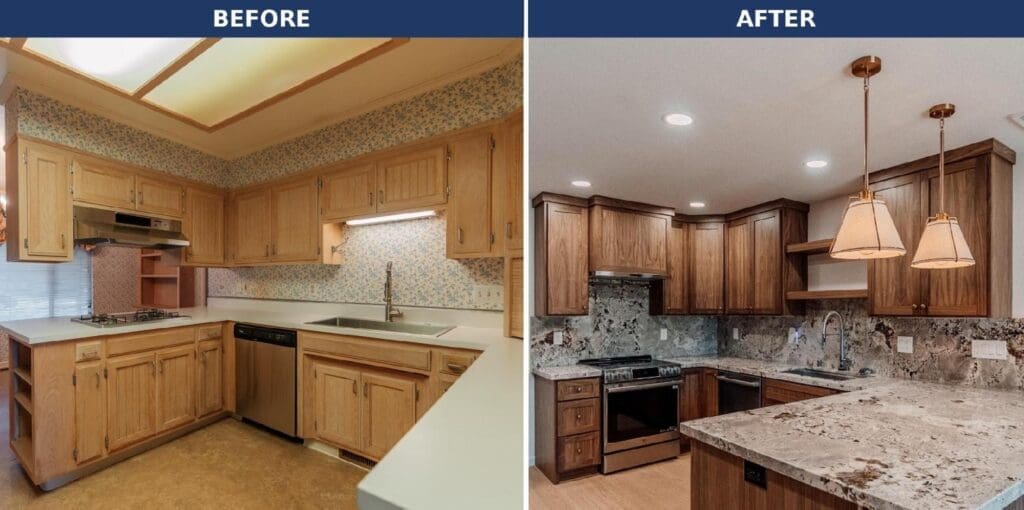
Kitchens and bathrooms involve the most plumbing, electrical, and structural complexity of any interior rooms, which is why they typically come before simpler cosmetic spaces. Tackling them earlier in the interior phase also means the most disruptive, messiest work is behind you sooner rather than later. The before-and-after shown at the top of this article is a good example of the scale of that transformation, a dated kitchen in Walnut Grove, still wearing its original wallpaper and laminate counters, turned into the finished space on the right.
Living Spaces and Flooring Last
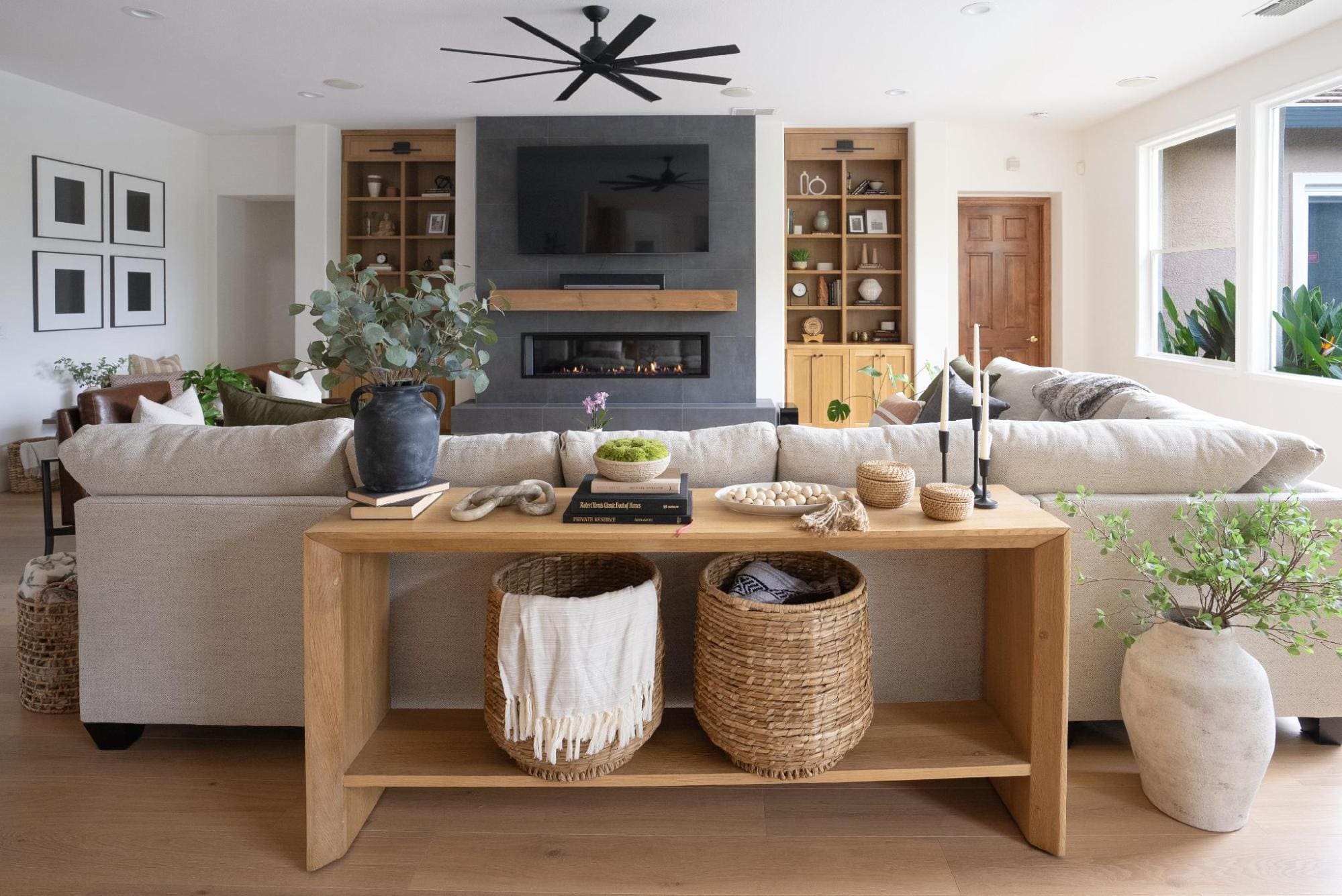
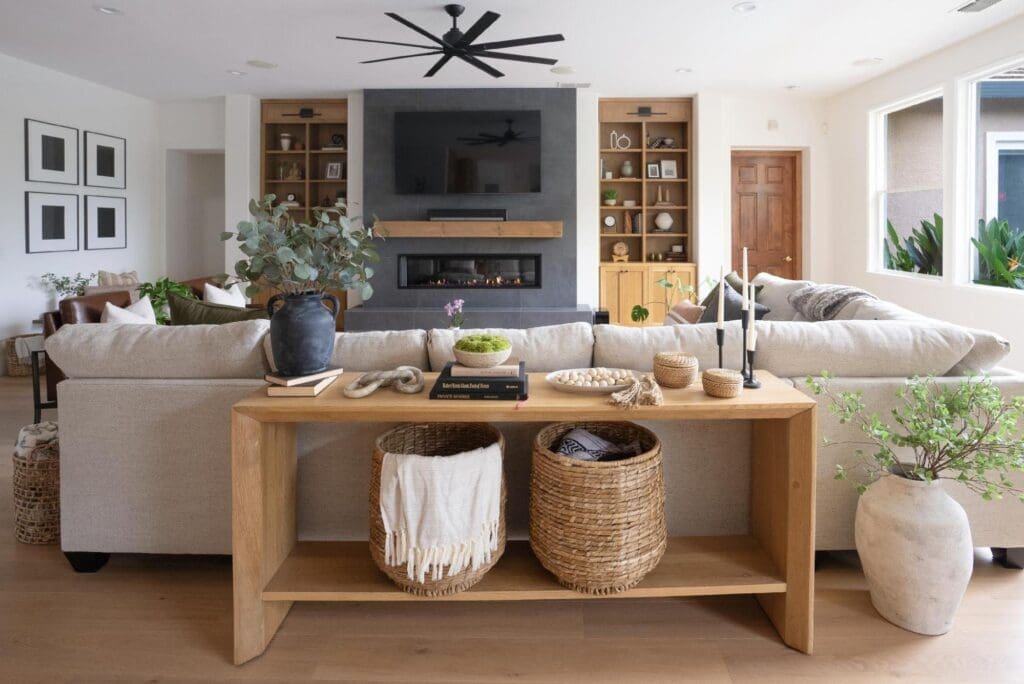
Flooring, paint, and finish work in living rooms, bedrooms, and hallways generally come last. This sequencing protects new floors and finishes from the heavier foot traffic and equipment involved in kitchen and bathroom work, and it means the areas you’ll actually relax in are the freshest when the project wraps. On a recent full home project of ours in Roseville, the living room’s new flooring, built-in shelving, and fireplace surround were among the final pieces to come together, the payoff after the less glamorous systems and kitchen work was already behind us.
A Rough Sequence
- 1. Systems: electrical, plumbing, HVAC, insulation, structural repairs
- 2. Exterior: roof, siding, windows, landscaping
- 3. Kitchen and bathrooms
- 4. Remaining interior: flooring, paint, trim, finish work
Every home is different, and a good contractor will adjust this order based on your specific project — but this is the framework that keeps a full home remodel moving efficiently rather than backtracking. If you’re planning a whole-home project, my team at America’s Advantage Remodeling can walk your property and map out a sequence that fits your home and your timeline.
Frequently Asked Questions
Q: What should you remodel first in a full home renovation
A: Start with what’s behind the walls: electrical, plumbing, HVAC, and any structural repairs. Addressing these systems first avoids having to cut into newly finished surfaces later in the project.
Q: Should you do the exterior or interior first in a full home remodel?
A: Exterior work like roofing and siding typically comes after systems but before interior finishes, since it protects the home from weather exposure while interior construction is underway.
Q: Why do kitchens and bathrooms usually get remodeled before living rooms and bedrooms?
A: Kitchens and bathrooms involve the most plumbing, electrical, and structural complexity, so tackling them earlier keeps the most disruptive work concentrated in one phase, while simpler cosmetic spaces like living rooms and bedrooms are typically finished last.
CONTACT US
Our Services
Areas We Serve
Certificate