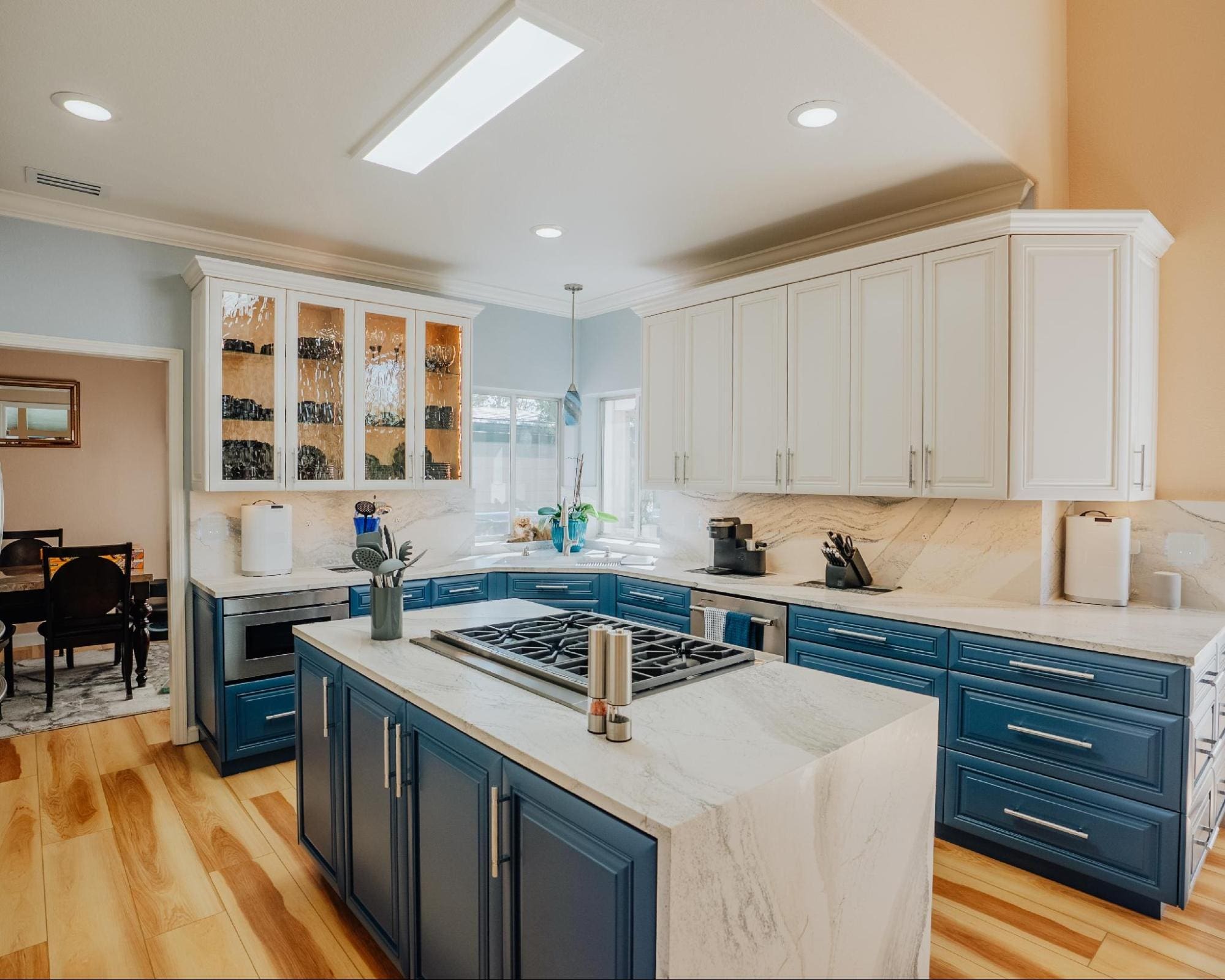
“What does kitchen cabinet refacing cost, and is it actually worth it compared to just replacing everything?” is one of the most common cost-saving questions I get in a kitchen consultation. The honest answer is that it depends on the condition of your existing cabinet boxes and how much you want to change about the layout. After 25 years remodeling kitchens across the Sacramento area, here’s how I walk clients through that decision.
What Refacing Actually Involves
Cabinet refacing keeps your existing cabinet boxes in place and replaces the doors, drawer fronts, and hardware, along with new veneer on any exposed box surfaces. It’s a legitimate way to change the entire look of a kitchen, new door style, new color, new hardware, without touching the layout. The tradeoff is that refacing only works if the boxes themselves are in good structural shape. If there’s water damage, warping, or the layout needs to change, refacing isn’t the right fit.
What Replacement Actually Involves
Full replacement means new cabinet boxes from the studs out, which opens up the layout entirely, you can add an island, change the footprint, adjust cabinet heights, or reconfigure storage completely. It’s more disruptive and costs more, but it’s the only option if you’re changing the kitchen’s layout or if the existing boxes aren’t sound enough to reface.
What Kitchen Cabinet Refacing Actually Costs
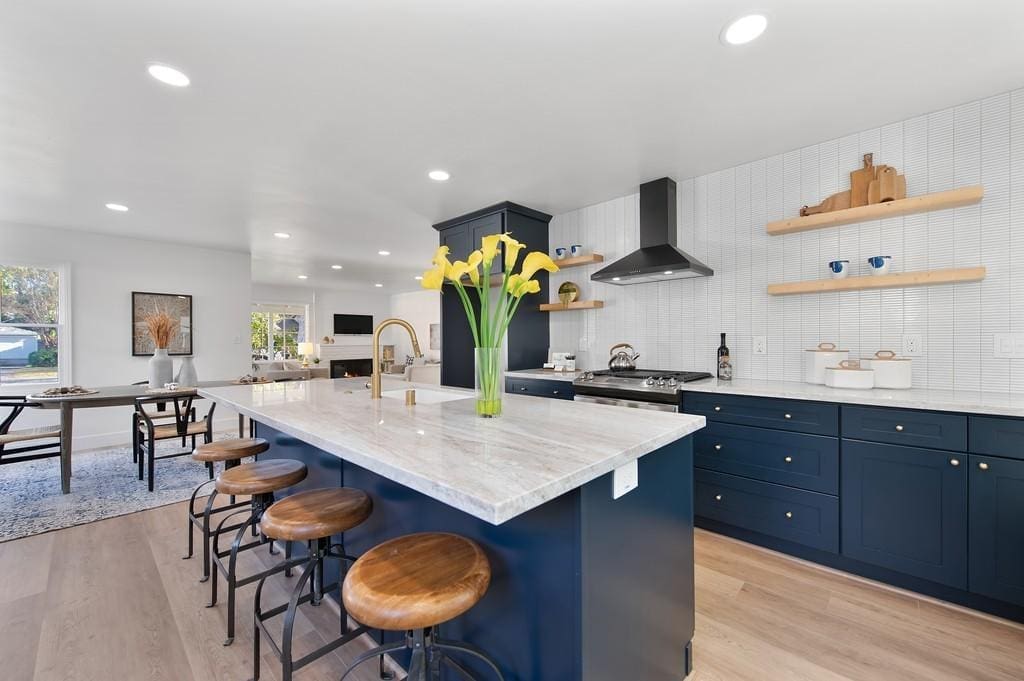
Refacing is less expensive than replacement primarily because it skips the demolition, new box construction, and the electrical/plumbing rework that often comes with a full layout change. Refacing cost is driven mainly by two things: the door and drawer front material you choose, and how much of the existing box surface needs new veneer. A simple laminate refacing job costs far less than a solid-wood refacing job with premium hardware — the range is wide enough that “how much does refacing cost” rarely has one single answer without seeing the kitchen.
But refacing isn’t always dramatically cheaper than replacement. High-end door styles and finishes on a refacing project can approach the cost of a modest full replacement. The bigger cost driver is usually the layout: if you’re not changing the footprint, refacing saves real money. If you are changing the footprint, you’re paying for a replacement either way, refacing or not.
When Refacing Makes Sense
- Cabinet boxes are structurally sound, with no water damage or warping
- You’re happy with the current layout and don’t need to move plumbing or appliances
- You want a different look, new color, new door style, new hardware, without a full renovation
- Budget is the primary constraint and layout changes aren’t essential
When Replacement Makes Sense
- The layout needs to change, adding an island, moving an appliance, or reconfiguring storage
- Cabinet boxes show water damage, warping, or structural wear
- You want full control over interior storage features (soft-close drawers, pull-out organizers, deeper boxes)
- You’re doing a broader kitchen remodel where cabinets are just one part of the scope
Both approaches can produce a beautiful result, the right call comes down to your cabinet boxes’ condition and whether the layout itself needs to change. If you’re not sure which situation you’re in, that’s exactly what a walkthrough is for. My team at America’s Advantage Remodeling can take a look at your existing cabinets and give you a straight answer before you commit to either approach.
Frequently Asked Questions
Q: How much does kitchen cabinet refacing cost?
A: Cost varies mainly based on the door and drawer front material you choose and how much veneer work the existing boxes need. Simple laminate refacing is on the lower end, while solid-wood doors with premium hardware can approach the cost of a modest full replacement.
Q: Is cabinet refacing worth it?
A: Cabinet refacing is worth it when your existing cabinet boxes are structurally sound and you’re happy with the current layout. It gives you a new look at a lower cost than full replacement, but isn’t the right choice if the boxes are damaged or the layout needs to change.
Q: How much does it cost to reface kitchen cabinets?
A: Refacing costs less than full replacement in most cases, since it avoids demolition and new box construction, but the exact cost depends heavily on the door style and finish you choose, high-end refacing can approach the cost of a modest full replacement.
Q: What’s the difference between cabinet refacing and replacement?
A: Refacing keeps the existing cabinet boxes and replaces only the doors, drawer fronts, and hardware. Replacement removes the boxes entirely and installs new ones, which allows for layout changes that refacing can’t accommodate.
Q: Can you reface cabinets if the layout is changing?
A: No. Refacing only works with the existing cabinet box layout. If you’re adding an island, moving an appliance, or reconfiguring storage, you need full replacement.
CONTACT US
Our Services
Areas We Serve
Certificate