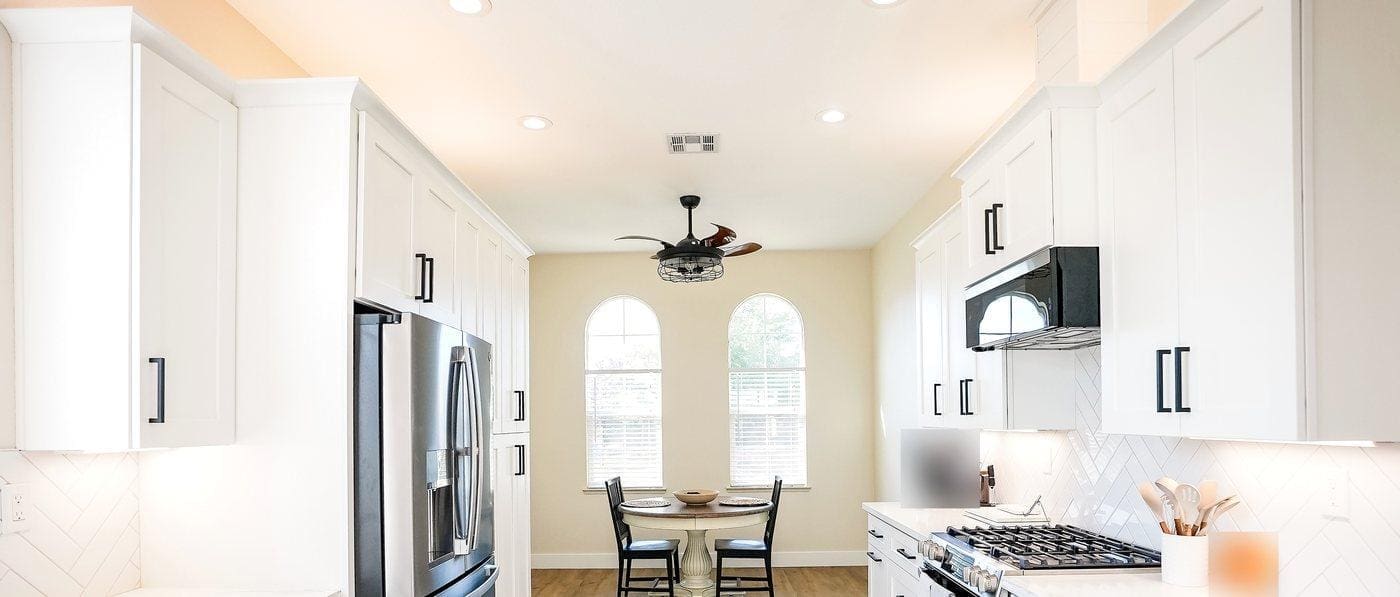
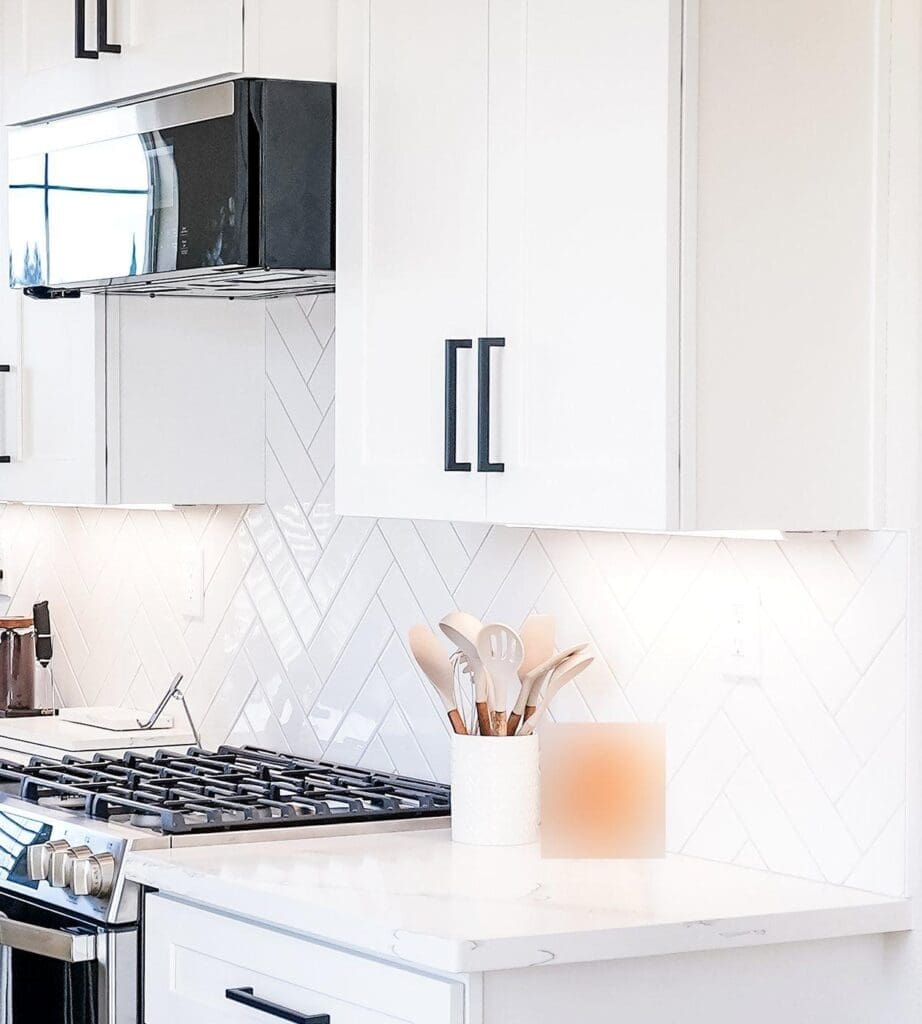
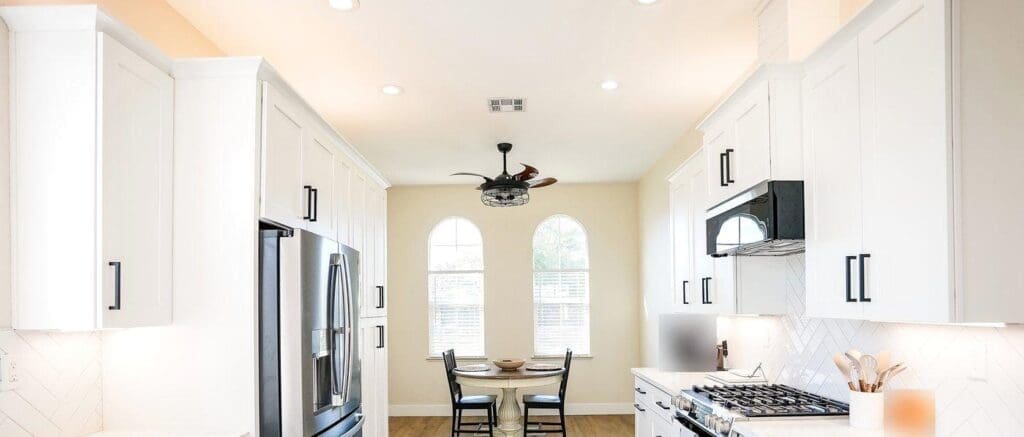
Most kitchens have good light overhead and weak light where the work happens. Under a wall cabinet, your own shadow falls right on the counter. In this Elk Grove kitchen remodel, a slim light under the wall cabinets beside the range fixes that, and it washes the herringbone backsplash with an even glow. Here is a closer look at under-cabinet lighting, and what to plan before the cabinets go up.
Light Where the Work Happens
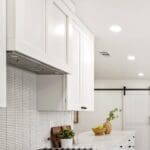
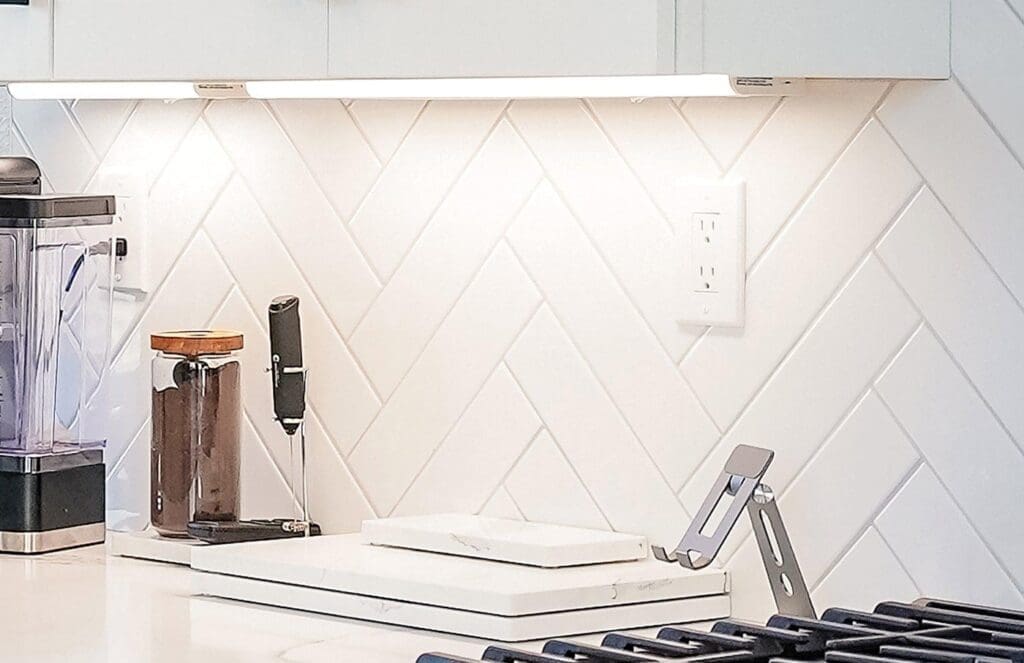
The light runs along the front edge of the cabinet’s underside, so it shines onto the counter and the tile below. Putting the source close to the work surface keeps your body from blocking it. A ceiling light cannot do this, because you stand between it and the counter. That is the main job of kitchen task lighting, and it is why under-cabinet lights are one of the most useful details in a kitchen. Slim LED under cabinet lighting is a common choice because it can sit behind the front edge of the cabinet and stay out of sight. Light placed this way also helps with quick jobs, like reading a recipe or wiping the counter at night.
A Glow on the Tile
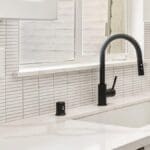
The light also grazes the backsplash, so the herringbone pattern shows clearly, with each tile edge catching the light. The glossy tile reflects it back, which makes the wall behind the counter feel brighter and the corner less boxed in. Our kitchen backsplash ideas guide covers other tile patterns that respond well to this kind of light.
Layers of Light in the Galley
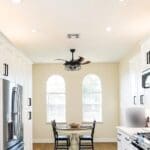
This kitchen layers its light. Recessed ceiling lights give general light, the arched windows at the far end bring in daylight, and the under-cabinet lights fill the work zone along the counters on both sides. Each does a different job, and together they keep the room bright at any hour. Our recessed lighting layout guide explains how to plan the ceiling half of that pair.
Planning Under Cabinet Lighting
Decide on the lights before the cabinets and backsplash go in, since the wiring has to be hidden and the power source chosen early. Ask your electrician whether plug-in under-cabinet lighting or hardwired under-cabinet lighting suits your kitchen, and where the switch should go, so you can turn the light on without reaching under the cabinet. Match the color temperature to your ceiling lights, and consider a dimmer, so the light can be bright for chopping and soft in the evening. Place the light toward the front of the cabinet to cut glare on glossy counters and tile.
Planning a Kitchen Remodel of Your Own?
At America’s Advantage Remodeling, we have been handling kitchen remodeling projects across the greater Sacramento area since 2001, including Elk Grove and nearby communities. Reach out for a free in-home consultation, and we will help you plan the lighting along with the cabinets, tile, and counters.
Frequently Asked Questions
Q: What is under cabinet lighting?
A: Under cabinet lighting is task lighting mounted on the underside of wall cabinets, shining down on the counter and the backsplash. It fills the shadow your body casts when you work under a ceiling light, which makes chopping, reading recipes, and cleaning easier.
Q: Where should under cabinet lights be placed?
A: Toward the front edge of the cabinet’s underside, so the light falls on the counter instead of behind your work. Placing the light near the front also helps keep your body from blocking it and reduces glare on glossy counters and tile.
Q: What color temperature is best for under cabinet lighting?
A: Warm white, roughly 2700K to 3000K, is a common choice because it matches most kitchen ceiling lights and feels comfortable. Cooler white around 3500K to 4000K feels crisper for prep work. Whichever you choose, keep the color consistent across the kitchen.
Q: Should under-cabinet lighting be hardwired or plug-in?
A: Both work. Plug-in lights are quicker to add and easy to replace, while hardwired lights hide the wiring and can be controlled from a wall switch. Which one fits depends on your outlets, your cabinets, and your budget, so ask your electrician.
Q: Can I add under cabinet lighting to existing cabinets?
A: Often, yes. Slim LED lights can usually be fitted under existing wall cabinets. Hardwiring them may mean opening part of the wall, and a licensed electrician should handle any new wiring.
Q: Should under cabinet lights be dimmable?
A: In most kitchens, yes. A dimmer lets you run the lights bright for cooking and low for the evening. Choose lights and a dimmer that are rated to work together, so the lights do not flicker or buzz.
CONTACT US
Our Services
Areas We Serve
Certificate