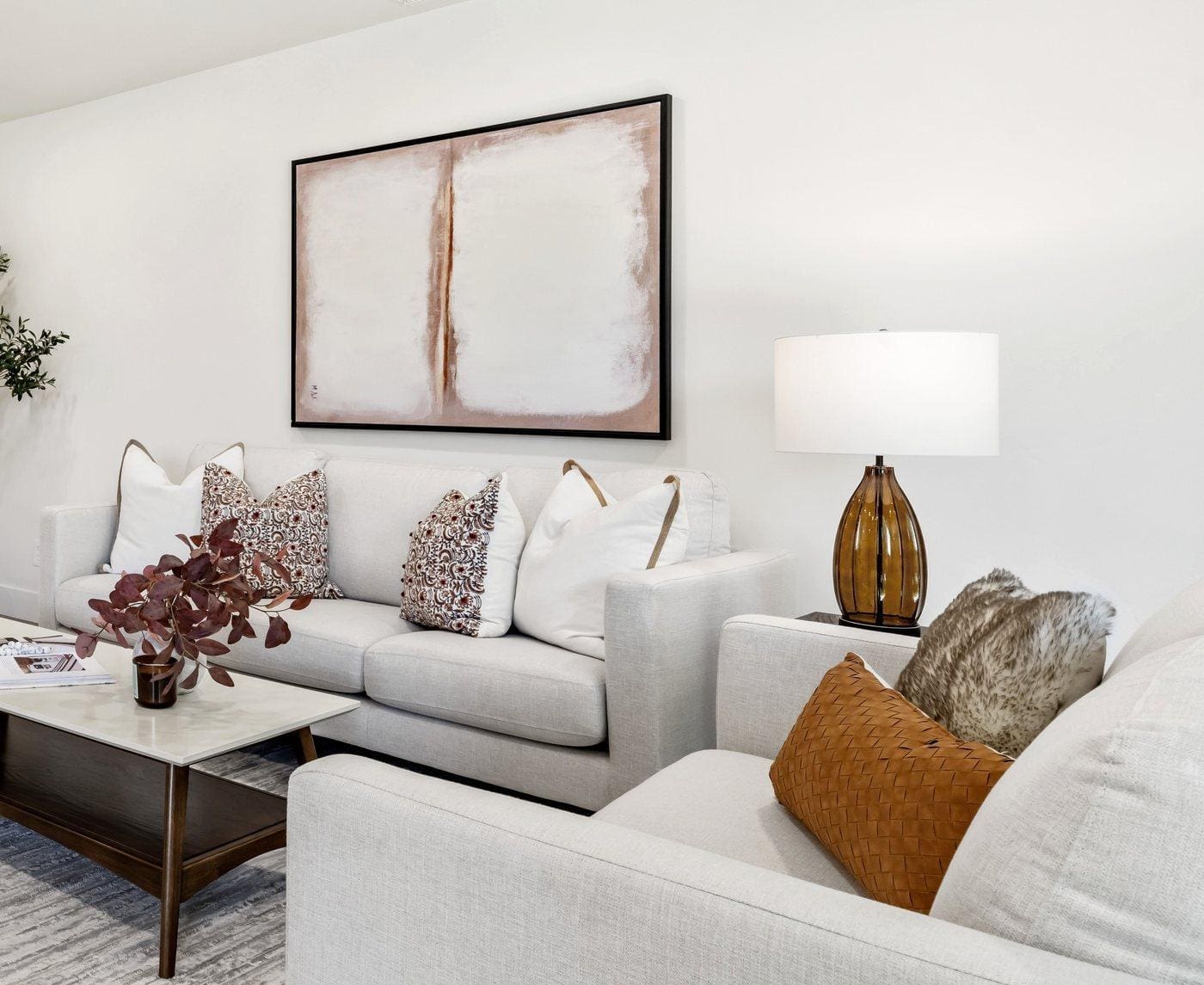
Lighting is the part of a remodel that people notice most and plan least for. In this Franklin-area home remodel, the family room has no hanging fixtures. Instead, slim round recessed lights are set into a smooth white ceiling and light the room evenly. Here is a closer look at how recessed lights work in a living space, and what to plan before you add them.
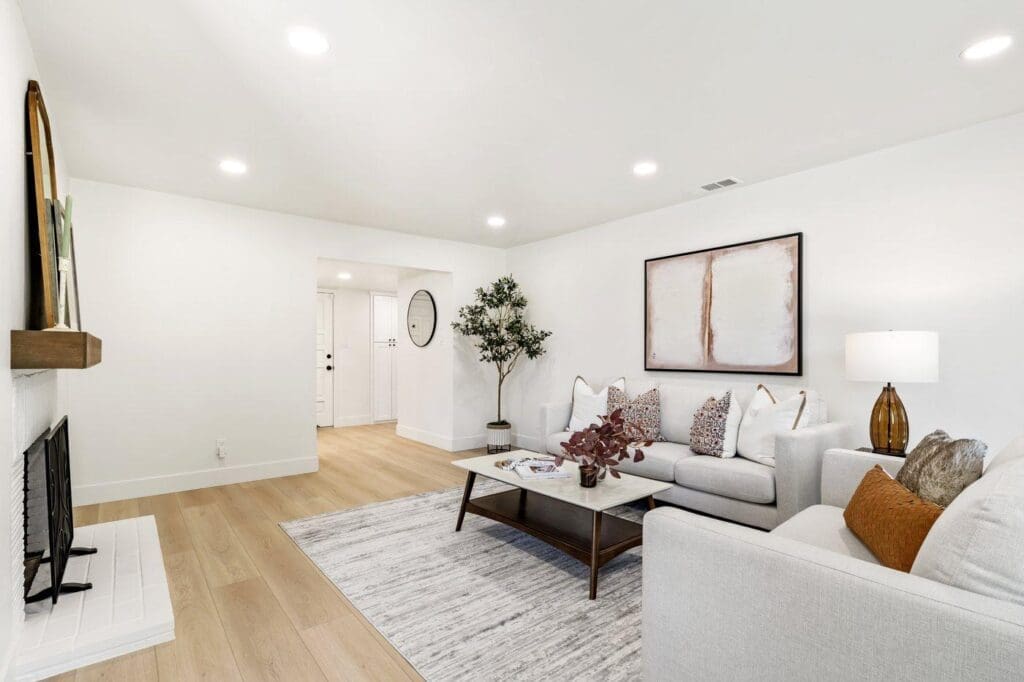
Recessed Lighting Spacing That Lights the Whole Room
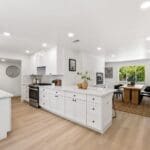
Five recessed lights are spread across the main room, with another in the hallway beyond. They sit in a loose grid instead of a single line, so the seating area, the fireplace wall, and the walkway all get light, and no corner depends on one lamp. Good recessed lighting spacing is the detail that keeps a room from looking spotty, with bright patches and dark gaps.
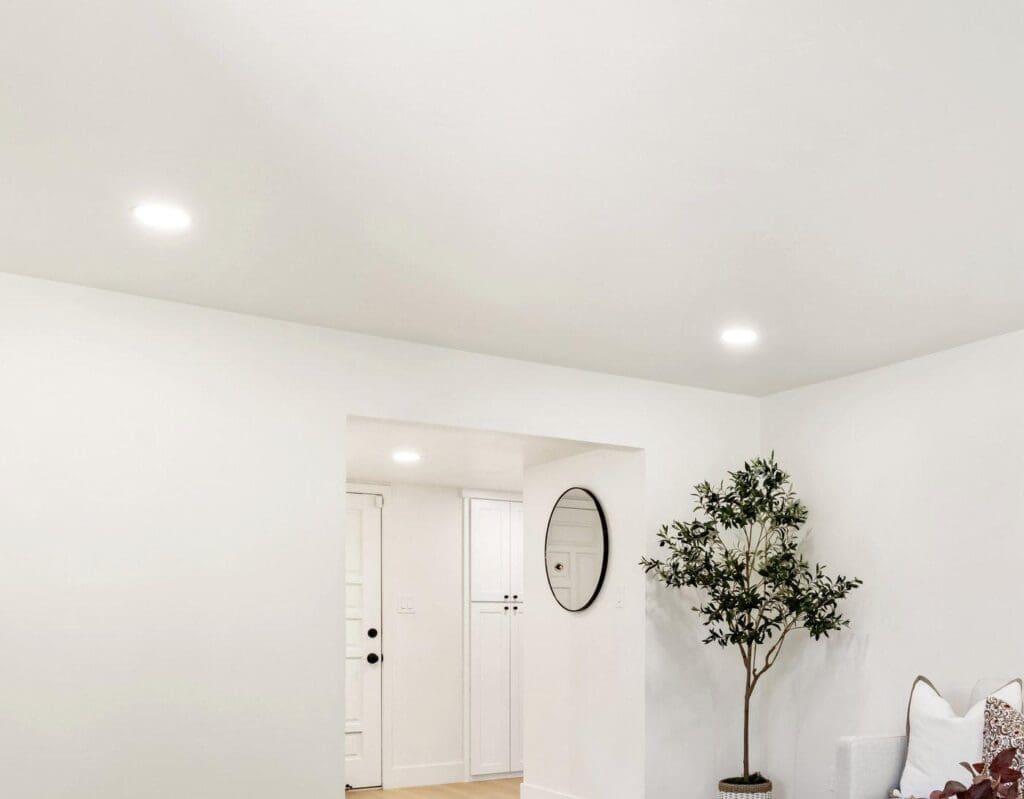
A Clean Ceiling
Because the lights sit flush in the ceiling, nothing hangs into the room. The white ceiling, walls, and trim stay light and uncluttered, and the wood-look floor adds warmth below. Recessed lights also keep the ceiling open, since there is no fixture to fill the space overhead. That also makes the room easy to rearrange, because moving a sofa or rug never has to line up with a hanging fixture.
A Note on the Bulbs
The bulbs matter as much as the layout, and recessed lighting color temperature is the first thing to settle. Warm white, roughly 2700K to 3000K, is a common choice for living rooms, while cooler white feels crisper and suits work areas. Keep every light in the room at the same color temperature so they match, and choose dimmable recessed lights, meaning dimmable LED bulbs or trims. Look for a dimmer that is rated to work with them.
Light in Layers
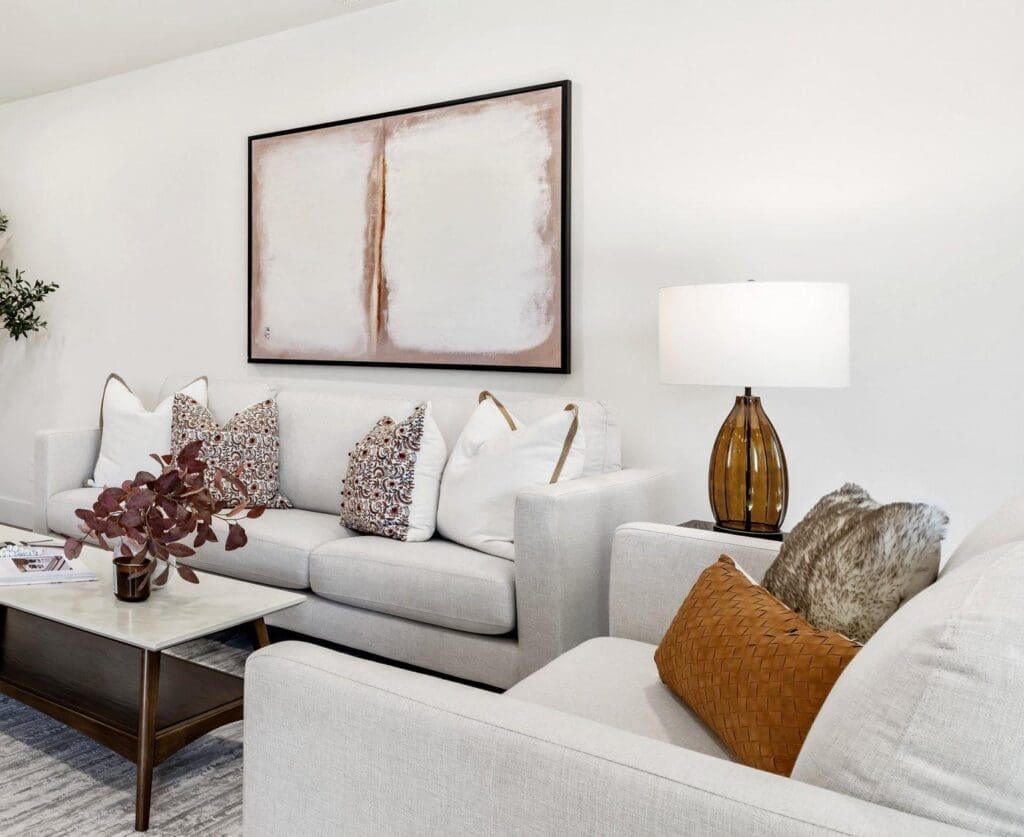
Recessed lights supply general light, but they are rarely enough alone. Here, a table lamp beside the sofa adds a softer pool of light at seating height, and the large framed artwork gives the wall a focal point. Use recessed lights for the room, lamps for comfort, and a dimmer to move between the two.
Planning Recessed Lights for Your Home
A common rule of thumb for recessed lighting spacing is to place lights about half the ceiling height apart, then adjust for the room, the furniture, and anything above the ceiling, such as ducts. Ask your electrician about housings made for insulated ceilings, where the wiring will run, and which switches control which lights. AAR’s guide to recessed lighting layout covers the kitchen in detail, and our open concept kitchen living room guide shows how lighting zones fit into a larger plan.
Planning a Home Remodel of Your Own?
At America’s Advantage Remodeling, we have been handling home remodeling projects across the greater Sacramento area since 2001, including Elk Grove and nearby communities. Reach out for a free in-home consultation, and we will help you plan the lighting along with the rest of your home.
Frequently Asked Questions
Q: How far apart should recessed lights be in a living room?
A: A common rule of thumb is to space recessed lights apart by about half the ceiling height, so an 8-foot ceiling calls for roughly 4 feet between lights. Adjust for the room’s shape, furniture and anything hidden above the ceiling, and confirm the plan with your electrician.
Q: How many recessed lights do I need in a living room?
A: There is no single number, because room size, ceiling height and the brightness you want all matter. A lighting plan that spaces the lights evenly across the room is a better starting point than a fixed count, and an electrician or designer can fine-tune it.
Q: What color temperature is best for living room recessed lights?
A: Warm white, roughly 2700K to 3000K, is a common choice for living rooms because it feels cozy and flatters wood and fabric. Cooler white around 3500K to 4000K feels crisper. Whichever you choose, use the same color temperature for every light in the room so they match.
Q: Should recessed lights be dimmable?
A: Yes, in most living spaces. A dimmer lets you brighten the room for cleaning or reading and lower it for the evening. Choose dimmable LED bulbs or trims and a dimmer rated to work with them, so the lights do not flicker or buzz.
Q: Are recessed lights enough to light a living room?
A: Usually not on their own. Recessed lights give even general light, while table lamps, floor lamps, or wall lights add warmth at seating height. Using both gives the room layers you can adjust through the day.
Q: Can recessed lights be added to an existing ceiling?
A: Often, yes. Remodel-style housings can be installed through openings cut in the existing ceiling, depending on what is above it, such as joists, ducts, and insulation. A licensed electrician should check the ceiling and handle the wiring.
CONTACT US
Our Services
Areas We Serve
Certificate