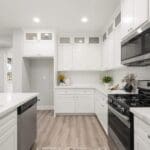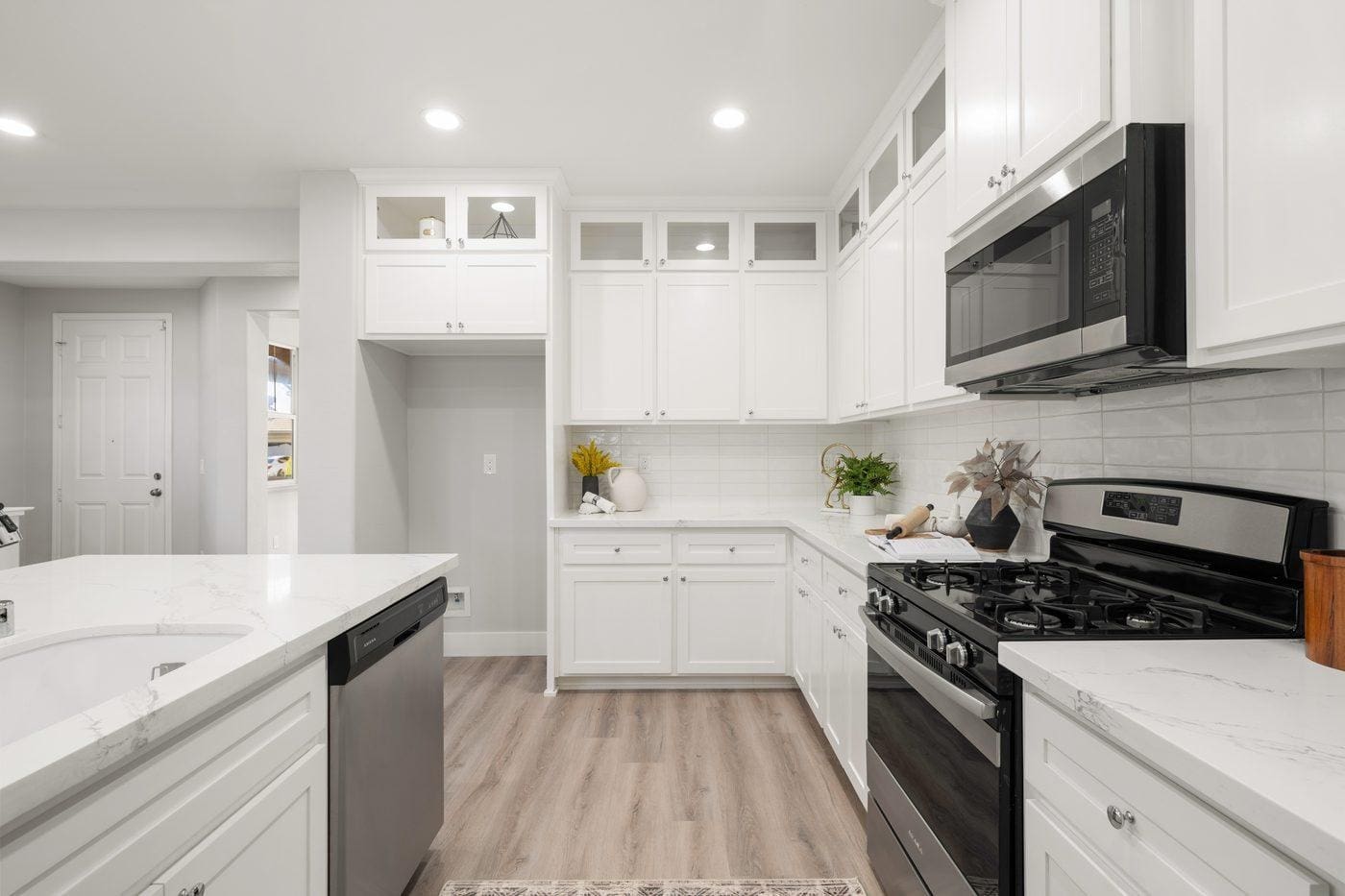
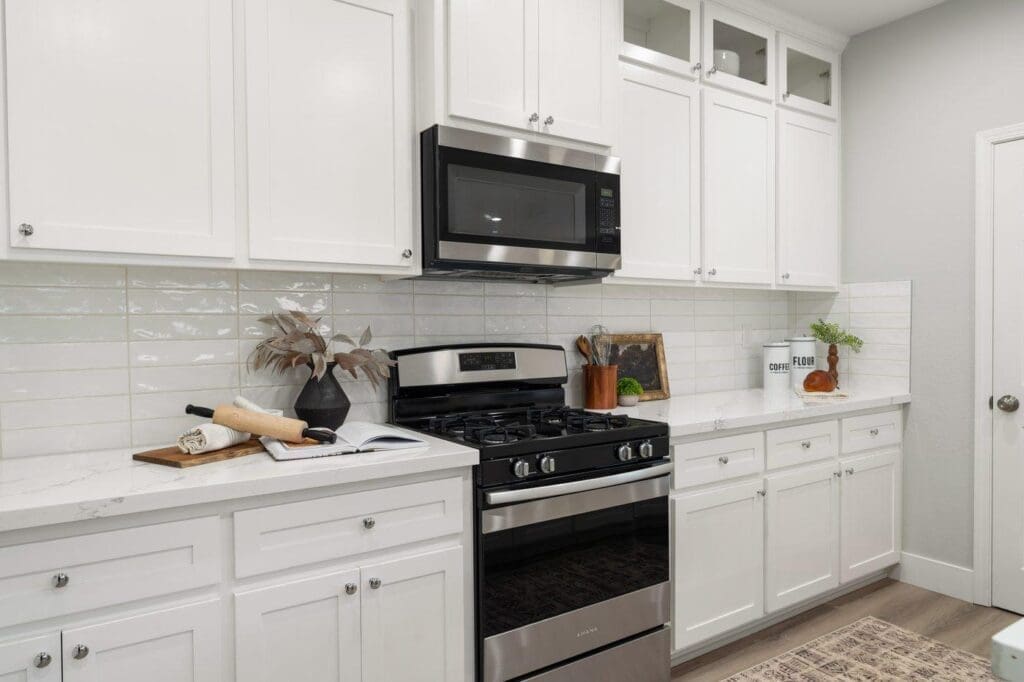
Verdict first: in a kitchen where counter space matters, an over-the-range microwave is usually the smartest place to put it, as long as it is planned into the cabinet layout from the start rather than squeezed in at the end. That is exactly how it works in this Elk Grove kitchen remodel, where a stainless microwave sits centered above the range, flanked by white shaker cabinets, and the counters on either side of the stove stay completely clear. Here is a closer look at why that one appliance decision shapes the whole cooking wall.
One Appliance, Two Jobs
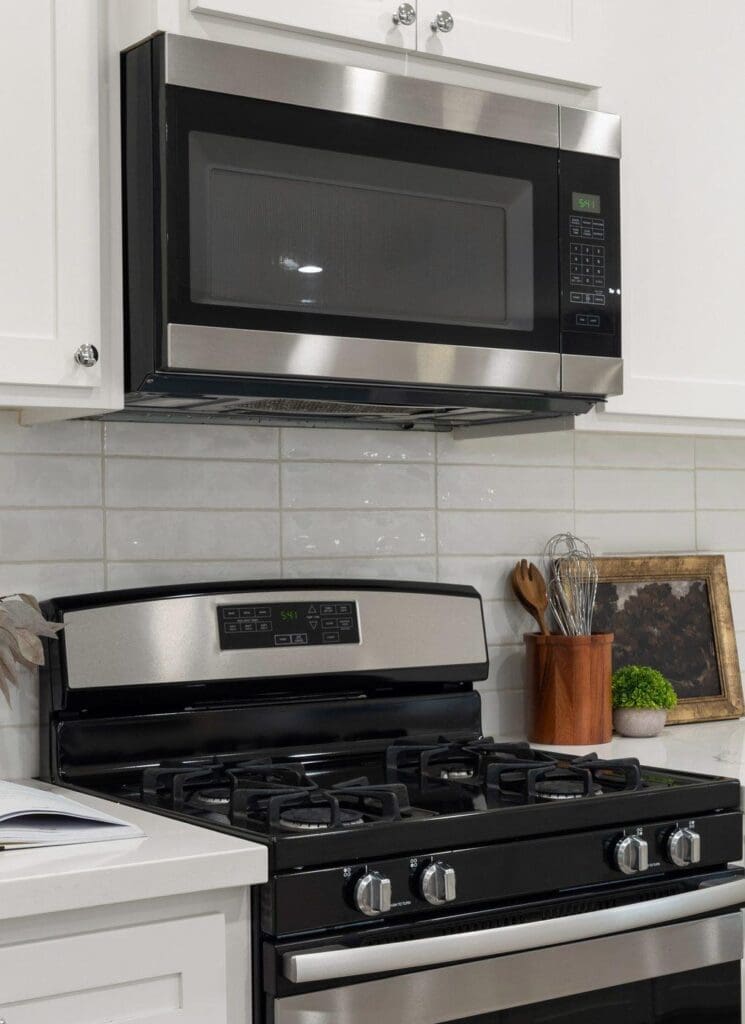
An over-the-range microwave does double duty. Up top, it is a full microwave oven; underneath it carries a built-in fan and light that handle basic ventilation for the burners below. That pairing is the whole appeal: instead of a countertop microwave eating into the work surface and a separate hood hanging over the range, one mounted unit covers both, and the cooking wall is compact. In this kitchen it means the quartz counter to the left and right of the range is open landing space for hot pans and prep, rather than being claimed by an appliance.
A Cooking Wall Planned Around It
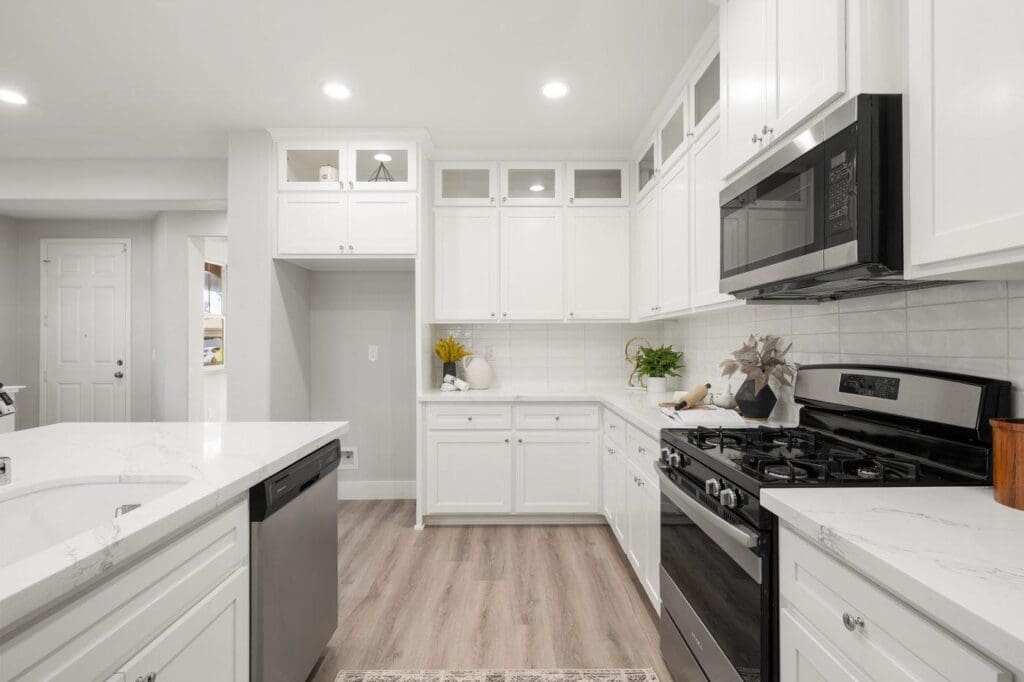
The reason this reads as a finished wall rather than an add-on is the way the cabinetry was laid out around the microwave. It sits in line with the white shaker upper cabinets, with cabinet doors on either side and storage directly above it, so the appliance looks built into the run instead of bolted onto it. The glossy elongated-tile backsplash carries up behind the range to the underside of the microwave, and the freestanding gas range below sits centered in the opening. When the microwave’s width, mounting height, and the cabinets around it are decided together, the result is a clean, symmetrical cooking zone.
What to Decide Before the Cabinets Go In
An over-the-range microwave looks simple, but it touches three things that are much easier to settle during a remodel than afterward. First is height: every model specifies a minimum clearance above the cooktop, so the cabinet layout should be built around the exact unit chosen. Second is power: the microwave needs a properly rated outlet, typically tucked inside the cabinet above it, and the manufacturer may call for a dedicated circuit. Third is venting: depending on the model, the fan can recirculate air back into the room or vent outdoors through ducting, and a duct path is far easier to run while the walls are open.
Over-the-Range Microwave vs. a Range Hood
The honest trade-off is airflow. A microwave’s built-in fan typically moves less air than a dedicated range hood, so it fits everyday cooking best. A household that sears, fries, or cooks on a high-output range every night may be happier with a real hood and the microwave moved elsewhere. One common alternative is a wall oven microwave combo tower, which gets the microwave off the cooking wall entirely and which we cover in its own post. For many families, though, the over-the-range setup is the right balance of function and space, which is why it earned its place on this cooking wall.
Who This Layout Fits Best
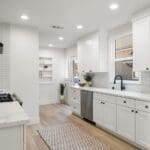
The over-the-range setup works best in kitchens where counter space is at a premium and cooking leans toward the everyday: weeknight dinners, reheating, boiling a pot of pasta. It is especially practical in a kitchen like this one, where the cooking wall is a single run of cabinets, and the island in the foreground of the wider shot is the main work and gathering surface. Keeping the microwave off the island and the counters leaves those surfaces for people instead of appliances. The one thing to check is reach: because the microwave sits above the range, its door and controls are higher than on a counter-height unit, so it is worth confirming that everyone in the household can use it comfortably.
Planning a Kitchen of Your Own?
Choices like where the microwave lives look small on paper, but they decide how a kitchen works every single day. At America’s Advantage Remodeling, we have been handling kitchen remodeling projects across the greater Sacramento area since 2001, and we are happy to walk through your cooking wall with you and work out which layout fits the way you cook. Reach out for a free in-home consultation.
Frequently Asked Questions
Q: What is an over-the-range microwave?
A: An over-the-range microwave is a microwave oven mounted above the cooking surface that also includes a built-in vent fan and light underneath, so a single appliance handles reheating and basic range ventilation. It takes the place of a countertop microwave and, in many kitchens, a separate range hood.
Q: Does an over-the-range microwave replace a range hood?
A: Partly, it provides ventilation, but its fan typically moves less air than a dedicated range hood, so it is best suited to everyday cooking rather than heavy searing or frying. If a household cooks that way often, or the kitchen has a high-output gas range, a dedicated hood is usually the stronger choice and the microwave can go somewhere else, such as a wall-oven tower or a drawer.
Q: Does an over-the-range microwave have to vent outside?
A: No, most models can be set up either to vent outdoors through ducting or to recirculate filtered air back into the kitchen. Venting outside is generally more effective at removing steam, smoke, and odors, but it requires a duct path through the wall or roof, which is much easier to plan during a remodel than to add afterward.
Q: How high should an over-the-range microwave be mounted?
A: The correct height is set by the manufacturer’s installation instructions, which specify the minimum clearance between the cooktop and the bottom of the microwave and usually include a mounting template. The goal is to keep the unit far enough above the burners to be safe while still keeping the controls and the door within comfortable reach, so cabinet heights are best planned around the exact model before the cabinets are ordered.
Q: Does an over-the-range microwave need its own electrical outlet?
A: Yes, it needs a properly rated outlet, which is typically placed inside the cabinet directly above the microwave, and manufacturers commonly call for a dedicated circuit. A licensed electrician should confirm the requirement for the specific model and local code, which is easiest to handle while the walls are open during a remodel.
Q: Is an over-the-range microwave a good choice for a smaller kitchen?
A: Yes, it is one of the most space-efficient layouts, because it frees up countertop that a freestanding microwave would otherwise occupy and keeps the cooking wall compact. The main trade-off is that a microwave mounted above the range sits higher than a counter-height one, so it is worth confirming that everyone who uses the kitchen can comfortably reach it.
CONTACT US
Our Services
Areas We Serve
Certificate