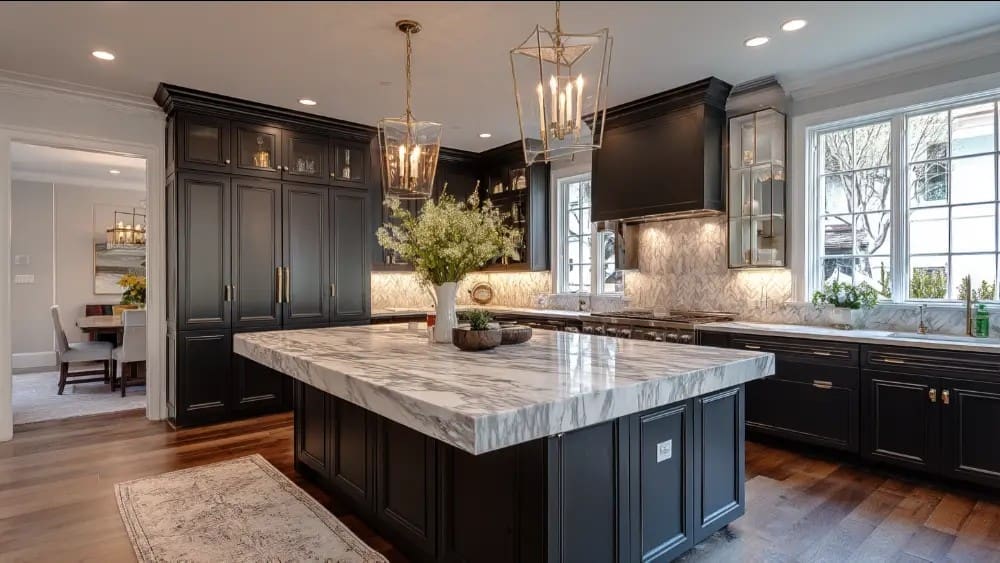
One of the most common decisions I help Sacramento homeowners make during a kitchen remodel is whether to build an island or a peninsula. Both add counter space, storage, and seating — but they work very differently, and the right choice depends almost entirely on your kitchen’s size and how you actually live in it. I am Eugene Chernioglo, founder of America’s Advantage Remodeling, and over 25 years and thousands of kitchens across Roseville, Folsom, and the greater Sacramento area, I have built plenty of both. Here is how to decide which one fits your space.
The basic difference
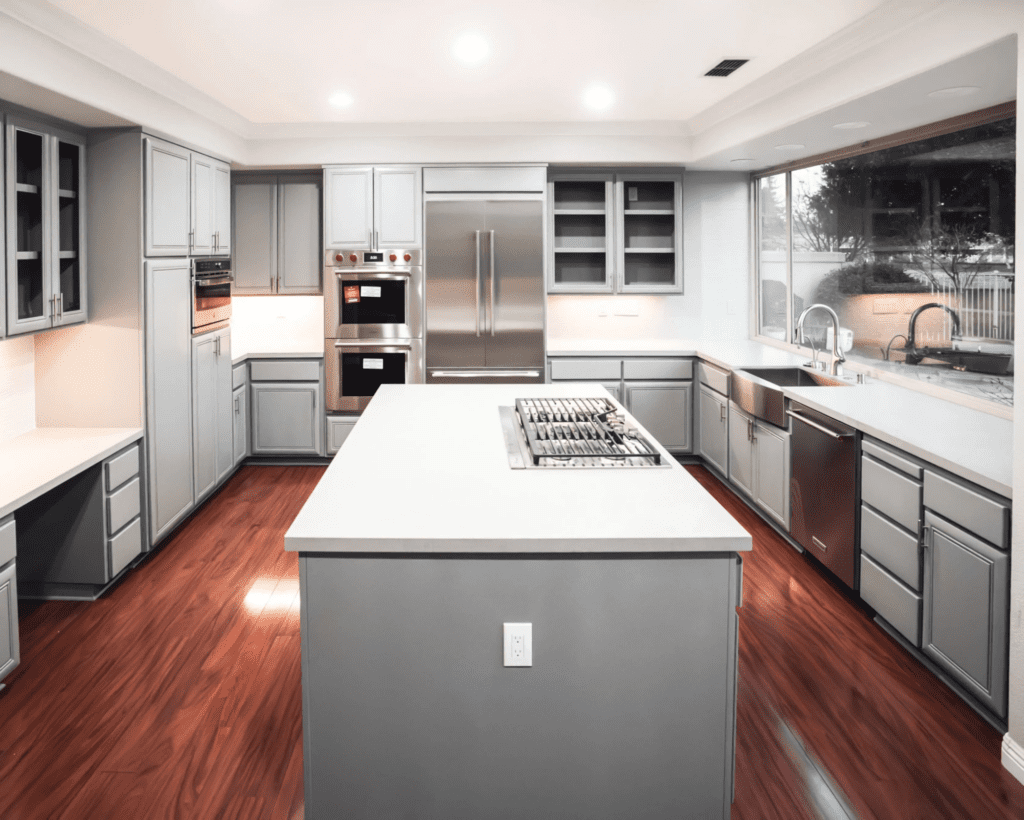
A kitchen island is a freestanding cabinet-and-countertop unit that sits in the middle of the kitchen with open space on all four sides. A kitchen peninsula is essentially an island with one end attached to a wall or to your existing cabinets, creating an L-shaped or U-shaped layout. Think of an island as a standalone table and a peninsula as an extension of your countertop. That one connection point — attached versus freestanding — drives every practical difference between them.
Kitchen island: pros and cons
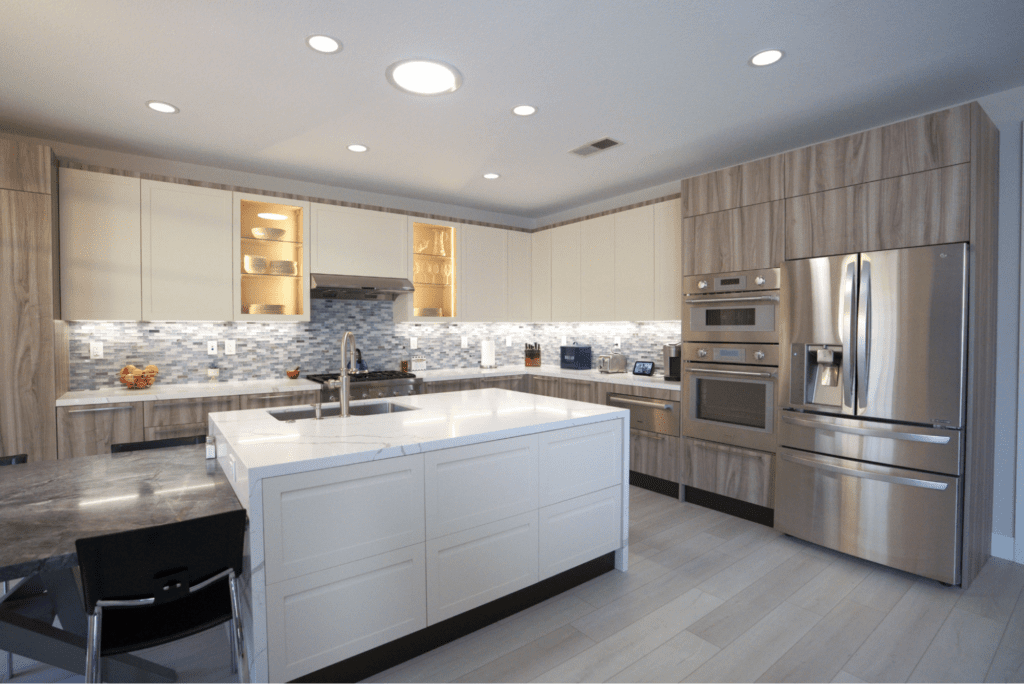
Islands are the most requested feature in kitchen remodels, and for good reason. With access from all sides, an island becomes a natural gathering spot — the place where kids do homework while you cook and where guests stand and talk during a party. It also offers the most flexibility: you can add a prep sink, a cooktop, or seating on more than one side.
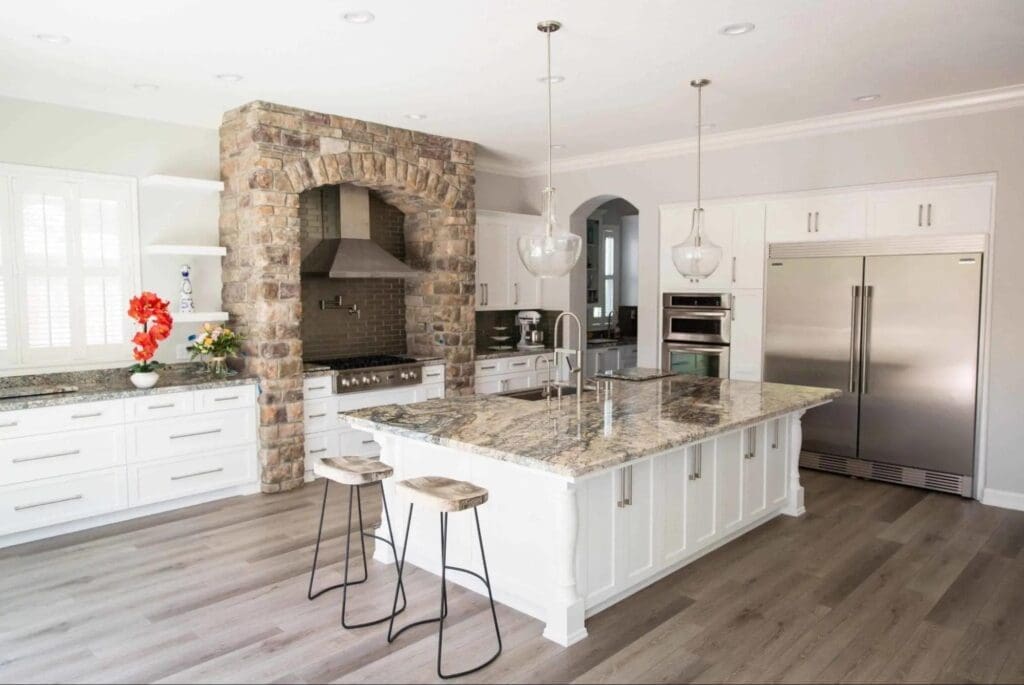
The catch is space. An island needs roughly 36 to 42 inches of clearance on every side so people can walk around it and open appliance doors. In a kitchen that is too narrow, an island actually reduces function — it forces you to squeeze past it during meal prep. Because every side is visible and finished, islands also tend to cost more than peninsulas, and adding a sink or cooktop means running new plumbing or electrical to the center of the room.
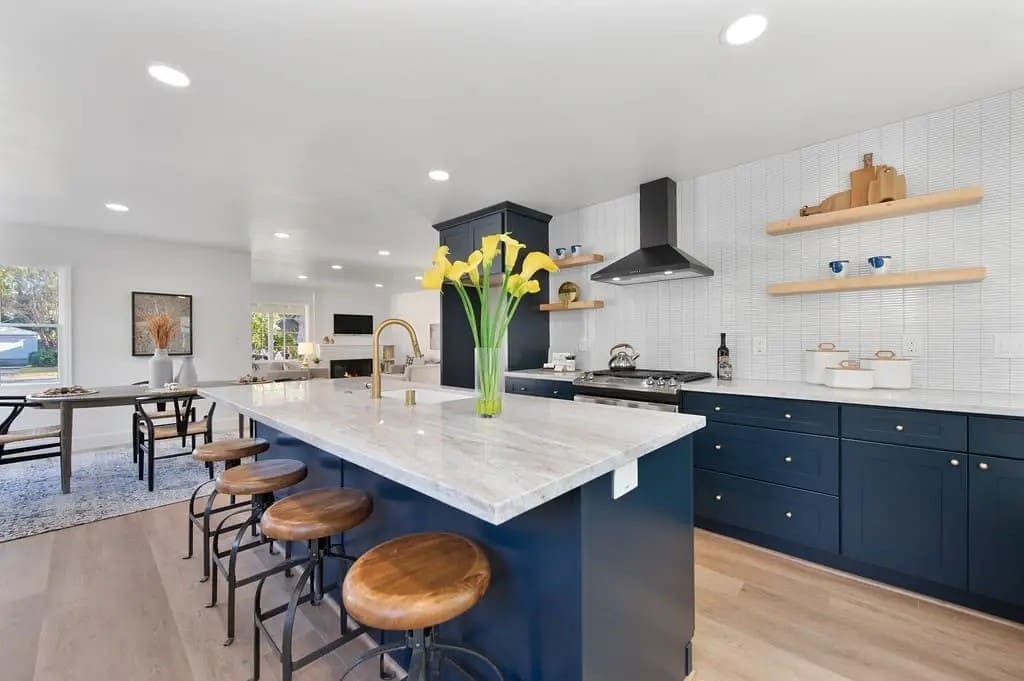
An island works best when:
- You have a larger, open kitchen with at least 36 inches of clearance on all sides.
- You entertain often and want a social centerpiece.
- You want seating and prep space accessible from multiple sides.
- Your floor plan is open-concept and an island won’t disrupt the flow.
Kitchen peninsula: pros and cons
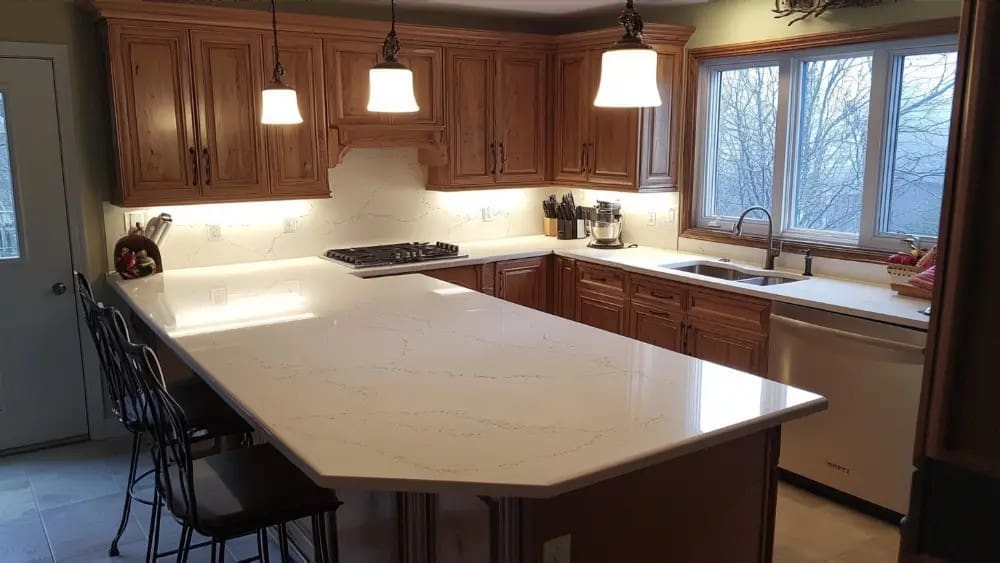
A peninsula delivers many of the same benefits — extra counter, storage, and a breakfast bar — while taking up less floor space, because it connects to what is already there. That makes it the smarter choice in smaller or galley-style kitchens where an island simply will not fit. A peninsula is also typically more affordable to build, since one side attaches to existing cabinetry and often shares nearby plumbing and electrical. As a bonus, it creates a natural divider between the kitchen and an adjacent dining or living area while keeping the space open.
The trade-offs are real, though. A peninsula has a corner where two runs of cabinet meet, and that corner can become hard-to-reach “dead” storage. Because it is only open on three sides, a peninsula can also create a pinch point in traffic flow — if more than one person is in the kitchen, people may have to wait to get past. And in resale terms, many of today’s buyers simply prefer the look of an island.
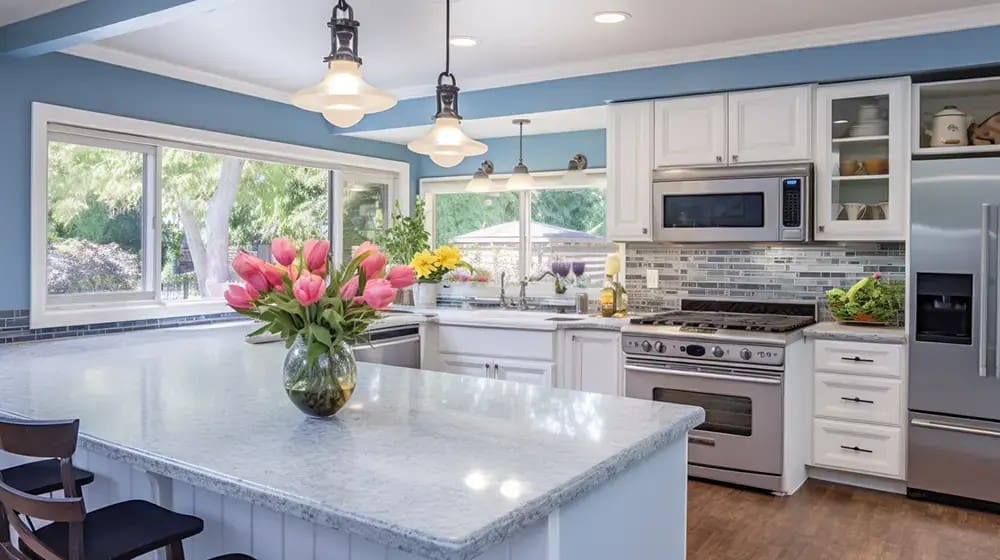
A peninsula works best when:
- Your kitchen is smaller, narrow, or galley-style and lacks room for an island.
- You want to add seating and counter space without a major plumbing relocation.
- You want to define the boundary between the kitchen and a living or dining area.
- Budget is a priority and you want more function per dollar.
How to choose: the questions that actually matter

When I sit down with a homeowner, the decision usually comes down to a few honest questions about the space and the household:
- How much room do you really have? Measure for 36 to 42 inches of clearance on all sides. If you cannot get that around an island, a peninsula is the answer.
- How do you move while cooking? If yours is a one-cook kitchen, a peninsula’s tighter flow is fine. If two people cook together, an island’s all-around access matters.
- What’s your budget? Islands cost more because every side is finished and utilities often have to be run to the center of the room.
- Where are the utilities now? Keeping a sink or cooktop near existing plumbing and gas lines saves real money — a factor that often favors a peninsula.
- How do you entertain? If you like guests gathered around you while you cook, an island is the people magnet.
The Sacramento reality

A lot of the homes we remodel around Sacramento, Land Park, and East Sac were built in the 1970s through the 1990s, often with closed-off, smaller kitchens. In many of those layouts a peninsula is the practical winner — it adds the seating and counter space the kitchen was missing without demanding square footage the room does not have. When we open up a wall for an open-concept remodel, though, an island frequently becomes possible for the first time. That is exactly the kind of thing we work through with you during the design stage, using a 3D layout so you can see both options in your actual kitchen before any demolition starts.

Trying to decide between an island and a peninsula for your kitchen remodel? We will measure your space, talk through how you use your kitchen, and show you both options in a 3D design. Reach out for a free in-home consultation.
See your kitchen with an island or a peninsula in a free 3D design. Call (916) 507-0469 or book your in-home consultation today.
Frequently Asked Questions
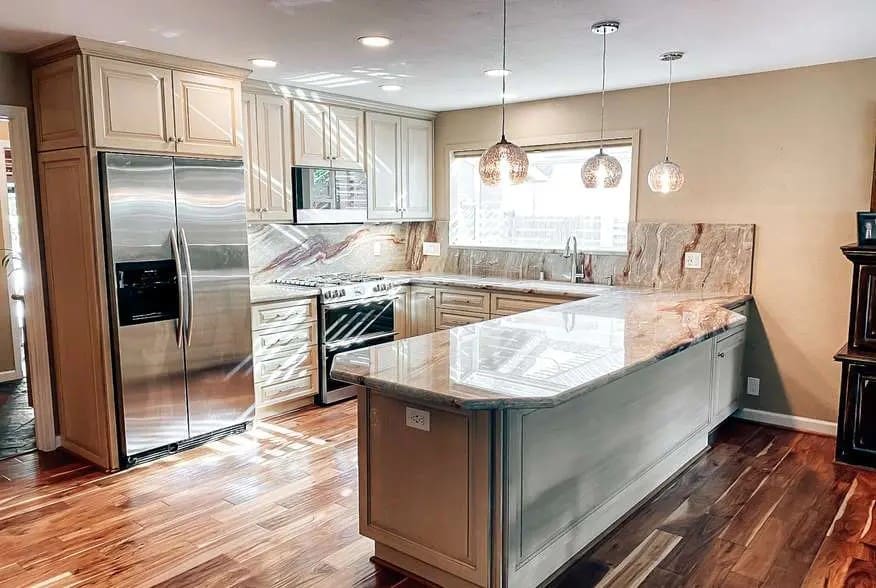
Q: What is the difference between a kitchen island and a peninsula?
A: A kitchen island is a freestanding cabinet-and-countertop unit with open space on all four sides, while a peninsula has one end attached to a wall or existing cabinets, forming an L- or U-shape. The key difference is the connection point: an island stands alone, a peninsula is an extension of your cabinetry. That single difference affects cost, traffic flow, and how much space each one needs.
Q: Is a peninsula or an island better for a small kitchen?
A: A peninsula is usually better for a small or narrow kitchen because it adds counter space and seating without needing clearance on all four sides. An island requires roughly 36 to 42 inches of walkway around its entire perimeter, which most small kitchens can’t provide. In a galley or compact layout, a peninsula delivers the same benefits while fitting the available space.
Q: Is a kitchen island more expensive than a peninsula?
A: Yes, an island is typically more expensive than a peninsula. Every side of an island is finished cabinetry, and adding a sink or cooktop often requires running new plumbing and electrical to the center of the room. A peninsula attaches to existing cabinets and frequently shares nearby utilities, which lowers the cost.
Q: How much clearance do you need around a kitchen island?
A: You need roughly 36 to 42 inches of clearance on all sides of a kitchen island so people can walk past and open appliance and cabinet doors comfortably. If your kitchen can’t provide that space on every side, an island will disrupt traffic flow during cooking, and a peninsula is the better choice.
Q: Can you convert a peninsula into an island?
A: Sometimes, but it depends on your kitchen’s size and layout. Converting a peninsula to an island requires enough floor space for full clearance on all sides, and if the peninsula holds a sink or cooktop, the utilities may need to be relocated. During a remodel, the best way to know is to have a contractor measure the space and show both options in a 3D design.
Q: Is a kitchen peninsula outdated?
A: No, a kitchen peninsula is not outdated — it remains a smart, space-efficient choice, especially in smaller or galley kitchens where an island won’t fit. Islands are more popular in large, open layouts and many of today’s buyers prefer that open look when the room can support one, but a well-designed peninsula adds more real value than a cramped island that disrupts the flow. The best return comes from the option that genuinely fits your space, not the trendier label.
Q: Which is better for entertaining, an island or a peninsula?
A: An island is generally better for entertaining because guests can gather around all four sides while you cook, making it a natural social centerpiece. A peninsula still provides seating at a breakfast bar but opens on only three sides, so it accommodates fewer people comfortably. If hosting is a priority and you have the space, an island is the stronger choice.
CONTACT US
Our Services
Areas We Serve
Certificate