Outlets are the part of a kitchen nobody photographs, and everybody uses. In this Sacramento kitchen remodel, they sit right in a narrow vertical tile backsplash, and the way the tile meets each cover plate keeps them from looking like an afterthought. Here is a closer look at kitchen outlet placement, and what to plan before the tile goes up.
Tile Cut Around the Cover Plate
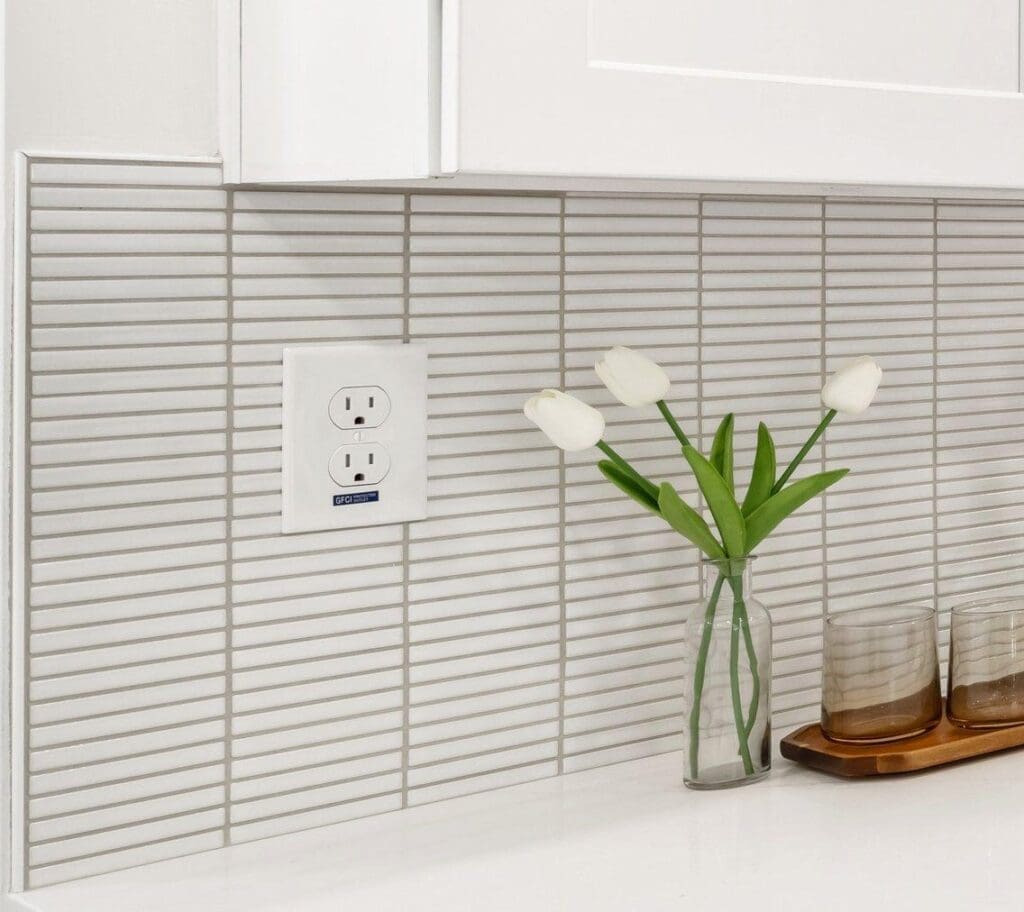
At the left end of the counter, a standard white backsplash outlet sits in a field of slim, vertical tile. The plate lies flat against the surface, and the tile is cut to fit around it, so the edges look neat instead of ragged. That detail depends on the order of work. The electrician sets the boxes at the right depth, the tile setter cuts around them, and the cover plate goes on last. A box set too deep or too shallow is what leaves a plate crooked or a gap at the edge.
Outlets Where the Work Happens
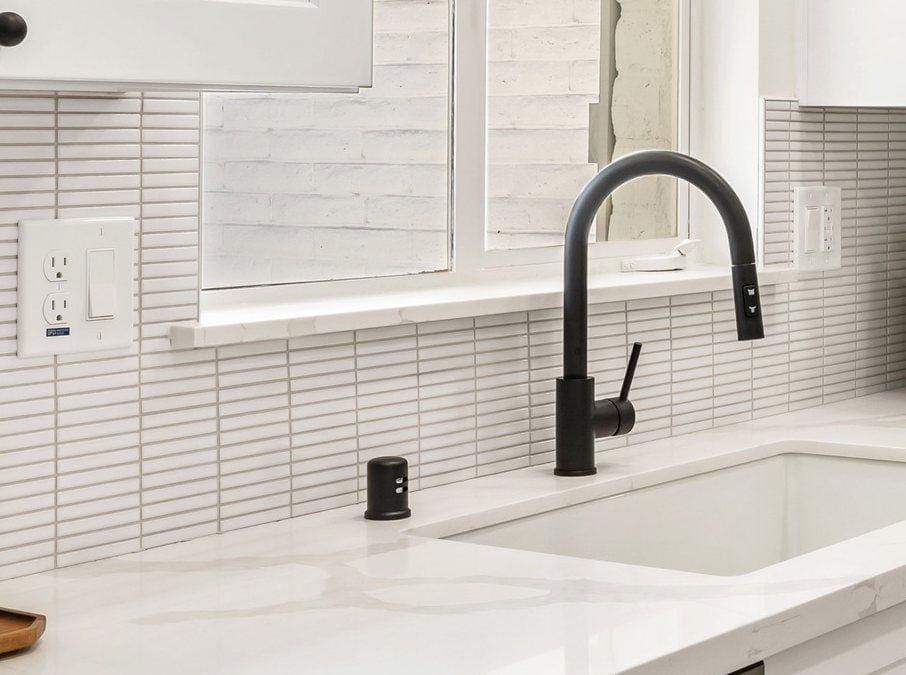
Beside the sink window, an outlet and a light switch share one plate, with a second switch plate on the other side of the black faucet. They sit just above the quartz counter, so a small appliance can plug in without a cord stretched across the work area. Power close to the sink and the prep space is the whole point of good kitchen backsplash outlets. If you are choosing fixtures too, our guide to black kitchen faucets covers that side of the sink.
White Plates, Quiet Tile
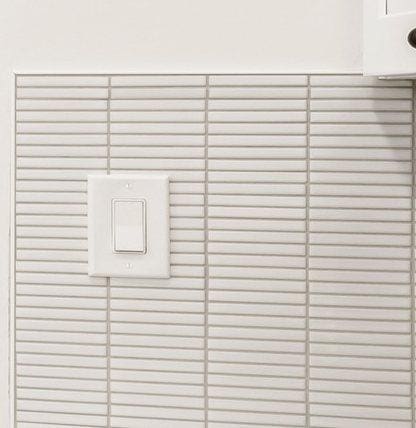
Toward the range end of the counter, a single light switch sits in the same tile. The plates are white, and the tile is a soft gray-white, so they blend in. The narrow grout lines also break up the surface, which keeps a plate from becoming the first thing you notice. Our kitchen backsplash ideas guide shows other tile styles, and each one changes how outlets look on the wall.
Planning Backsplash Outlets in Your Kitchen
Plan the outlets before you choose the tile. A few general points to cover with your electrician: counter outlets are generally required to be GFCI-protected, they are usually spaced so no stretch of counter is far from one, and kitchen outlet height is usually low in the backsplash, just above the counter. Local code sets the exact numbers. A vertical tile pattern means a plate may land on a grout line or in the middle of a tile, so settle the positions first and lay out the tile to match. Keep outlets level across the run so they look intentional.
Planning a Kitchen Remodel of Your Own?
At America’s Advantage Remodeling, we have been handling kitchen remodeling projects across the greater Sacramento area since 2001, including Elk Grove and nearby communities. Reach out for a free in-home consultation, and we will help you plan the outlets and lighting along with the tile and cabinets.
Frequently Asked Questions
Q: How high should outlets be above a kitchen counter?
A: Kitchen counter outlets usually sit within the first foot above the countertop, so they land in the backsplash. The National Electrical Code, which California adopts with its own amendments, generally caps counter outlets at about 20 inches above the counter. Your electrician will confirm the exact height for your kitchen.
Q: Do kitchen backsplash outlets need to be GFCI?
A: In general, yes. Outlets that serve kitchen countertops are required to have GFCI protection, which cuts power quickly if it detects a ground fault near water. An electrician can protect them with GFCI outlets or a GFCI breaker, depending on the circuit.
Q: How many outlets do I need along a kitchen counter?
A: Code generally requires an outlet so that no point along the counter wall is more than about 24 inches from one, and any counter section 12 inches or wider needs its own. Local rules vary, so confirm the spacing with your electrician or building department.
Q: Should outlets go in before or after the backsplash tile?
A: Before. The electrician rough-sets the boxes first, so they can sit at the depth of the finished tile, and the tile setter then cuts around them. If the tile ends up thicker than planned, a licensed electrician can fix it with box extenders.
Q: Can I move or add outlets to an existing backsplash?
A: Often, yes, though it usually means cutting or removing some tile and possibly running new wiring. A licensed electrician should handle the wiring, and a tile setter can patch the surface so the repair blends in.
Q: How do I make backsplash outlets less noticeable?
A: Match the cover plate color to the tile or grout, keep outlets and switches on a level line, and place each plate where it lands cleanly on a tile or a grout line. A white plate on a light tile, as in this kitchen, blends in almost completely.
CONTACT US
Our Services
Areas We Serve
Certificate