Crown molding is one of those finishing touches that homeowners often overlook until they see two identical kitchens side by side — one with it and one without. The one with crown molding looks finished and custom; the one without looks like the cabinets just stopped. After 25 years installing cabinetry in Sacramento-area kitchens, I can tell you crown molding is one of the highest-impact, lowest-cost details you can add. But it’s not right for every kitchen, and how it’s installed makes all the difference. I’m Eugene Chernioglo, and here’s what you need to know.
What Crown Molding Does for a Kitchen
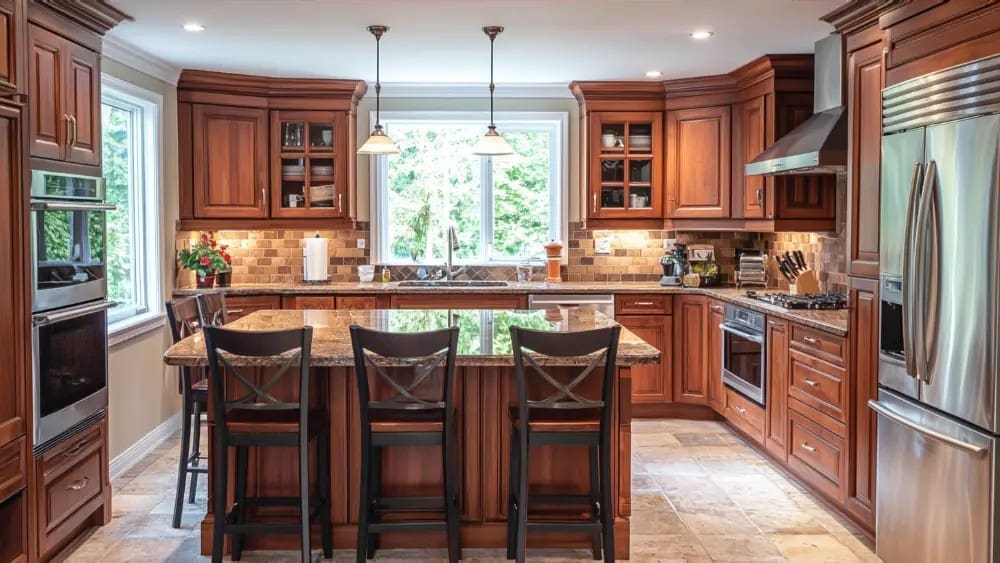
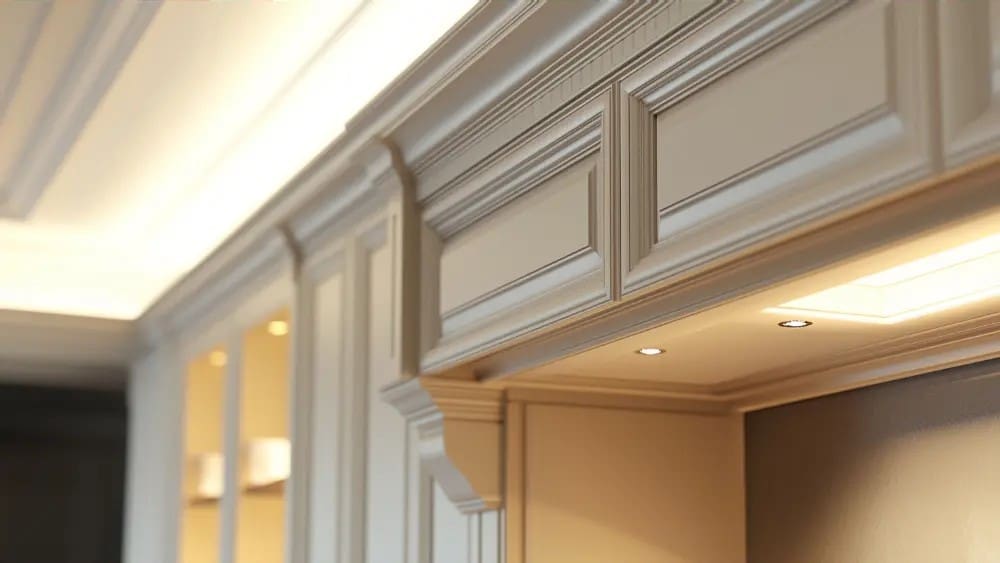
Crown molding bridges the space between the top of your wall cabinets and the ceiling. When cabinets stop short — which they often do, ending 6 to 18 inches below the ceiling — that gap can look unfinished. Crown molding closes the visual gap and ties the cabinetry into the architecture of the room, giving the whole kitchen a built-in, custom appearance. It’s the difference between cabinets that were installed and cabinets that were designed into the space.
When Crown Molding Makes Sense (and When It Doesn’t)
Crown molding is a strong choice when:
- Your cabinets end below the ceiling, leaving a gap that looks unfinished.
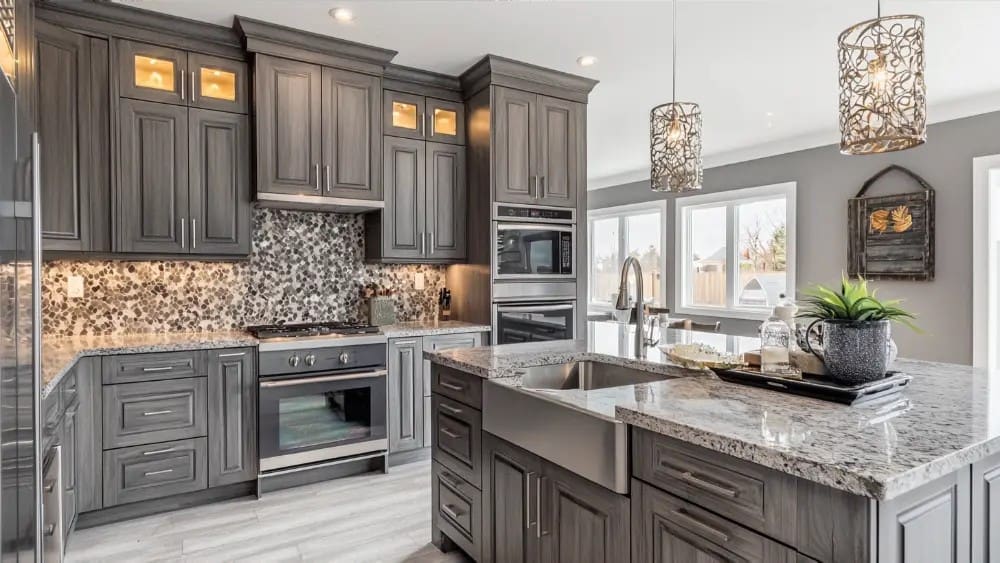
- You have a traditional or transitional kitchen where the molding complements the door style.
- You want to add a custom, high-end feel without major structural work.
It’s usually skipped when you have a strictly modern, flat-panel kitchen where clean uninterrupted lines are the goal, or when cabinets already run all the way to the ceiling. In those cases, a simple square trim or no molding at all suits the look better.
Choosing the Right Crown Molding Profile
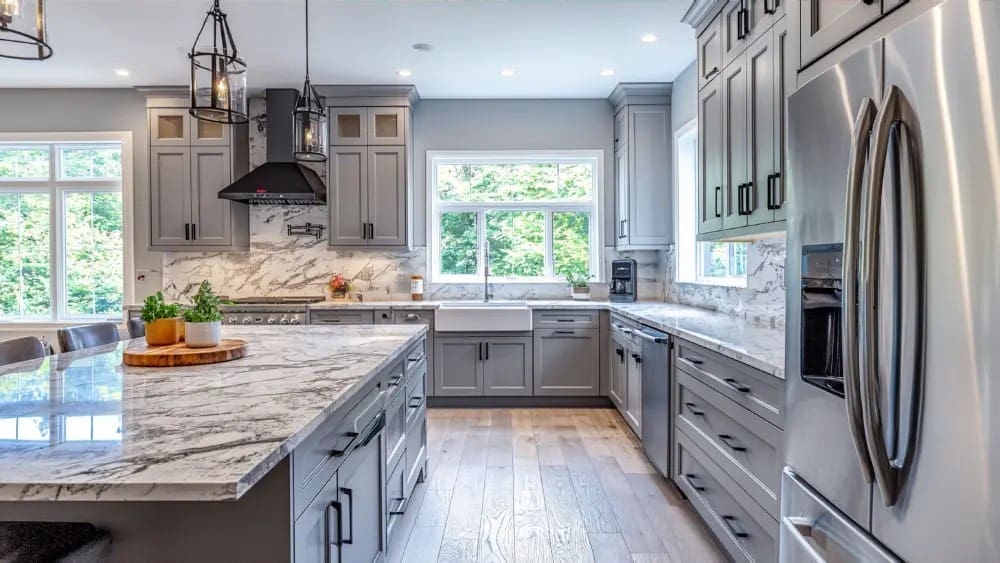
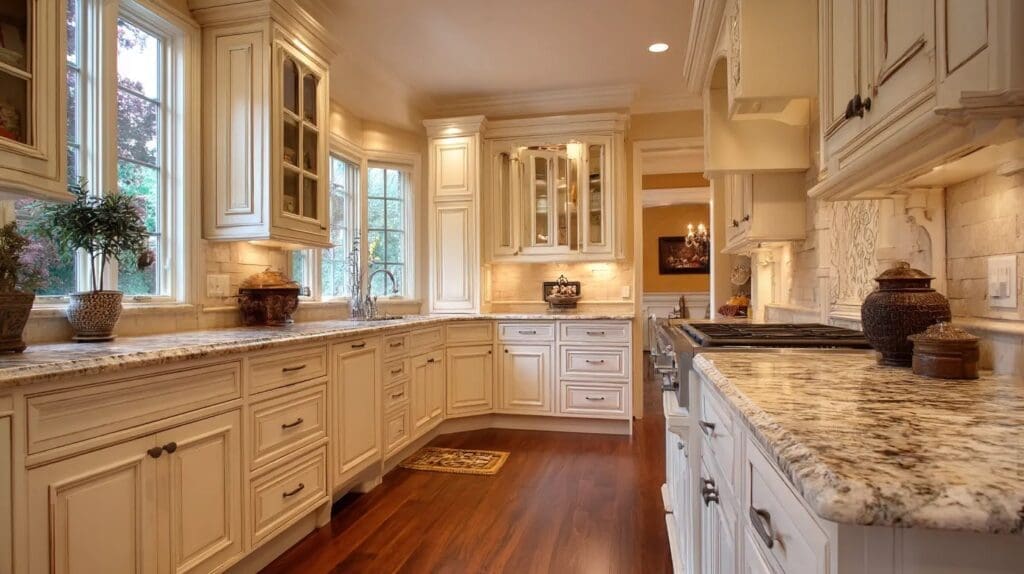
The profile — the shape of the molding in cross-section — should match your cabinet style. Stepped or stacked profiles suit traditional kitchens; a simple cove profile works for transitional and shaker-style cabinets; slim, square profiles fit contemporary kitchens. Just as important, the molding should be the same material and finish as the cabinets so it reads as one continuous piece. When my team specs crown molding, we match the profile to your door style so it looks like it was always part of the design, never an afterthought.
How Crown Molding Is Installed
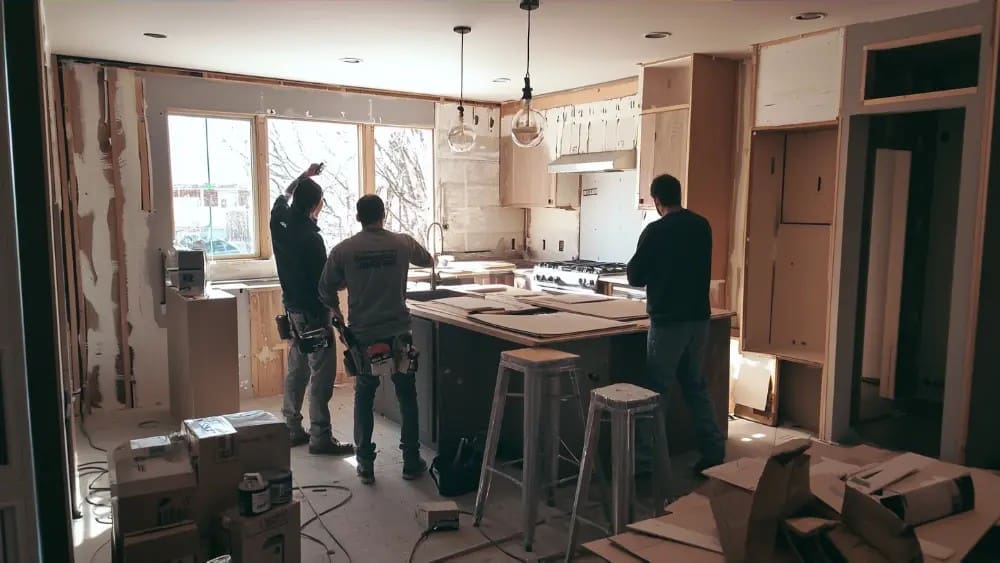
Here’s where craftsmanship shows. Crown molding is installed by first fastening a backer or nailing strip along the top edge of the cabinets, then attaching the molding to that strip at the correct angle using finish nails and adhesive. The corners are where it gets technical — each joint is cut with a precise miter so the molding meets cleanly with no visible gaps. On a kitchen with multiple corners and cabinet heights, getting every joint tight is finish carpentry that rewards experience. A poorly cut crown shows gaps at the corners; a well-cut one looks seamless.
Adding Crown Molding to Existing Cabinets
You don’t need new cabinets to get crown molding. As long as your existing cabinets have a flat top edge to attach a backer strip to, crown molding can be added as a standalone upgrade — a popular way to modernize older cabinets without the cost of replacement. The main consideration is matching the finish, which takes more care on aged cabinets but is very doable. It’s one of the most cost-effective ways to refresh a kitchen that’s structurally fine but looks dated.
Is It Worth It?
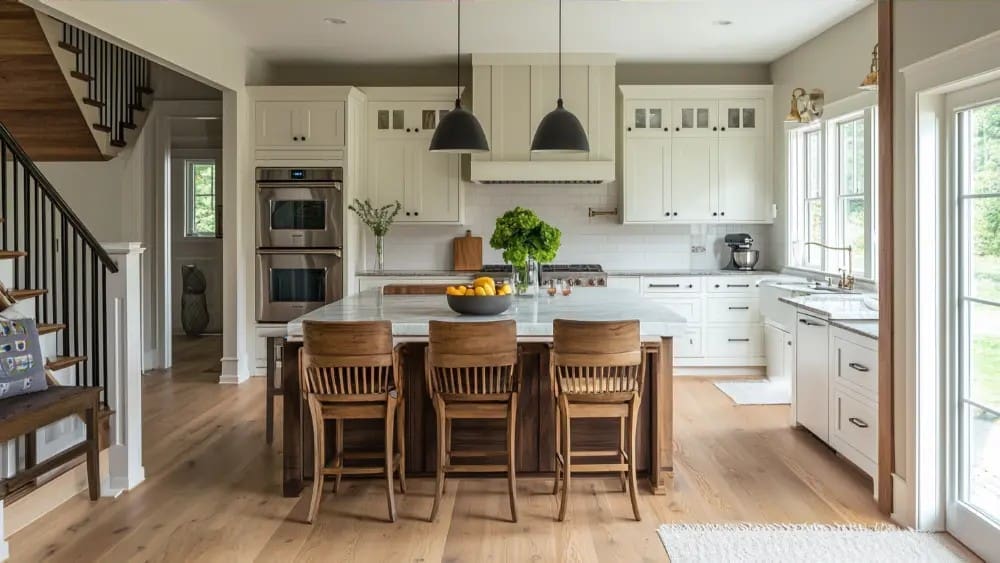
For most traditional and transitional kitchens with a gap above the cabinets, crown molding is one of the best-value finishing details you can add — modest cost, big visual payoff. The keys are choosing a profile that matches your cabinets and having it installed by someone who can cut tight corners. If you’re considering crown molding as part of a kitchen project or as a standalone upgrade, my team at America’s Advantage Remodeling has been doing this finish work in Sacramento-area kitchens since 2001, all in-house. Reach out for a free in-home consultation and we’ll show you how the right crown molding transforms a cabinet run.
Frequently Asked Questions
Pulled from live Google PAA, filtered through the 3-test conversion filter, written answer-first for AI Overview and featured snippet citation.
Q: Should you put crown molding on kitchen cabinets?
A: Crown molding is worth adding when your cabinets stop short of the ceiling, because it bridges the gap and gives the kitchen a finished, custom look instead of an unfinished one. It works especially well on traditional and transitional kitchens, and on cabinets that end 6 to 18 inches below the ceiling. For ultra-modern flat-panel kitchens or cabinets that already reach the ceiling, crown molding is often skipped in favor of a cleaner line.
Q: What kind of crown molding for kitchen cabinets?
A: The best crown molding for kitchen cabinets matches the cabinet style and finish — a stepped or stacked profile for traditional kitchens, a simple cove or shaker-compatible profile for transitional kitchens, and a slim, square profile for contemporary looks. It should be the same material and finish as the cabinets so it reads as one piece. A remodeler matches the molding profile to your door style so the whole cabinet run looks intentionally designed.
Q: Does crown molding look good in a kitchen?
A: Yes, crown molding generally looks good in a kitchen when it matches the cabinet style and fills the gap between cabinets and ceiling, giving the room a polished, built-in appearance. It’s most effective in traditional and transitional kitchens and on cabinets that don’t reach the ceiling. The key is choosing a profile that complements the cabinet doors rather than competing with them.
Q: How is crown molding attached to cabinets?
A: Crown molding is attached to a kitchen cabinet by first installing a backer or nailing strip along the top of the cabinets, then fastening the molding to that strip at the correct angle with finish nails and adhesive. Corners are cut with precise miter joints so they meet cleanly. Because crown molding on cabinets requires accurate angle cuts and tight seams, it’s a finish-carpentry job where experience clearly shows in the result.
Q: Can you add crown molding to existing cabinets?
A: Yes, crown molding can be added to existing cabinets as long as there’s a flat top edge to attach a backer strip to, making it a popular way to upgrade a kitchen without replacing the cabinets. The molding must match or be finished to match the existing cabinet color. It’s a relatively contained project that can noticeably modernize older cabinets, though matching the finish on aged cabinets takes care.
Q: Is crown molding out of style?
A: Crown molding on kitchen cabinets is not out of style, though the preferred profiles have shifted toward simpler, cleaner lines and away from very ornate stacked moldings. In contemporary kitchens, slim square profiles or no molding at all are common, while traditional and transitional kitchens still use classic crown. The trend is toward molding that looks intentional and proportionate rather than heavy.
CONTACT US
Our Services
Areas We Serve
Certificate