What Every Homeowner Needs to Know
When planning a kitchen remodel, homeowners often focus on colors, cabinets, and appliances. But an equally important aspect of effective kitchen design is getting the kitchen countertop overhang requirements right. Countertop overhangs may seem like a minor detail, but they directly affect comfort, safety, durability, and even the overall look of your kitchen. Whether you’re designing a new kitchen island with seating or updating your perimeter countertops, understanding the standard countertop overhang and when you need additional support is critical to a successful remodel.
What Is a Countertop Overhang?
A countertop overhang refers to the portion of the countertop that extends beyond the edge of the base cabinets or island structure. This slight extension serves several practical and aesthetic purposes. It protects your cabinetry from spills and wear, provides knee space for seating, and contributes to a polished look for your kitchen. Getting the right countertop overhang ensures safety and comfort, especially in areas where people will sit or gather.
Standard Kitchen Countertop Overhangs
The most common overhang measurement for perimeter counters is between 1 inch and 1.5 inches. This standard overhang protects your cabinetry while maintaining a clean and finished look. When working with small kitchen spaces, keeping the overhang to this standard measurement prevents the kitchen from feeling cramped and allows for more walking room between cabinets or appliances.
Kitchen Island and Peninsula Overhangs for Seating
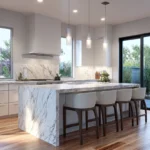
For islands or peninsula countertops that include seating areas, the overhang needs to be deeper. The minimum countertop overhang for seating is typically 12 inches, which provides enough space for bar stools and sufficient knee space. In some kitchen designs, this overhang can extend to 15 or even 18 inches, especially when creating a dedicated dining area or kitchen island seating zone. Larger overhangs like these, however, often require additional support to prevent structural issues.
Standard Overhang Dimensions by Countertop Material
Not all countertops can handle the same amount of overhang. The countertop material plays a significant role in how much overhang is possible without support brackets or legs. Let’s break it down by material type.
Quartz Countertops
Quartz countertops are extremely popular for their low maintenance and modern appearance. However, quartz is dense and heavy, which means there are limits to unsupported spans. Typically, quartz countertops can have an overhang of up to 10 or 12 inches without needing reinforcement. For extended overhangs beyond 12 inches, support brackets, hidden steel bars, or corbels are required to prevent sagging or cracks. The countertop’s thickness also impacts how much overhang is safe without additional support.
Granite Countertops and Other Stone
Granite countertops and other stone materials like marble and soapstone are similarly heavy and beautiful, but they can be brittle along natural veining. For these stone countertops, standard countertop overhang guidelines are similar to quartz. Unsupported overhangs should stay within 10 to 12 inches. Larger overhangs require support options such as decorative corbels or hidden brackets. These are essential to ensure safety and maintain the structural integrity of the counter.
Solid Surface and Laminate
Solid surface materials and laminate countertops are lighter and more flexible than stone. As a result, they may offer slightly more flexibility with overhang measurements. Still, if the overhang exceeds 12 inches, extra support is recommended to avoid long-term sagging. Even lighter materials and professionally installed kitchen countertops benefit from proper support, especially in high-use areas.
Do You Need Support for That Overhang?
In most cases, yes. Any countertop overhang beyond 12 inches should be evaluated for support requirements. While a standard 1.5 inches of overhang on a base cabinet doesn’t need reinforcement, extended overhangs used for countertop seating or bar-height dining areas almost always do.
How Much Overhang Can Be Unsupported?
One of the most widely accepted guidelines in the remodeling industry is the one-third rule: the maximum overhang should not exceed one-third of the countertop’s total depth. For example, if your counter is 36 inches deep, the maximum unsupported overhang would be 12 inches. Anything more requires support.
Support Options for Overhangs
There are various support options available to reinforce larger overhangs and ensure your countertop is safe and durable.
Decorative Corbels – These provide both support and style, and can be matched to your cabinetry for a custom look. Corbels are ideal for traditional or transitional kitchens where design details matter.
Hidden Brackets – These steel support brackets are installed beneath the counter and hidden from view, offering a clean, modern finish. They’re perfect for waterfall edges or floating island countertops where you want an open, minimalist aesthetic.
Support Legs or Posts – When you’re dealing with a large countertop seating area, posts or table-height legs offer excellent stability. They’re also an opportunity to add character to your island design.
Why Proper Support Matters
Without proper support, your overhang may begin to sag or, worse, crack under pressure. This is especially true for stone countertops, which are heavy and not flexible. Support overhangs with the right combination of brackets, corbels, or legs based on the material and design. This not only helps preserve the life of your countertop but also ensures safety for everyone using the space.
Code Compliance and Safety Considerations
Most building codes don’t specify exact countertop overhang requirements, but professional installers rely on a combination of manufacturer recommendations and structural best practices to determine what’s safe. While there’s no national code defining how much overhang is too much, inspections in California do expect overhangs to be properly supported and not exceed load limits.
Understanding Local Inspection Expectations
Local inspectors often refer to manufacturer specs for quartz countertops and granite countertops. They look at bracket placement, the countertop’s thickness, and overhang depth to confirm that the counter is built to last. In our Sacramento-area remodels, we make sure every countertop passes inspection the first time by using smart design choices and proper reinforcement, backed by our experience as expert home remodelers in Sacramento.
Avoiding Countertop Failure
Cracks in unsupported countertop overhangs don’t just happen from sitting or leaning. Over time, stress on unreinforced stone or engineered slabs can cause bowing, shifting, or failure at the seams. Reinforcing your overhang not only protects your investment but ensures the space is safe for everyday use.
Design Tips for the Perfect Overhang
A good overhang improves usability without disrupting the kitchen layout. Whether you’re working with a small kitchen or building a spacious island as part of a full kitchen remodeling project, a well-planned overhang can add both function and visual flow.
Kitchen Island Seating and Comfort
For comfortable seating, a kitchen island or peninsula countertop should include a minimum countertop overhang of 12 inches, paired with 18 inches of knee space per seat. Bar stools should slide easily underneath without forcing anyone to lean forward, especially when you’re planning a custom island with experienced home remodeling contractors in Roseville. Ensuring enough space and leg room is key to making your kitchen feel like a true gathering space.
Waterfall Edges and Modern Designs
If your kitchen design includes waterfall edges, it’s important to integrate hidden support during the planning stage with knowledgeable kitchen remodeling contractors in Sacramento. These stunning vertical extensions of the countertop material create a dramatic look, but they still require careful structural planning. Hidden support brackets maintain the clean look while offering strength beneath the surface.
How Overhang Affects Lighting and Traffic Flow
Extended overhangs influence the layout of lighting and kitchen traffic. Pendant lights should be centered over seating areas, and you’ll want at least 36 inches of walkway space between the island and perimeter cabinetry. These clearances help maintain an effective kitchen design, particularly in high-traffic areas where kitchen cabinet layout and storage also play a major role.
Tips from America’s Advantage Remodeling
At America’s Advantage Remodeling, we’ve helped hundreds of homeowners across Sacramento, Rocklin, and surrounding areas get the most out of their kitchen remodel. From countertop installation to custom cabinetry and flooring, America’s Advantage Remodeling makes sure every detail, right down to the countertop overhang, is designed for both beauty and performance.
Our team uses laser measurements, precision cuts, and the best support options for your layout and countertop material. Whether you’re installing quartz countertops, replacing old laminate, or creating a brand-new kitchen island, we know how to deliver a kitchen that lasts for years to come, as you can see in our kitchen and home remodeling gallery.
FAQs About Countertop Overhangs
What is the maximum countertop overhang without support?
The maximum is generally 12 inches for most quartz and granite countertops. Any overhang beyond this range requires support brackets, corbels, or legs.
How deep should a kitchen island overhang be for bar stools?
A 12 to 15 inch overhang is ideal for comfortable seating. For deeper dining areas, support brackets or legs may be required.
Can quartz countertops have longer overhangs than granite?
Quartz is typically heavier and more rigid than granite. Neither should exceed 12 inches of overhang without support, but quartz may require more cautious support planning.
What kind of brackets are best for hidden support?
Flat steel brackets mounted under the counter are popular for modern kitchens. These hidden supports work well with waterfall edges and open island designs.
Does an overhang count toward countertop square footage?
Yes, the entire slab, including the overhang, is included in countertop square footage and factored into pricing and planning.
Ready to Remodel Your Kitchen?
A well-designed countertop overhang ensures your kitchen looks amazing and functions properly. At America’s Advantage Remodeling, we guide you through every decision, from standard countertop overhang measurements to choosing the right support options and materials. Whether you’re replacing your old counters or starting from scratch with new countertops, we deliver expert craftsmanship with your lifestyle in mind.
If you’re ready to design a kitchen that blends beauty, comfort, and durability, let’s talk. We’ll make sure every countertop, every cabinet, and every inch of your kitchen remodel is done right, from layout to leg room.
CONTACT US
Our Services
Areas We Serve
Certificate