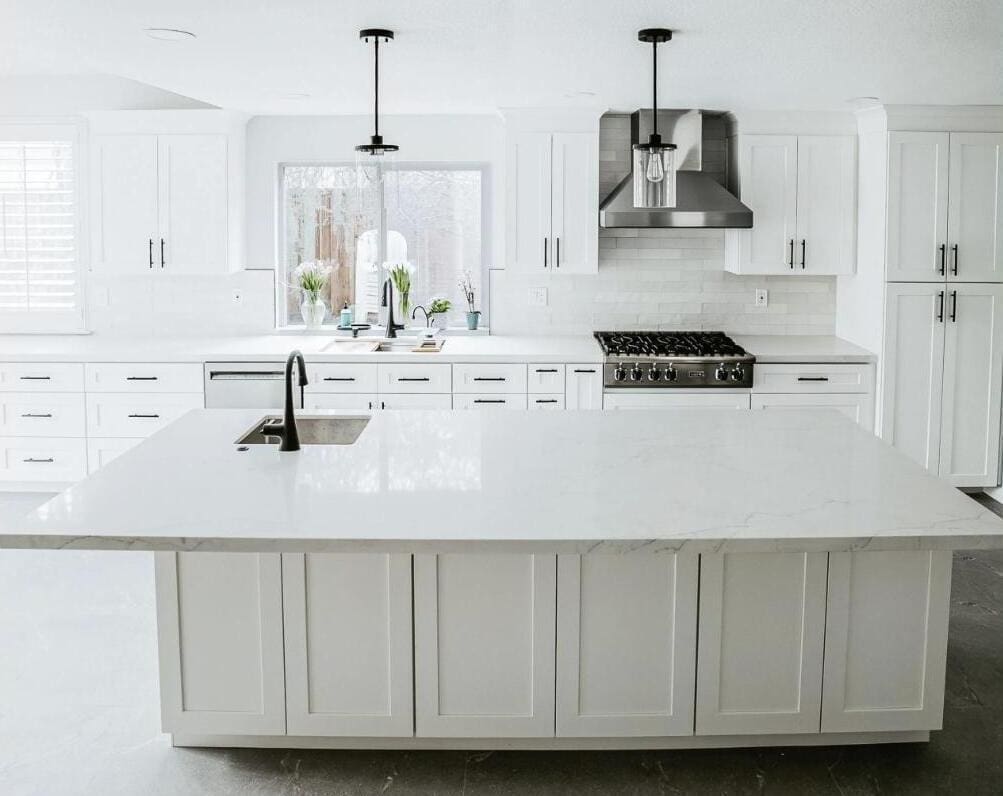
I’m Eugene Chernioglo, and one of the most common storage questions I get in a kitchen remodel consultation isn’t about cabinets or countertops — it’s “where does everything actually go?” On a recent kitchen remodel in Elk Grove, we answered that with two upgrades: a floor-to-ceiling pantry wall for everyday storage, and a built-in wet bar with a beverage fridge tucked into the breakfast nook. Here’s how each one works, what they cost, and how to fit both into a kitchen that isn’t oversized.
Why a Floor-to-Ceiling Pantry Wall Beats a Closet Pantry
Most kitchens lose the top foot or so of wall space above standard upper cabinets to dead air — space too high to reach comfortably, so it just sits empty. A floor-to-ceiling pantry wall closes that gap by running full-height cabinetry from the counter all the way to the ceiling, which on a typical 8- to 9-foot ceiling adds roughly two to three more shelves of usable storage across the same footprint. In this Elk Grove kitchen, that meant the homeowners could consolidate what used to be a separate closet pantry into the kitchen itself, without giving up any floor space to do it.
What Goes Into a Pantry Wall Like This One
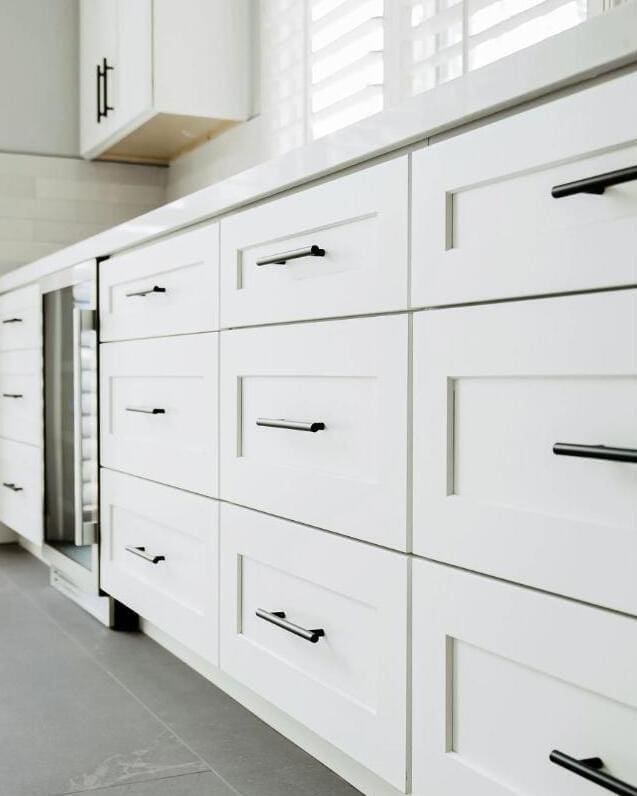
This pantry wall uses the same full-height white shaker cabinetry as the rest of the kitchen, finished with matte black bar-pull hardware so it reads as part of the cabinetry run rather than a bolted-on afterthought. Behind the doors, adjustable shelving handles everyday pantry goods, while the drawer bank below keeps smaller items — spices, wraps, utensils — sorted and out of the counter clutter. Keeping the hardware and finish consistent from the pantry wall to the perimeter cabinets is what makes a full-height storage run look intentional instead of oversized.
Adding a Wet Bar to an Adjoining Nook
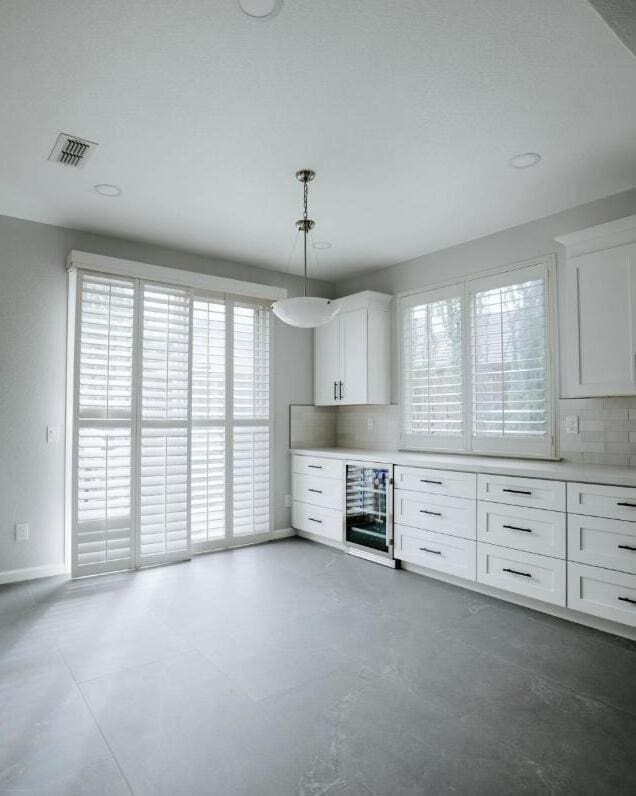
Rather than carve wet-bar space out of the main kitchen run, this remodel tucked a built-in beverage and wine fridge into cabinetry along the adjoining breakfast nook — a spot that was otherwise just walking-through space. It only needed a standard electrical outlet, not new plumbing, since a beverage fridge is a plug-in unit rather than a full bar sink setup. That keeps the cost and the disruption well below what a true wet bar with running water would require, while still giving the homeowners a dedicated spot to keep drinks cold without opening the main refrigerator.
What These Upgrades Cost
A floor-to-ceiling pantry wall typically adds a modest premium over standard upper cabinets — mostly the cost of the extra cabinet boxes and doors needed to reach the ceiling — since it uses the same materials and finish as the rest of the kitchen. A built-in wet bar with a beverage or wine fridge, cabinetry, and a small prep counter generally runs $2,500 to $8,000 depending on the fridge model and whether any electrical work is needed, and it’s meaingfully cheaper to add during a full remodel, while the walls and cabinetry layout are already being reworked, than to retrofit afterward.
Ready to Rethink Your Kitchen’s Storage?
If your kitchen remodel feels like it’s more about where things go than what things look like, America’s Advantage Remodeling offers a free in-home consultation for Elk Grove homeowners. I’ll walk your layout with you and talk through whether a pantry wall, a built-in beverage station, or both make sense for your space.
Frequently Asked Questions
Q: What is a floor-to-ceiling pantry wall, and how is it different from a regular pantry cabinet?
A: It’s a run of cabinetry that extends the full height of the wall, from the countertop line all the way to the ceiling, rather than stopping at standard upper-cabinet height with dead space above. That extra vertical run turns what would otherwise be wasted wall space into several additional feet of usable storage, without adding a single inch to the kitchen’s footprint.
Q: How much does it cost to add a wet bar or beverage station to a kitchen remodel?
A: A built-in wet bar with a beverage or wine fridge, cabinetry, and a small prep counter typically runs $2,500 to $8,000 as part of a larger kitchen remodel, depending on the fridge model and whether new plumbing or electrical is needed. Adding it during a full remodel, when the walls are already open, costs meaningfully less than retrofitting one into a finished kitchen later.
Q: Do I need plumbing for a built-in beverage or wine fridge, or just an electrical outlet?
A: Just an electrical outlet in almost every case. Beverage and wine fridges are standalone units that plug in like a standard refrigerator; they don’t need a water line the way an ice maker or a full wet bar sink would. That makes a beverage station one of the lower-cost, lower-disruption upgrades to add to an existing kitchen or breakfast nook layout.
Q: How much storage does a floor-to-ceiling pantry wall actually add compared to standard upper cabinets?
A: Standard upper cabinets typically stop 12 to 18 inches below the ceiling, leaving that gap unused. A floor-to-ceiling pantry wall closes that gap, which on an 8- or 9-foot ceiling can add roughly two to three additional shelves of storage across the same width of wall — often enough to consolidate a separate closet pantry into the kitchen itself.
Q: Can a pantry wall and a wet bar both fit into a smaller kitchen footprint?
A: Yes, if they’re planned together rather than added as afterthoughts. In this Elk Grove remodel, the floor-to-ceiling pantry wall lives along the main kitchen run while the wet bar and beverage fridge are tucked into the adjoining breakfast nook, so neither one competes with the island or the primary work triangle for space.
Q: What hardware or finish should I choose to match the rest of my kitchen?
A: Matte black is the easiest finish to carry across a full kitchen right now, since it already shows up in faucets, range hoods, and pendant lighting in most modern remodels. In this project, matte black bar-pull hardware runs consistently from the pantry wall to the perimeter cabinetry to the island, so the storage additions read as part of one cohesive design rather than a mismatched add-on.
CONTACT US
Our Services
Areas We Serve
Certificate