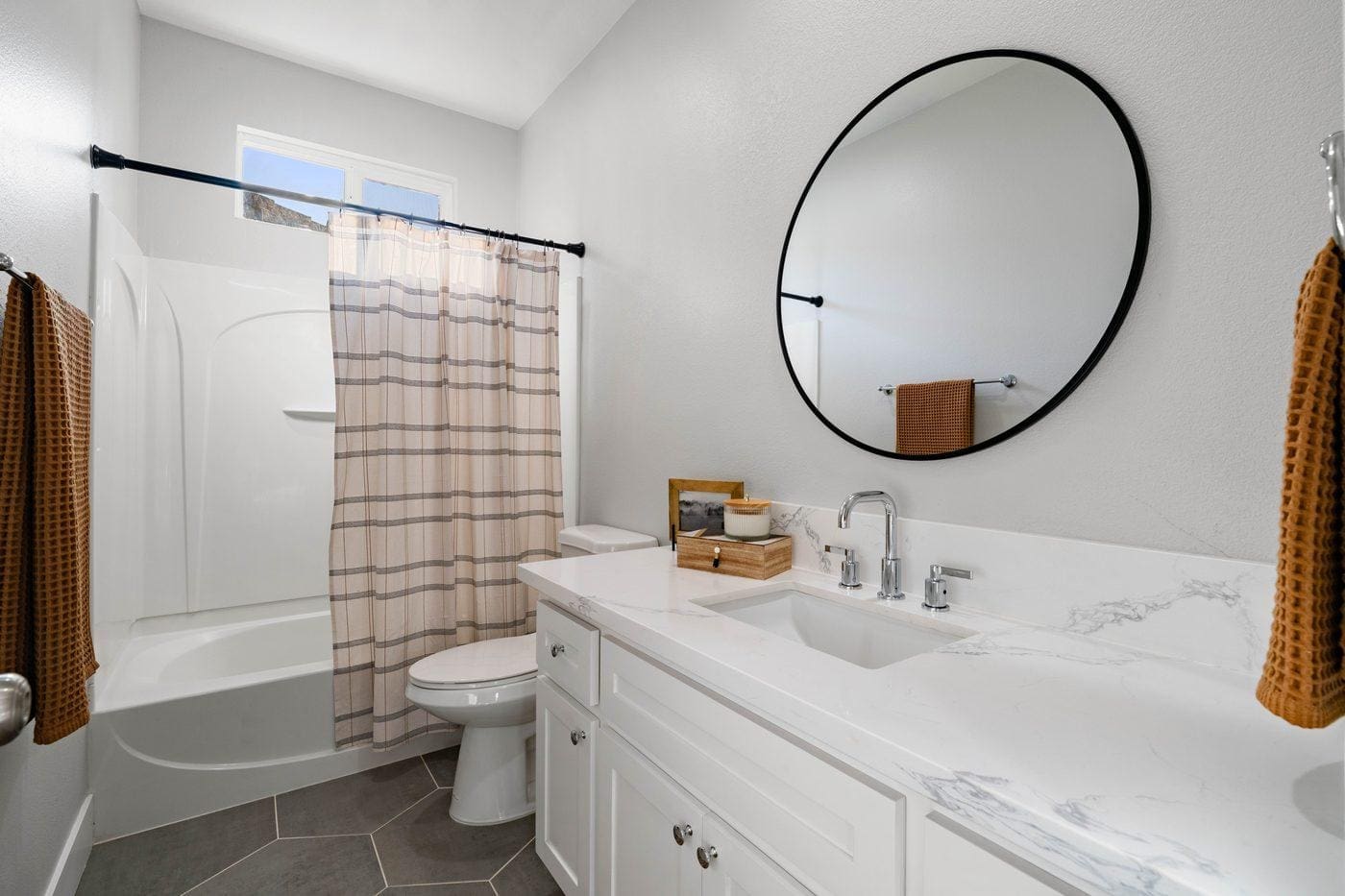
Most bathroom conversations start with the vanity or the shower. This one starts with the floor. In this Elk Grove hexagon tile bathroom, the surface underfoot does the heaviest design work: large elongated hexagon tiles in a soft gray, outlined with light grout. It is a single detail, but it sets the tone for the whole room. Here is a closer look at how it works.
A Shape That Stretches the Room
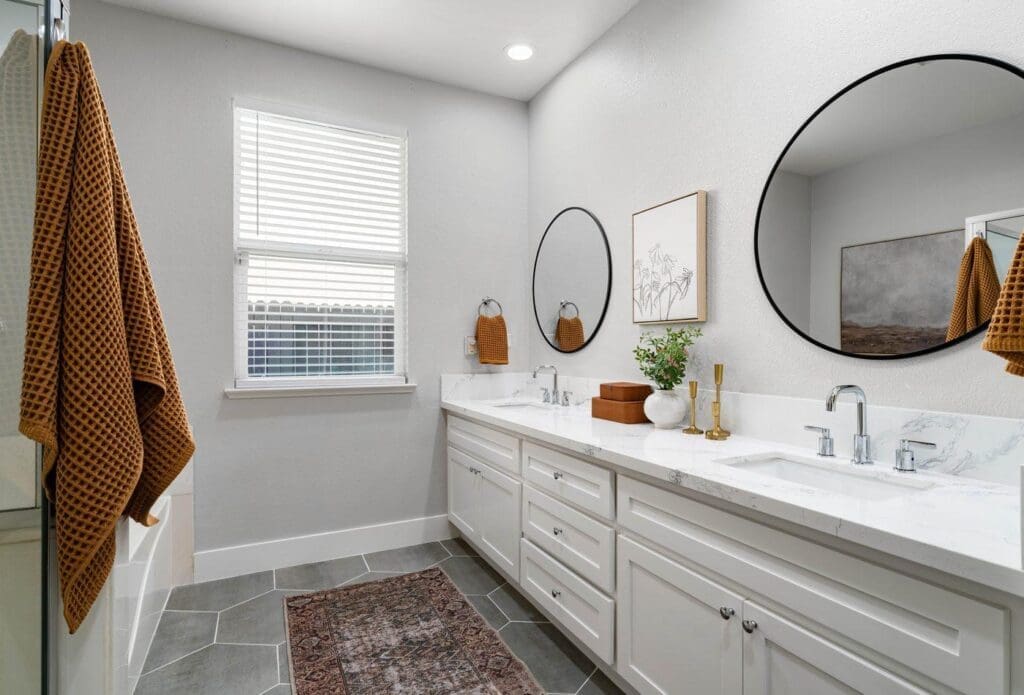
A regular hexagon looks like a honeycomb. Stretch it along one axis, and it becomes something different: a long, graceful shape whose points guide the eye across the floor. In this primary bathroom, the tile runs the length of the double vanity, and the pattern pulls the eye along the room. The tiles are large, so there are fewer grout joints than a small mosaic would have, which keeps the floor looking calm rather than busy.
Soft Gray with a Light Outline
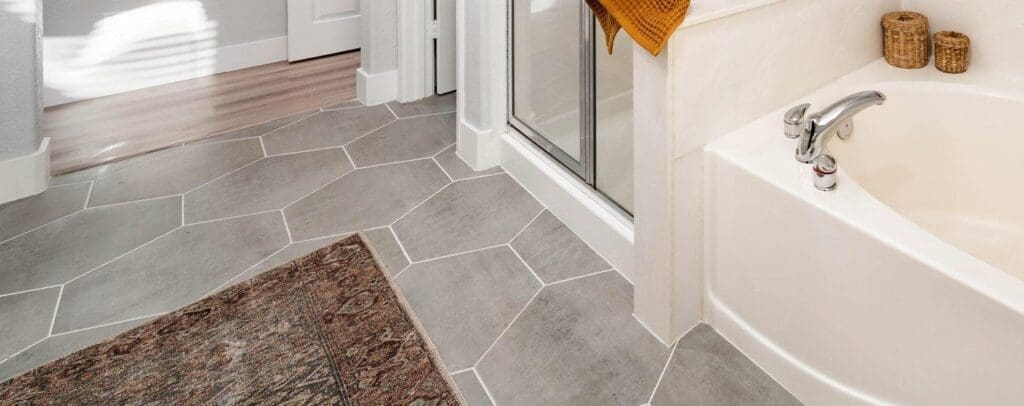
The tile itself is a matte gray with a slightly mottled, stone-like surface, and the light grout lines trace each shape like a drawing. Gray is a good partner for white shaker cabinetry and a quartz top, because it grounds the room without competing with it. A mid-tone floor is also forgiving of everyday dust and footprints. The thin white grout lines are what make the hexagon pattern readable; a grout matched to the tile would have blended the shapes into one surface.
One Floor, Two Bathrooms
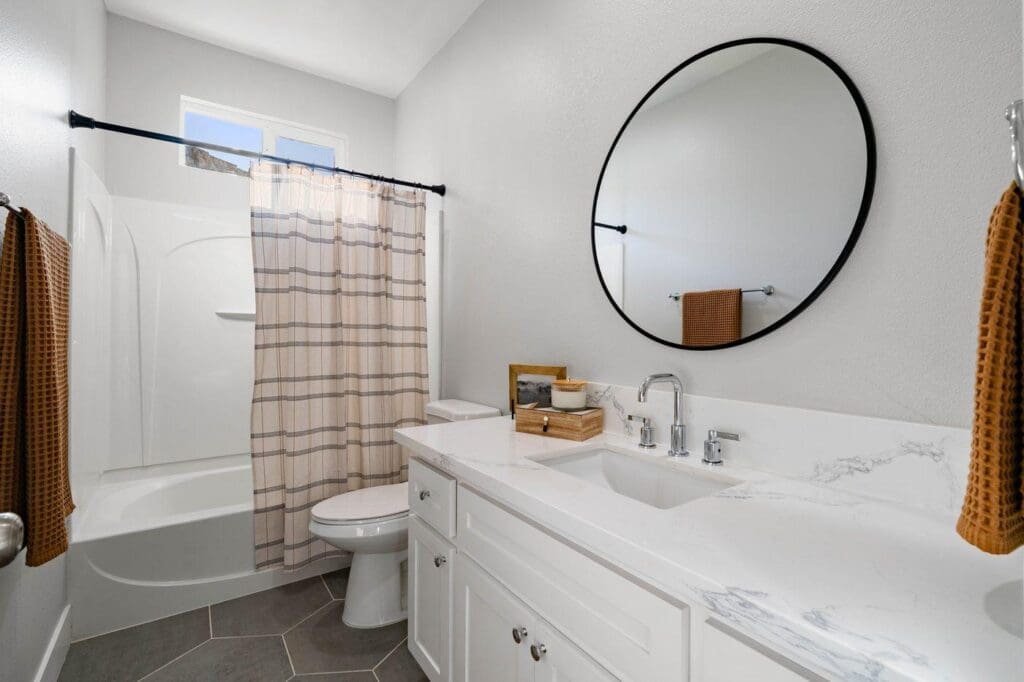
The same hexagon tile continues into the guest bathroom, where it sits beneath a single vanity and a tub-shower. Repeating the floor ties the two rooms together, even though each has its own layout and mirror. In the guest bath, the tile looks darker and more charcoal in the light, which shows how much lighting changes the way a gray floor reads.
What to Decide Before Tiling
Hexagon tile asks for more planning than a square. The layout has to be set before the first piece goes down, so the pattern lands evenly against the walls and the vanity, and there are more cuts at the edges, which affects labor and waste. Check the slip-resistance rating of any bathroom floor tile, and choose a finish with some grip. Finally, plan the transition where the tile meets the floor in the next room; in this home it meets a wood-look floor at the doorway. If you are comparing materials first, our guide to the best flooring for a small bathroom covers the main options.
Planning a Bathroom of Your Own?
Floor tile is one of the first things people see and one of the last things they think to plan. At America’s Advantage Remodeling, we have been handling bathroom remodeling projects across the greater Sacramento area since 2001, and we are happy to walk through tile choices, layout, and grout color with you. Reach out for a free in-home consultation.
Frequently Asked Questions
Q: What is elongated hexagon tile?
A: Elongated hexagon tile is a six-sided tile that is stretched along one axis instead of being evenly proportioned, so each piece looks like a long diamond with the ends cut off. It is also called a stretched or long hex tile, and it is often installed in a large format with thin grout lines.
Q: Is hexagon tile a good choice for a bathroom floor?
A: Yes, as long as the tile is rated for floors and wet areas. Porcelain and ceramic hexagon tiles are durable and water-resistant, and the shape adds pattern without adding color, which is why they are popular in primary and guest bathrooms.
Q: Does hexagon floor tile cost more to install?
A: It often does, because hexagon tile needs more cuts at walls, the vanity, and the toilet, and the layout takes more planning than a square tile. Pricing varies by tile size and room shape, so ask your remodeler how the pattern will be laid out before you compare quotes.
Q: What grout color works best with hexagon floor tile?
A: It depends on the look you want: light grout outlines each hexagon and makes the pattern stand out, while grout matched to the tile blends the shapes into one surface. A thin grout line is easier to keep clean than a wide one either way, and a stain-resistant grout helps in a bathroom.
Q: Is hexagon floor tile slippery?
A: The hexagon shape does not make a tile slippery; the finish does. A matte or textured finish gives more grip than a polished one, and tiles are given a slip-resistance rating, so check it for any bathroom floor. The grout lines in a hexagon pattern also add some traction.
Q: Can I use the same floor tile in more than one bathroom?
A: Yes, and many homeowners do. Using the same tile in a primary bath and a guest bath ties the two rooms together visually, and it can simplify ordering and layout. You can still change the vanity, mirrors, or fixtures between rooms to keep each one distinct.
CONTACT US
Our Services
Areas We Serve
Certificate