I’m Eugene Chernioglo, and one question I hear almost as often as “should I remodel my kitchen” is “do I have to retile my fireplace, or can I just refresh it?” On a recent full home remodel in Sacramento, we answered that question by keeping the home’s original brick fireplace in place and giving it a clean coat of white paint — here’s why that approach made sense, what it costs, and how it compares to a full retile.
Why Paint the Brick Instead of Covering It
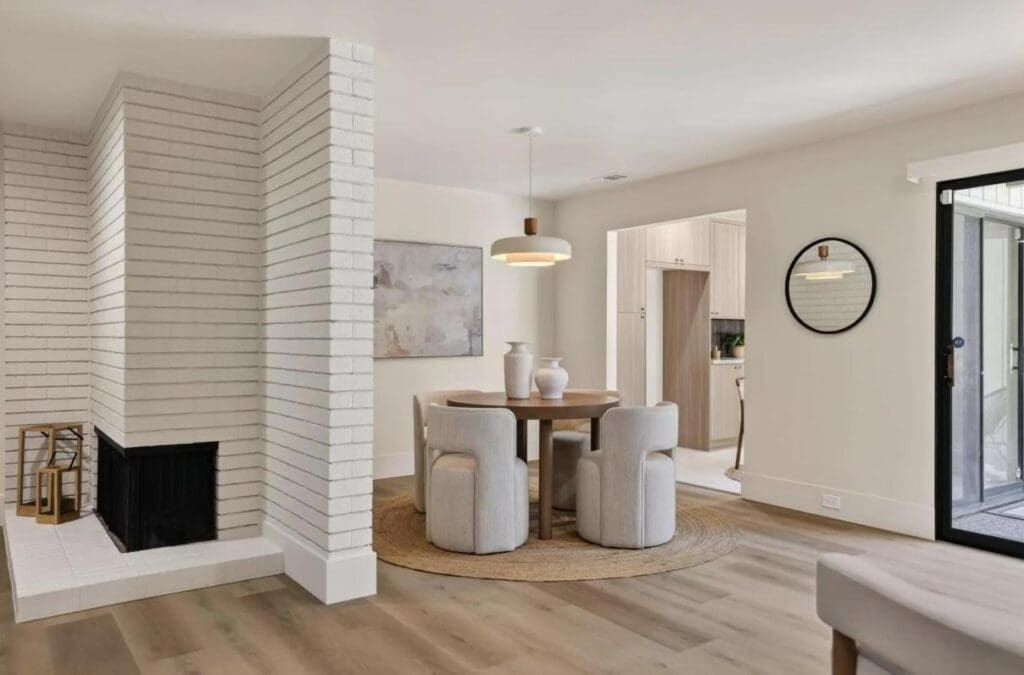
Tearing out an existing brick fireplace and refacing it with tile or stone is a legitimate remodel choice, but it’s also a bigger job — demolition, new substrate, tile work, and the labor that goes with all of it. In this Sacramento home, the brick fireplace was structurally sound and its shape fit the room well, so instead of replacing it, we painted it a crisp white that instantly modernized the space while keeping the project’s timeline and budget in check.
How It Anchors the Room
The painted brick fireplace does more than update its own surface — it became the visual anchor for the whole living room, with the seating area arranged to face it directly. Pairing the white brick with the home’s new light engineered wood flooring and neutral furniture let the fireplace’s clean lines read as a deliberate design feature rather than a leftover from the home’s original build.
Cost: Painting vs. a Full Retile
Painting an existing brick fireplace typically runs $300 to $800 for materials and professional labor, depending on the fireplace’s size and how much surface prep the brick needs. A full tile refacing, by comparison, usually lands between $2,000 and $5,000 or more once you account for removing the old surface, new substrate, tile, and installation labor. If the brick itself is in good shape structurally, painting delivers most of the visual impact of a full remodel at a fraction of the cost.
How This Fits Into the Rest of the Home
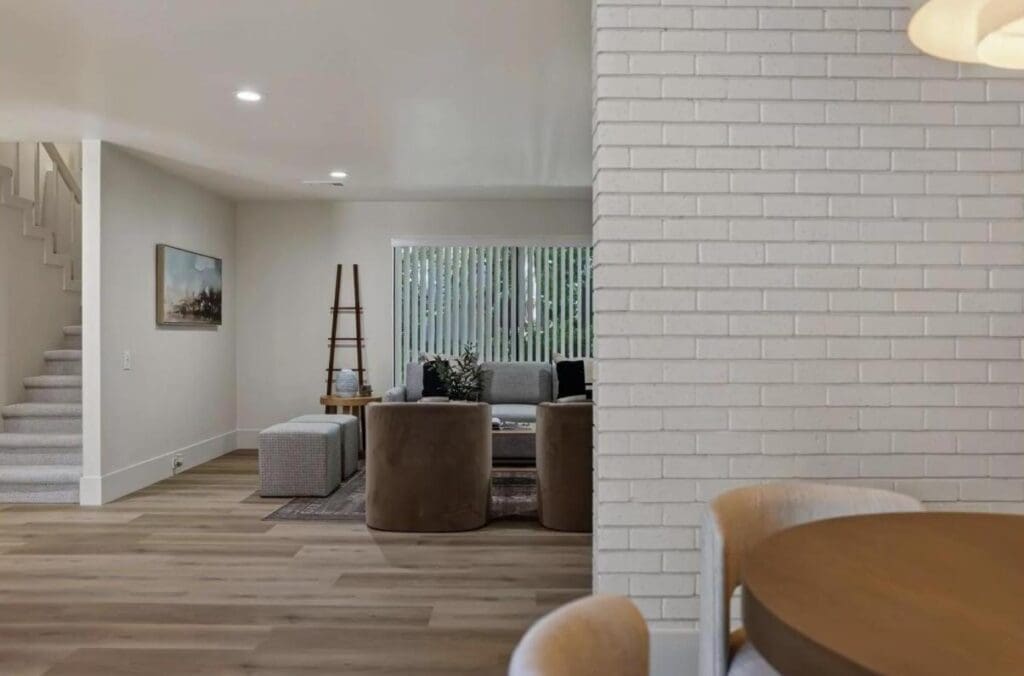
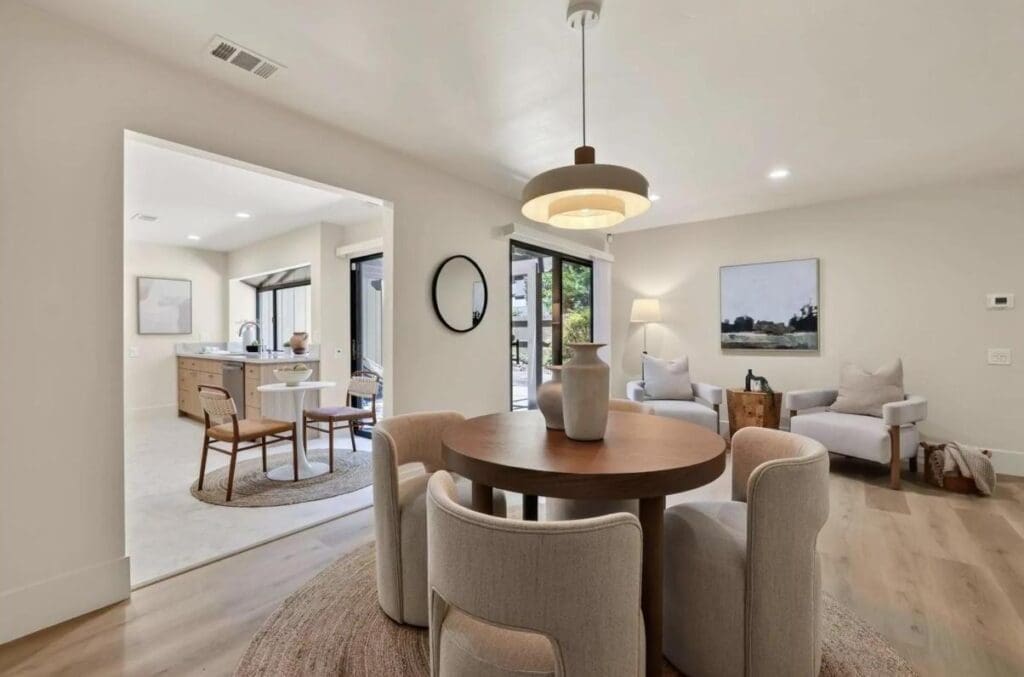
The fireplace refresh was one piece of a larger open-concept renovation, where the living room, dining area, and kitchen were opened up to flow into one another. Keeping the fireplace’s footprint the same made that layout change easier, since the room’s central anchor didn’t need to be rebuilt to fit the new sightlines between spaces.
Is a Painted Brick Refresh Right for Your Fireplace?
If your brick fireplace is structurally solid and its shape still works for the room, a painted refresh is one of the most cost-effective updates you can make in a remodel. If the brick is damaged, poorly shaped for the space, or you’re after a completely different look, a full retile or accent wall remodel — like the floor-to-ceiling tile approach we used in a different Sacramento project — may be the better fit. We walk through that decision with every client before recommending one approach over the other.
Ready to Rethink Your Fireplace?
If you’re weighing a fireplace refresh against a full remodel, America’s Advantage Remodeling offers a free in-home consultation for Sacramento homeowners. I’ll take a look at your fireplace with you and talk through which approach makes the most sense for your space and budget.
Frequently Asked Questions
Q: What does it mean to “refresh” a brick fireplace instead of retiling it?
A: It means keeping the original brick structure in place and updating its look with paint, rather than tearing it out and covering it with new tile or stone. In this Sacramento remodel, the existing brick fireplace was painted a crisp white, which modernized the room without the cost or demolition of a full refacing.
Q: How much does it cost to paint a brick fireplace versus re-tile it?
A: Painting an existing brick fireplace typically runs $300 to $800 for materials and professional labor, depending on the fireplace’s size and surface prep needed. A full tile refacing, by comparison, usually runs $2,000 to $5,000 or more once you factor in removing the old surface, new substrate, tile, and labor. Painting is the far lower-cost option when the brick itself is in good structural shape.
Q: Will a painted brick fireplace look dated, or is it a lasting design choice?
A: A painted white brick fireplace has held up as a classic look for years rather than a passing trend, especially in mid-century and traditional homes where the exposed brick shape itself is part of the architecture. Because the update is paint rather than a structural change, it’s also easy to refresh again down the road if a homeowner’s taste shifts.
Q: Can I paint over a brick fireplace myself, or does it need a professional?
A: It’s one of the more DIY-friendly fireplace updates, but it does require the right prep — cleaning soot and grime off the brick, using a masonry-specific primer, and choosing heat-tolerant paint near the firebox opening. We recommend a professional for the firebox area itself and for any fireplace that hasn’t been cleaned or inspected recently, but the surrounding brick face is a reasonable DIY project for an experienced homeowner.
Q: Does painting a brick fireplace affect how it functions?
A: No, as long as it’s done correctly. The paint goes on the decorative brick face, not inside the firebox or flue, so it doesn’t interfere with how the fireplace vents smoke or handles heat. The one exception is the firebox opening itself, which needs a heat-rated paint formulated to withstand direct flame exposure rather than standard interior paint.
Q: What’s the difference between refreshing an existing fireplace and a full fireplace accent wall remodel?
A: Refreshing an existing brick fireplace, like the painted surround in this project, works with the fireplace’s current structure and shape. A full accent wall remodel — floor-to-ceiling tile, for example — replaces the surface entirely and can extend well beyond the fireplace’s original footprint to become a larger design feature. Both are valid approaches; the right one comes down to budget, timeline, and whether the existing brick shape is one you want to keep or change.
CONTACT US
Our Services
Areas We Serve
Certificate