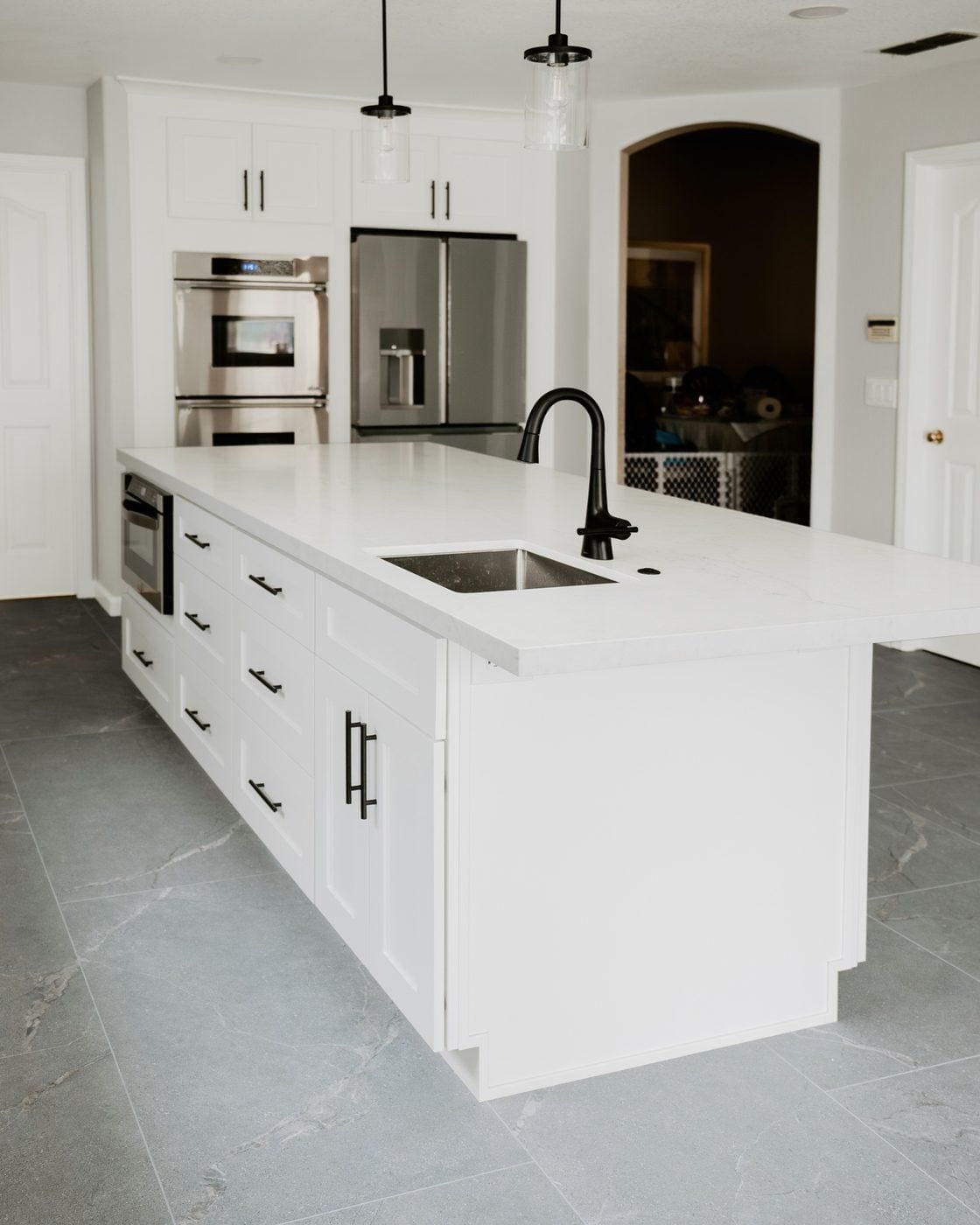
The last kitchen we featured from this Elk Grove kitchen remodel was about the details that do the everyday work: a prep sink, a range wall, cabinetry hardware. This time it’s a single decision that shapes the whole layout — instead of a wall oven in the cabinetry and a separate microwave taking up counter space, this kitchen builds both into one stacked tower against the same wall as the refrigerator. No countertop microwave, no dedicated cabinet for one, and no lost prep space to make room for it.
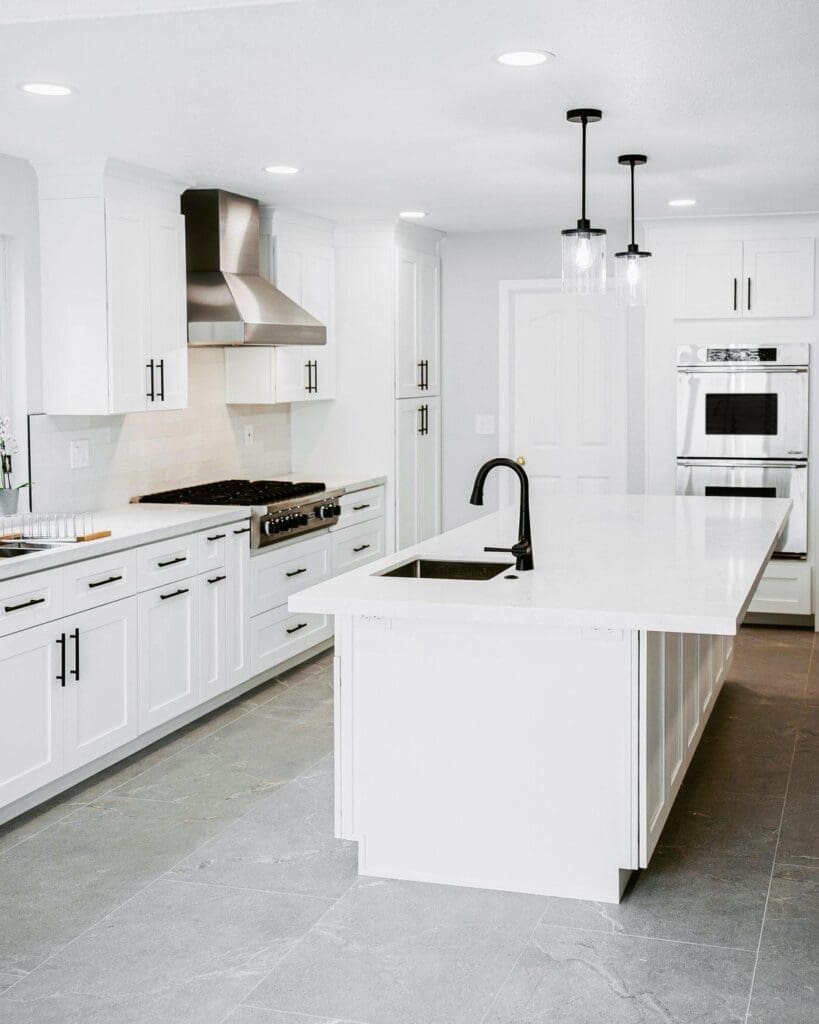
One Tower Does the Job of Two Appliances
The stacked column sits between the refrigerator and the island, with a full-size wall oven and a built-in microwave sharing one cabinet cutout. It’s a different trade-off than a double wall oven setup that pairs two full-size ovens for more cooking capacity; this household uses the microwave daily and rarely needs two ovens running at once, so the second cavity became a microwave instead of a second oven. Either version solves the same problem, getting appliances off the counter and into the wall, but the tower’s mix of one full oven and one microwave is built for everyday reheating and quick tasks, not for cooking multiple full dishes at the same time.
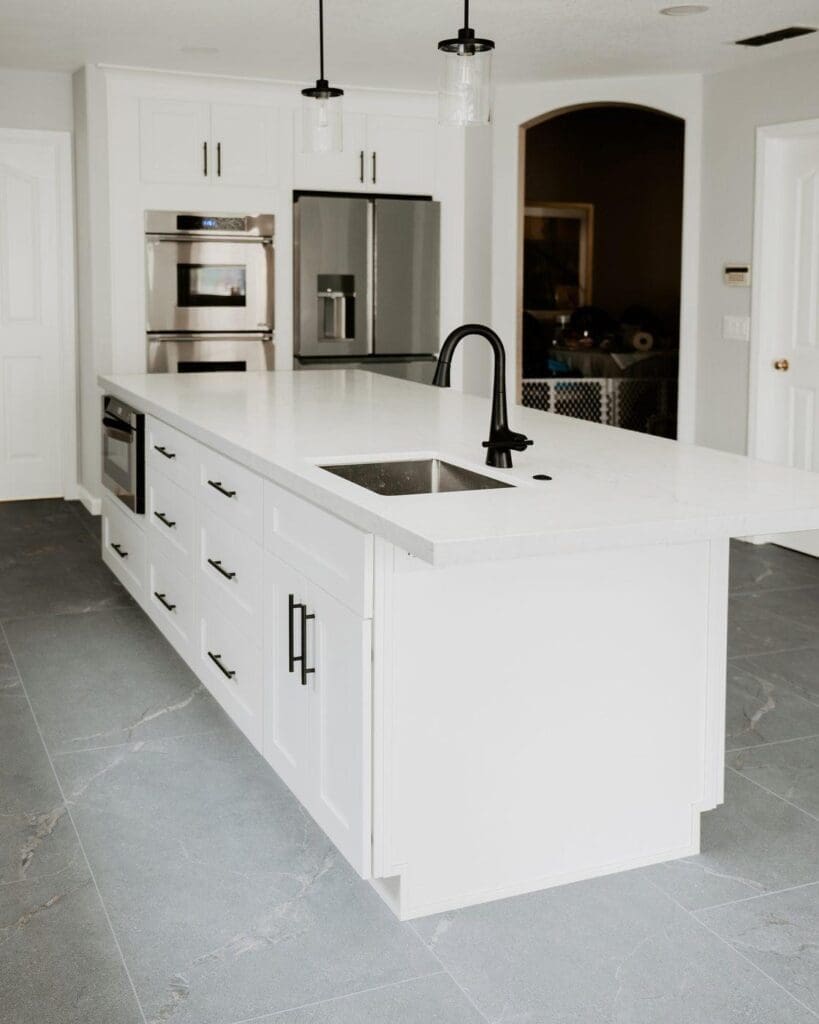
What Skipping the Countertop Microwave Actually Buys You
A standard countertop microwave and the clearance around it can take up two to three feet of counter length, real prep space in a single-run kitchen like this one. Building the microwave into the wall tower instead frees that stretch of counter for cutting boards, small appliances, or just clear space, and it also removes the need for a dedicated cabinet to store a microwave that would otherwise sit on the counter. The trade-off is real: that wall cabinet space is now for appliances, not storage. For a kitchen already tight on counter length, most homeowners find that trade worth making.
Planning This Into Your Own Kitchen Remodel
A combo tower needs to be decided early, not added on. The cabinet cutout, venting, and electrical for a built-in wall oven and microwave are sized differently than a standard oven cabinet, so this has to be locked in before cabinetry is ordered, not adjusted afterward. It’s also worth deciding oven-and-microwave placement based on daily use; the microwave should land at a height you’ll actually reach for multiple times a day, not wherever leaves the cleanest cabinet layout on paper.
Considering a Kitchen Remodel of Your Own?
Whether it’s a full double wall oven setup or a combo tower like this one, the right call comes down to how you actually cook, not which layout looks best in a photo. At America’s Advantage Remodeling, we’ve been planning kitchen remodels in the greater Sacramento area since 2001, and we’re happy to walk through which appliance layout fits how your household uses a kitchen. Reach out for a free in-home consultation.
Frequently Asked Questions
Q: What is a built-in oven and microwave combo tower?
A: It’s a single stacked column, built into a cabinet wall, that pairs a full-size wall oven with a built-in microwave directly above or below it, combining two appliances into one footprint instead of putting a wall oven in the cabinetry and a separate microwave on the counter.
Q: Is a wall oven and microwave combo better than a double wall oven?
A: It depends on how you cook: a double wall oven gives you two full ovens for cooking multiple dishes at once, while a combo tower trades that second oven for a built-in microwave, which is the better trade for households that use a microwave daily but rarely need two ovens running at the same time.
Q: Does a built-in microwave take up cabinet space that could be used for storage?
A: Yes, a built-in microwave uses cabinet space that could otherwise hold storage, which is the main trade-off homeowners weigh against it, but it also frees up the same amount of counter space that a standalone microwave would otherwise occupy, and clears a cabinet elsewhere that would have stored it.
Q: Where should a built-in microwave go in a combo tower, above or below the oven?
A: Placing the microwave below the wall oven, at counter height or just above it, keeps the most frequently used appliance within easy reach without requiring a step stool, while placing it above the oven suits kitchens where counter-height cabinet space is already tight.
Q: Does removing the countertop microwave actually free up much counter space?
A: A standard countertop microwave and its clearance typically take up two to three feet of counter length, so removing it from the counter can open up a meaningful stretch of usable prep space, especially in a galley-style or single-run kitchen layout.
Q: Is a built-in oven and microwave combo more expensive than separate appliances?
A: It’s usually more expensive than a standard wall oven plus a countertop microwave, since combo units and their matching cabinet cutouts cost more than off-the-shelf separate appliances, but it can cost less than a full double wall oven setup depending on the brand and size chosen.
CONTACT US
Our Services
Areas We Serve
Certificate