“How much does a full house renovation cost?” is one of the first questions every homeowner asks, and it’s a fair one, but the more useful question is how that total actually breaks down room by room. Once you commit to a full home remodel, the budget conversation gets a lot more complicated than a single-room project. Instead of asking “what will the kitchen cost,” you’re asking how to split one number across an entire house. After 25 years managing full home remodels across Roseville, Sacramento, and the surrounding communities, here’s how I actually help clients think through that allocation.
Start With Systems and Structure, Even Though It’s the Least Exciting
Electrical, plumbing, HVAC, and any structural repairs should get first claim on the budget, before finishes. It’s tempting to skip ahead to the fun decisions, but underfunding this phase is the single most common cause of a full home remodel running over budget, problems found once walls are open don’t wait for a more convenient time.
Kitchen: The Largest Single Line Item
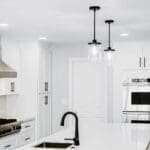
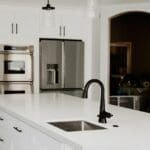
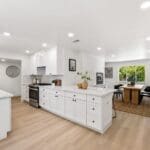
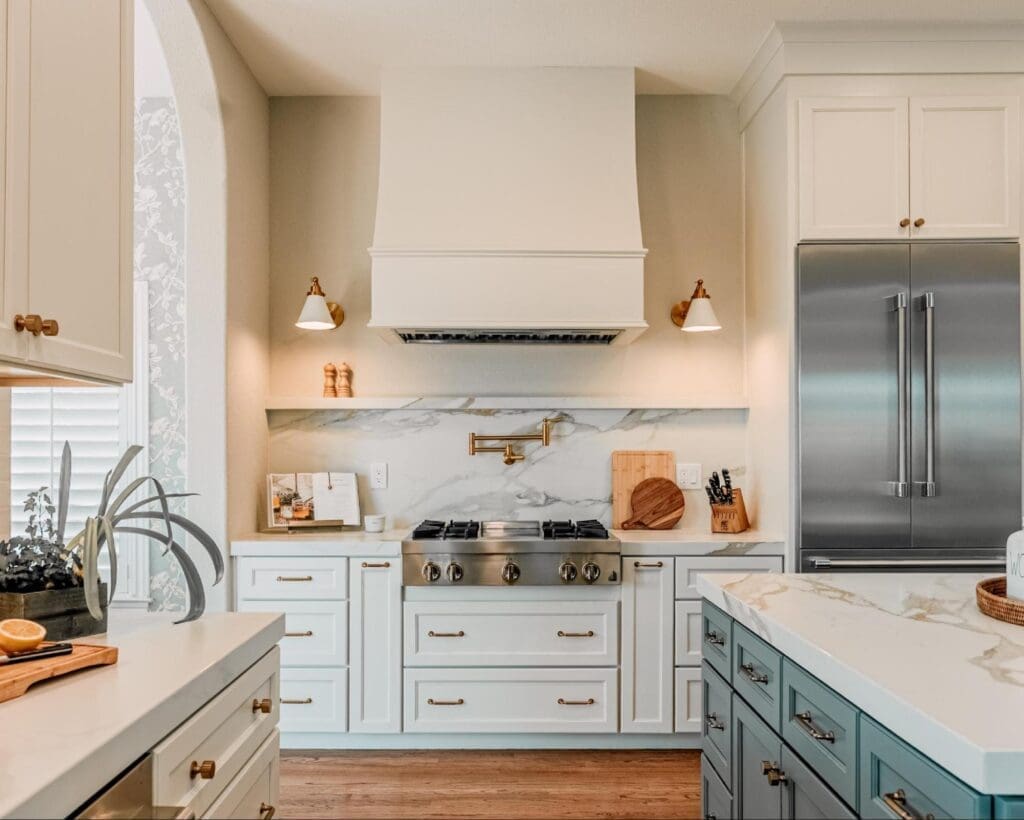
In most full home remodels, the kitchen takes the largest individual share of the budget, often 25 to 35 percent of the total. Cabinetry, countertops, and appliances add up fast, and it’s usually the room homeowners are least willing to compromise on. The kitchen shown here, with a marble backsplash, brass fixtures, and a professional-grade range, is a good example of where that investment tends to show.
Bathrooms: Smaller Rooms, Real Cost
Bathrooms are physically small but plumbing-heavy, which keeps their share of the budget disproportionate to their square footage, typically 10 to 15 percent per bathroom in a full home remodel.
Living Spaces: Where the Budget Often Stretches Further
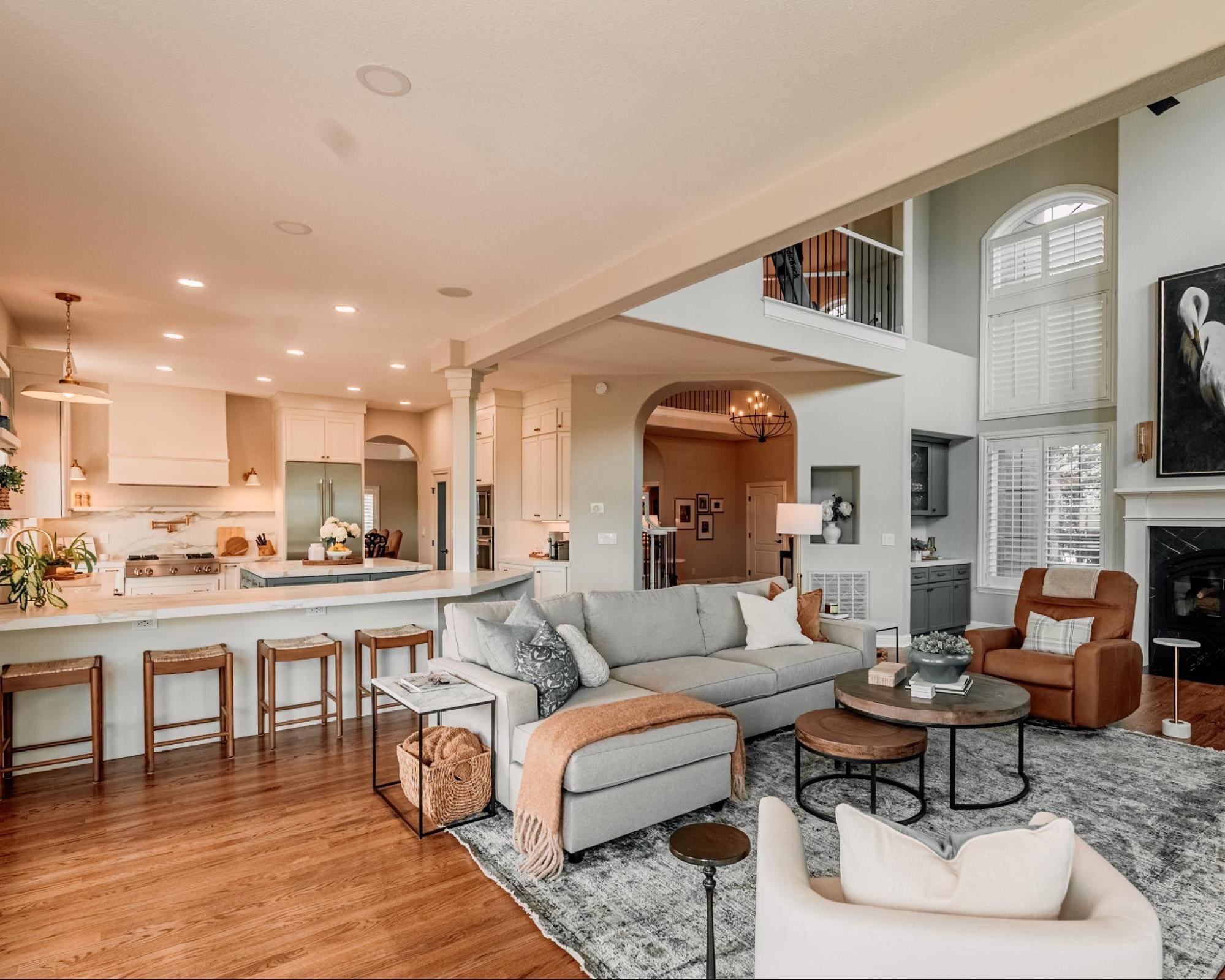
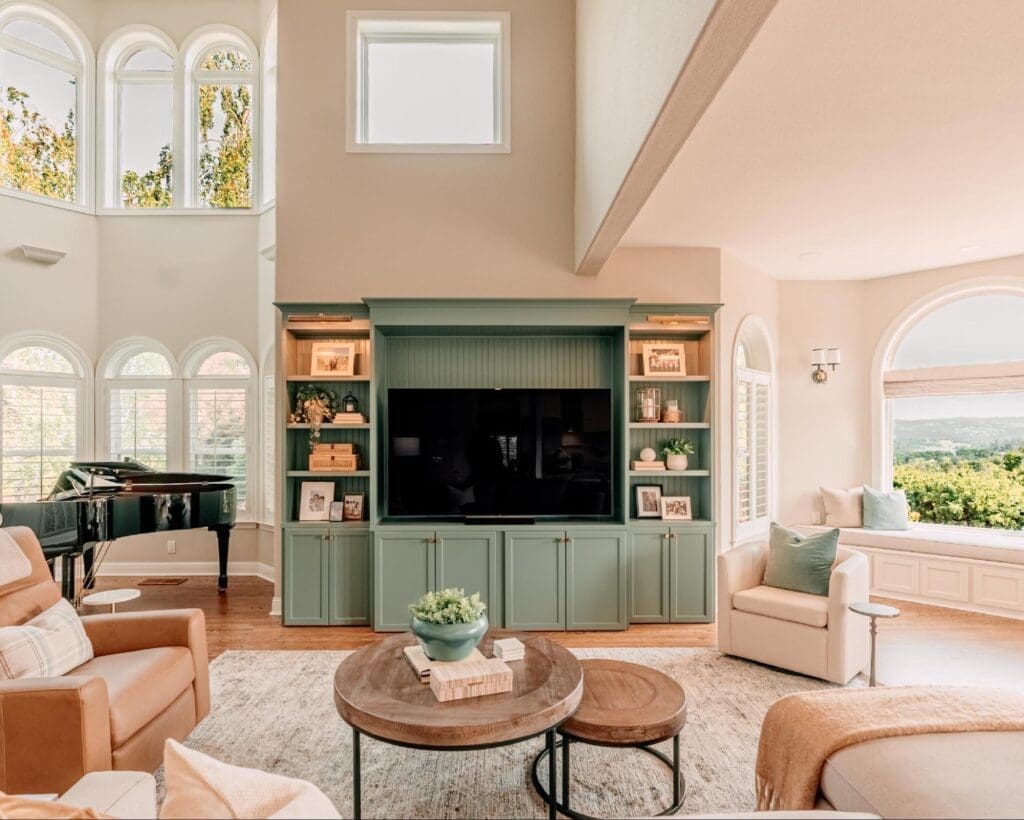
Living rooms, family rooms, and dining areas usually cost less per square foot than kitchens and bathrooms, since they involve less plumbing and electrical complexity. That makes this the category where a slightly larger allocation, built-ins, a fireplace update, better flooring, tends to deliver a lot of visible impact without breaking the budget.
A Rough Starting Split
- Systems and structure: 15 to 20 percent
- Kitchen: 25 to 35 percent
- Bathrooms (combined): 15 to 25 percent
- Living spaces and remaining interior: 15 to 25 percent
- Contingency: 10 to 20 percent, always
That contingency line isn’t optional. Full home remodels almost always turn up at least one surprise once walls and floors come up, and a healthy buffer is what keeps a surprise from becoming a budget crisis.
Every home and every family’s priorities are different, some clients want to pour extra into the kitchen and keep bathrooms simple, others do the opposite. If you’re planning a full home remodel and want help figuring out where your specific budget should go, my team at America’s Advantage Remodeling can walk through it with you.
Frequently Asked Questions
Q: How much does a full house renovation cost?
A: A full house renovation typically ranges widely based on scope and square footage, but the total is best understood by breaking it into categories: systems and structure, kitchen, bathrooms, living spaces, and a contingency fund. The kitchen alone often accounts for 25 to 35 percent of the total budget.
Q: How should I allocate my budget for a full home remodel?
A: A reasonable starting split is 15 to 20 percent for systems and structure, 25 to 35 percent for the kitchen, 15 to 25 percent combined for bathrooms, 15 to 25 percent for living spaces, and 10 to 20 percent held as contingency.
Q: What takes the biggest share of a full home remodel budget?
A: The kitchen typically takes the largest single share of a full home remodel budget, often 25 to 35 percent of the total, due to the cost of cabinetry, countertops, and appliances.
Q: How much contingency should I budget for a whole house renovation?
A: A contingency of 10 to 20 percent of the total budget is standard for a full home remodel, since unexpected issues behind walls or under floors are common once construction begins.
CONTACT US
Our Services
Areas We Serve
Certificate