I’m Eugene Chernioglo, and “should I get a frameless shower door?” is one of the most common questions I hear once a bathroom remodel gets to the shower. On a recent bathroom remodel in El Dorado Hills, we installed frameless glass in two different ways in the same project — here’s what it costs, how it compares to a standard framed door, and which configuration might make sense for your bathroom.
What Makes a Shower Door “Frameless”
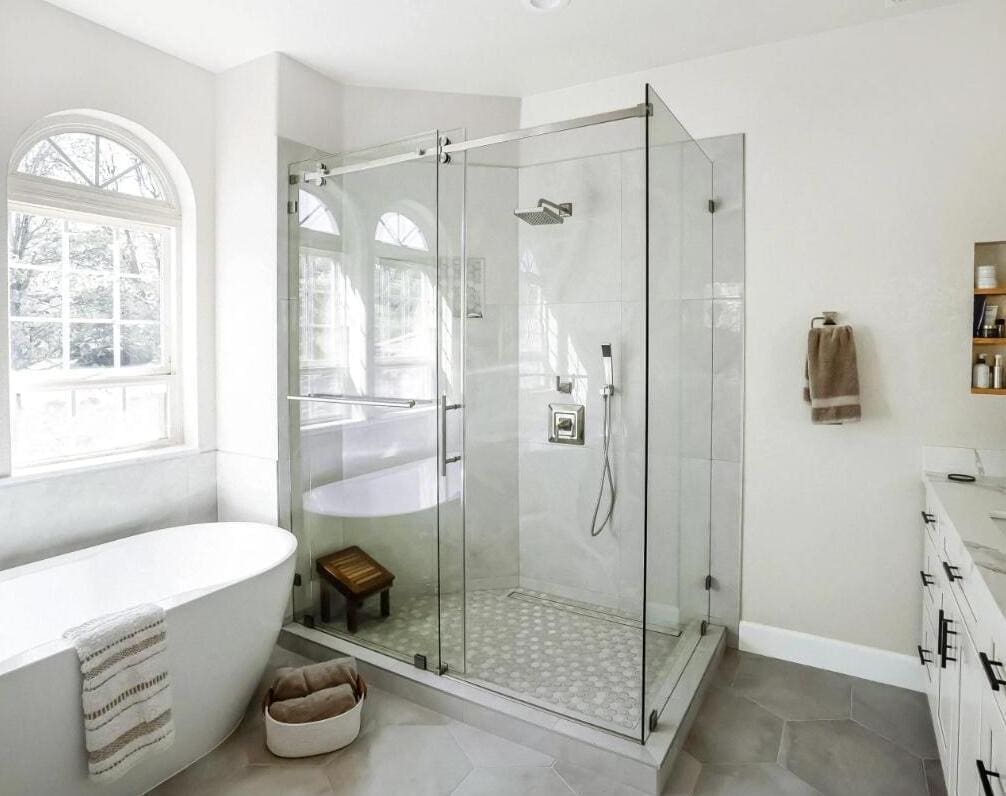
A standard shower door uses aluminum framing around the glass on all sides to hold it in place and seal out water. A frameless door skips most of that framing and instead uses thick, tempered glass — usually 3/8″ to 1/2″ — held by minimal hinges, clips, or a sliding track, so the glass itself becomes the visual feature instead of a metal frame around it. In this El Dorado Hills primary bathroom, that meant a fully frameless glass enclosure paired with a freestanding soaking tub under a pair of arched windows.
The Hardware Detail That Makes It Work
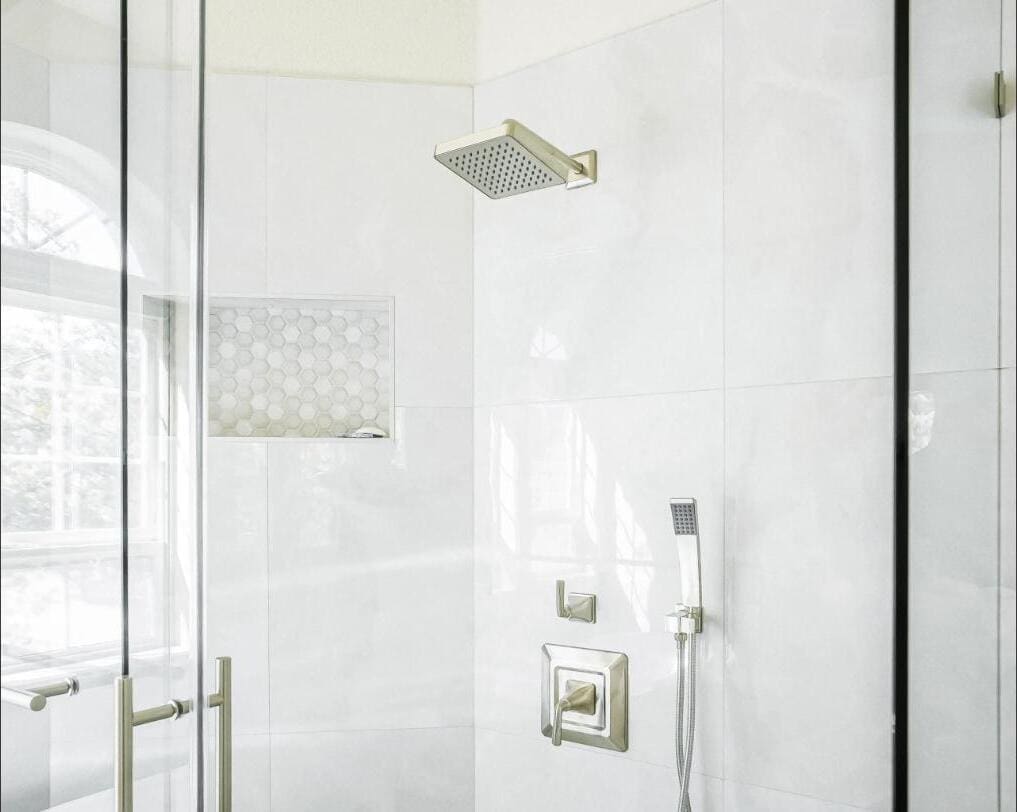
Frameless doesn’t mean hardware-free — it means the hardware gets smaller and more precise. This shower’s hinges, handle, and towel bar are all brushed-nickel, chosen to complement rather than compete with the glass. The hexagon tile niche built into the shower wall shows how a frameless enclosure lets built-in storage and fixture details read cleanly, without a metal frame edge interrupting the tile pattern around them.
Walk-In Enclosure vs. Sliding Door Over a Tub
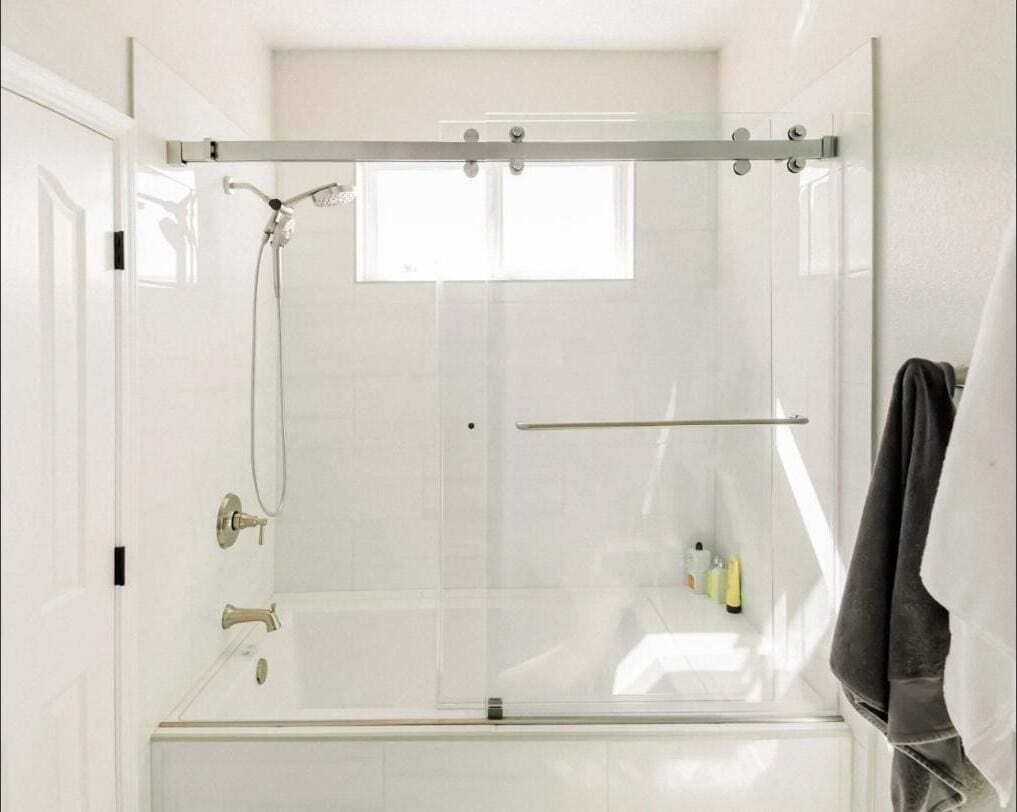
This project used frameless glass two different ways. The primary bathroom’s walk-in shower uses a fully frameless enclosure with hinged glass panels — the configuration most people picture when they hear “frameless shower.” The secondary bathroom’s tub-shower combo instead uses a frameless sliding door on a single track, which gets the same clean glass look without needing to convert the tub into a walk-in shower. Both are legitimate frameless options; which one fits depends on whether you’re working with an existing tub or building a dedicated shower.
Cost: Frameless vs. Standard Framed Doors
A frameless shower door or enclosure typically runs $1,000 to $3,500 installed, compared to $300 to $1,200 for a standard framed door — the gap comes from the thicker glass and more precise, template-measured installation frameless glass requires. It’s a real cost difference, but for most bathroom remodels the door is a small piece of the overall budget, and it’s one of the details clients notice and mention most once the project is finished.
Is a Frameless Shower Door Right for Your Bathroom?
If you’re already replacing tile or fixtures in a bathroom remodel, a frameless door is one of the higher-impact upgrades for the added cost, since it changes how the whole shower reads rather than just how the door looks. If your bathroom’s shower/tub layout is staying put and budget is tighter, a frameless sliding door over an existing tub — like the secondary bathroom in this project — is a lower-cost way to get a similar look without a full walk-in shower conversion.
Ready to Talk Through Your Shower Options?
If you’re planning a bathroom remodel and weighing frameless glass against a standard shower door, America’s Advantage Remodeling offers a free in-home consultation for El Dorado Hills and greater Sacramento-area homeowners. I’ll walk your bathroom with you and talk through which shower configuration makes sense for your space and budget.
Frequently Asked Questions
Q: What makes a shower door “frameless,” and how is it different from a standard shower door?
A: A frameless shower door uses thick, tempered glass (typically 3/8″ to 1/2″) held in place by minimal metal hardware, instead of the aluminum framing that surrounds a standard shower door on all sides. The result is a cleaner, more open look where the glass itself is the visual feature rather than a metal frame around it.
Q: How much does a frameless glass shower door cost?
A: A frameless shower door or enclosure typically runs $1,000 to $3,500 installed, depending on size, glass thickness, and hardware finish, compared to $300 to $1,200 for a standard framed door. The price difference comes down to the thicker glass required for structural stability without a frame, plus more precise (and more expensive) installation.
Q: Do frameless shower doors work for a tub-shower combo, or only a walk-in shower?
A: Both. A walk-in shower typically uses a fully frameless enclosure with hinged or fixed glass panels, like the primary bathroom in this El Dorado Hills project. A tub-shower combo more often uses a frameless sliding door on a single track, which is what was installed in this project’s secondary bathroom — it keeps the frameless look without needing a full walk-in shower footprint.
Q: Are frameless shower doors harder to keep clean than framed ones?
A: They’re actually easier in one important way: there’s no metal frame track along the bottom or sides to trap soap scum and mildew, which is one of the most common complaints with older framed doors. Regular squeegeeing and an occasional glass cleaner keep frameless glass looking clear, since there’s less hardware surface for water spots and buildup to collect on.
Q: How long does it take to install a frameless shower door?
A: Installation itself typically takes half a day to a full day once the shower or tub surround is ready for it, but the glass is custom-measured and cut for each opening, so it’s usually ordered 2 to 4 weeks ahead of the install date. As part of a larger bathroom remodel, the shower door installation is scheduled near the end of the project, after all tile work is complete.
Q: Does a frameless shower door add resale value to a bathroom?
A: It’s one of the more noticeable upgrades a buyer or appraiser sees, since it signals a fully renovated bathroom rather than a partial update. It won’t single-handedly move a home’s value the way a full bathroom remodel does, but it’s consistently cited as a detail that makes a renovated bathroom photograph and show better, especially paired with the large-format tile and modern fixtures it’s usually installed alongside.
CONTACT US
Our Services
Areas We Serve
Certificate