I’m Eugene Chernioglo, and “do we really need a whole extra room just for coffee?” is a question I get more and more as kitchen remodels get bigger and more zoned. On a recent kitchen remodel near Land Park, we built a full butler’s pantry off the main kitchen with a dedicated espresso and coffee station, no counter space sacrificed, no morning traffic jam at the main sink. Here’s what went into it, what it costs, and how to think about adding one to your own kitchen.
Open Shelving Ties It Together
Above the wet bar, open wood floating shelves hold everyday glassware and a few bottles of wine, the same open-shelving logic we’ve covered elsewhere in kitchen remodels, applied here to a butler’s pantry instead of the main kitchen. It keeps frequently-used items in easy reach and adds a collected, lived-in look rather than a wall of closed cabinet doors. If you’re weighing open versus closed storage for a coffee bar area, our take is the same as it is for any kitchen: keep the everyday items open and reachable, and let closed cabinetry handle anything you don’t want on display.
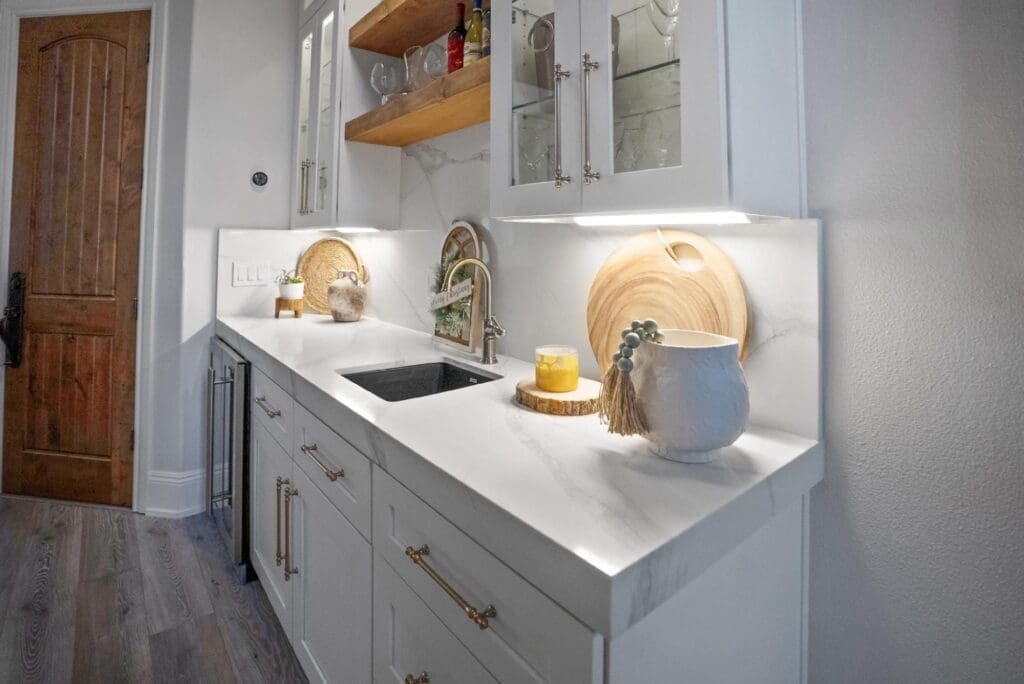
Why a Butler’s Pantry Is the Right Home for a Coffee Bar
A coffee bar bolted onto the main kitchen counter almost always ends up in the way, it competes with meal prep, it collects clutter, and it’s usually the first thing guests bump into during a dinner party. Tucking it into a butler’s pantry solves all three problems at once: it gets its own dedicated footprint, its own storage, and its own identity separate from the main cooking zone. On this project, the butler’s pantry sits just off the kitchen, with floor-to-ceiling glass-front cabinetry that keeps everyday glassware and coffee supplies visible and easy to grab without opening a single door.
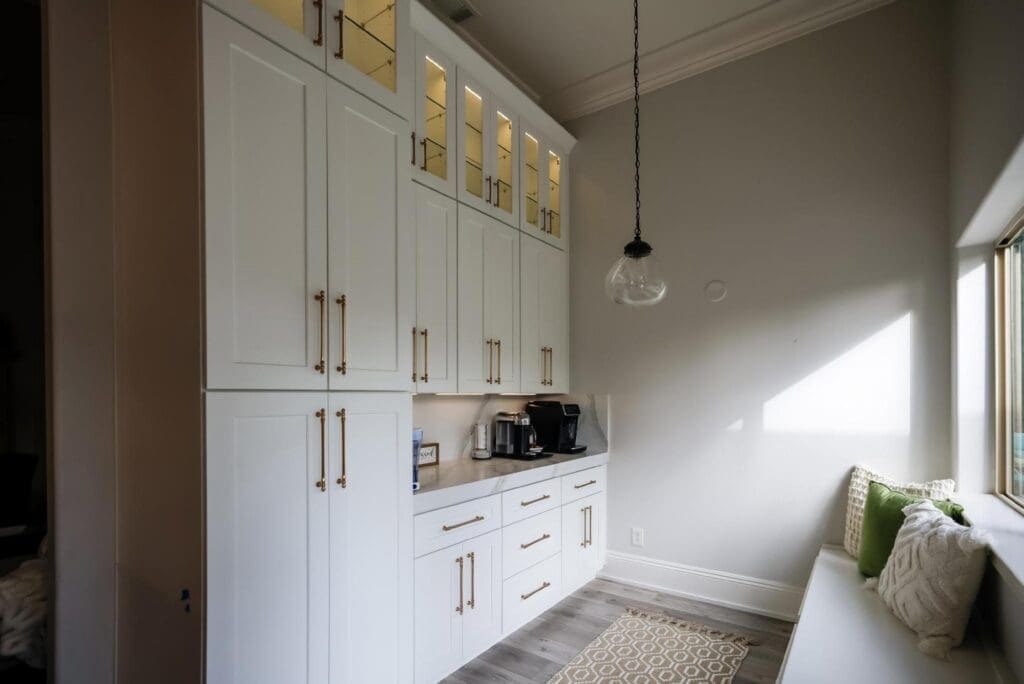
What’s Actually in This Coffee Station
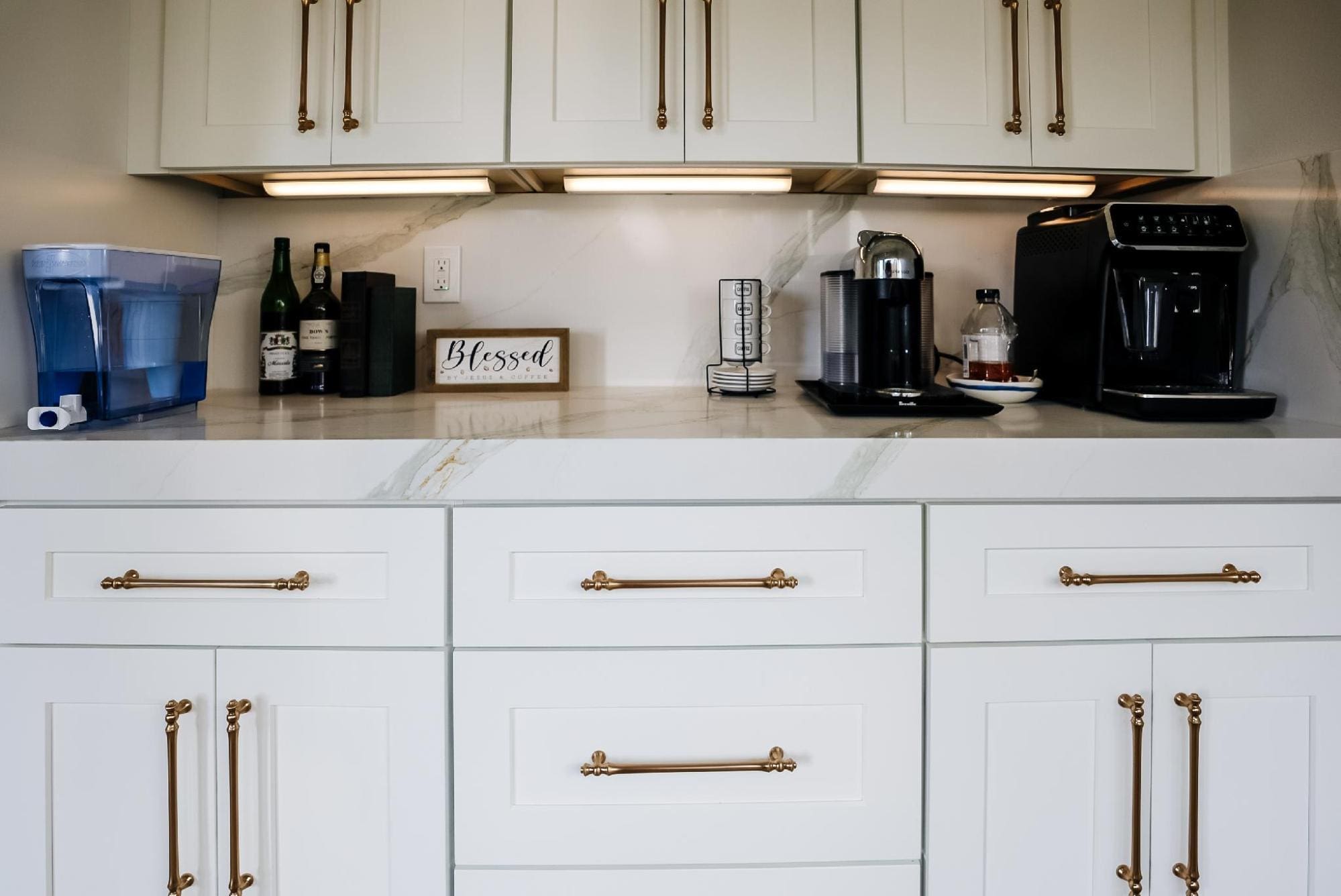
Up close, this is really two dedicated machines built into the counter: a single-serve brewer and a full automatic espresso machine, with a mug rack, a filtered water pitcher, and a small stash of syrup kept right there so nothing has to be carried in from the main kitchen. No appliances balanced on a shelf, no cords crossing the counter. That’s the small detail that separates a real coffee station from a coffee maker that happens to sit on a countertop.
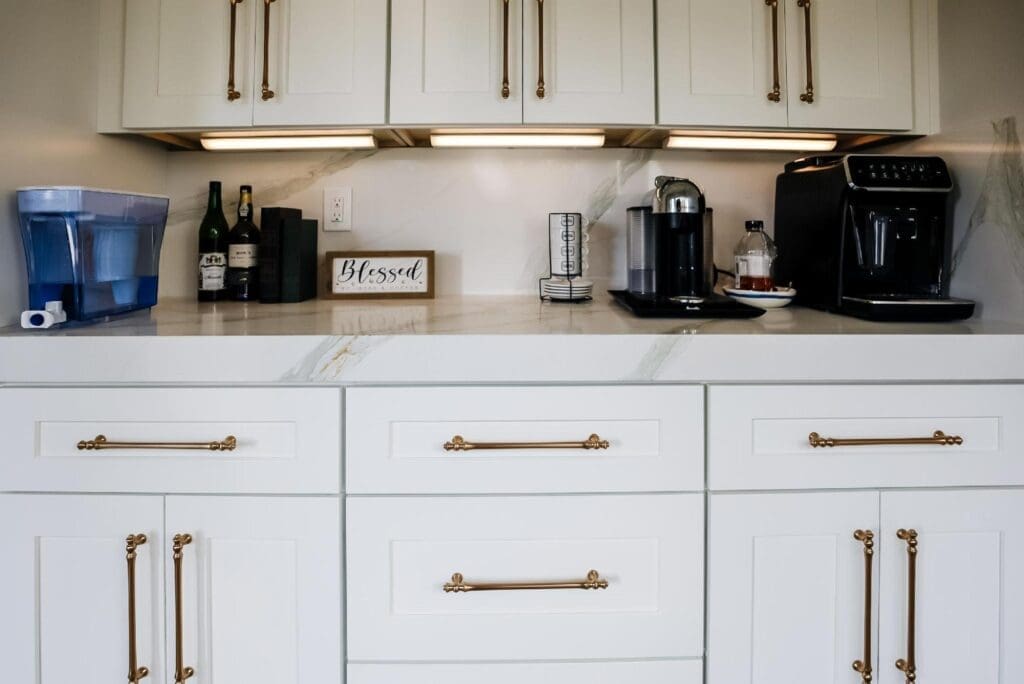
Cost and What to Plan For
A basic built-in coffee station added into an existing pantry or closet typically runs $3,000–$8,000, covering cabinetry, a small prep sink hookup, and the electrical the equipment needs. A full butler’s pantry build-out like this one, with a coffee bar, wet bar, glass-front cabinetry, and matching finishes to the rest of the kitchen, runs considerably more, since it’s really a small second kitchen built as part of a larger remodel. Either way, the two things worth planning for early are electrical (dedicated circuits for an espresso machine and any small appliances) and plumbing (a prep sink adds real convenience but needs to be roughed in before drywall goes up).
Considering a Coffee Bar for Your Own Kitchen?
You don’t need a full butler’s pantry to add a coffee station, but if you’re already planning a kitchen remodel, it’s worth carving out the space for one; it’s consistently one of the most-used features homeowners tell us about after the project wraps. At America’s Advantage Remodeling, we’ve been doing this kind of work in the greater Sacramento area since 2001, and we’re happy to walk through your kitchen with you and figure out where a coffee bar or butler’s pantry could fit. Reach out for a free in-home consultation.
Frequently Asked Questions
Q: What is a butler’s pantry coffee bar?
A: A butler’s pantry coffee bar is a dedicated coffee and espresso setup built into a butler’s pantry — the small prep/storage room off the kitchen — rather than crammed onto the kitchen counter. It typically includes a built-in espresso machine or coffee maker, a small prep sink, storage for cups and grounds, and open shelving for everyday glassware, so the main kitchen counters stay clear.
Q: Do I need a butler’s pantry to add a coffee bar?
A: No, but a butler’s pantry makes it much easier to do well. Without one, a coffee bar usually means giving up a section of kitchen counter or upper cabinet; with a butler’s pantry, the coffee station gets its own dedicated footprint, plumbing, and storage without competing with the kitchen’s main cooking and prep zones.
Q: How much does a butler’s pantry coffee bar cost to add?
A: A basic built-in coffee station added to an existing butler’s pantry or large closet typically runs $3,000–$8,000, covering cabinetry, a small prep sink hookup, and electrical for the equipment; a full butler’s pantry build-out with a coffee bar, wet bar, and glass-front cabinetry (like the project featured here) runs considerably more as part of a broader kitchen remodel.
Q: What should be included in a coffee bar setup?
A: At minimum: a built-in or plumbed-in coffee/espresso machine, closed or open storage for mugs and supplies, and counter space for a grinder or accessories. Many homeowners also add a small prep sink for rinsing equipment and filling water reservoirs, plus open shelving nearby for everyday glassware — all of which this Land Park butler’s pantry includes.
Q: Does a butler’s pantry add resale value?
A: A well-built butler’s pantry is generally seen as a desirable, higher-end feature, particularly in homes with an open-concept kitchen where extra prep and storage space away from the main cooking area is valued. It won’t single-handedly drive a home’s resale value the way a full kitchen remodel does, but it’s consistently listed as an attractive feature in listings that have one.
Q: Can I add a coffee bar without a full kitchen remodel?
A: Yes — a coffee bar can be added to an existing closet, pantry, or underused cabinet run without touching the rest of the kitchen, as long as there’s access to an electrical outlet and, ideally, a water line nearby. It’s a smaller, standalone project that many homeowners tackle on its own rather than as part of a full remodel.
CONTACT US
Our Services
Areas We Serve
Certificate