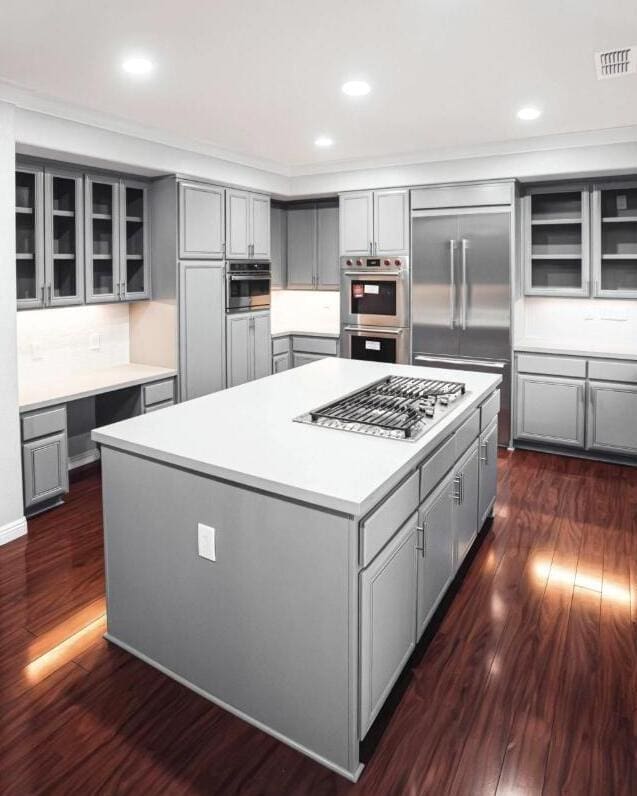
I’m Eugene Chernioglo, and on a recent kitchen remodel out in Elk Grove, the homeowners asked for something I hadn’t been asked for in a while: a real spot in the kitchen that isn’t for cooking at all. Here’s what we built, what it costs to add, and why it’s showing up in more of our gourmet kitchen remodels lately.
The Built-In Desk Nook Is Back — And It’s Not Just for Mail
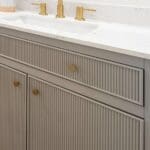
A built-in desk nook is a section of base cabinetry, usually one run without upper cabinets above it, left open as counter-height workspace instead of more prep or storage space. It’s where a laptop lives during the day, where the mail and the school calendar land, and where meal planning actually happens instead of on a tablet propped against the backsplash. In this Elk Grove kitchen, the nook sits right off the main cabinetry run in the same gray shaker cabinetry and quartz countertop as the rest of the kitchen, so it reads as part of the design rather than a leftover corner.
Glass-Front Cabinets Make the Nook Feel Considered
Glass-front upper cabinets are showing up near these desk nooks more than almost anywhere else in the kitchen. Instead of hiding everything behind solid doors, a few glass fronts let you display everyday dishware or cookbooks, which makes a small functional corner feel like a deliberate design choice instead of an afterthought. They do take a little more upkeep, mainly wiping fingerprints and keeping what’s behind them tidy, so most homeowners we work with use them selectively rather than throughout the whole kitchen.
The Farmhouse Sink Everyone Notices First
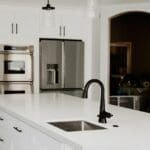
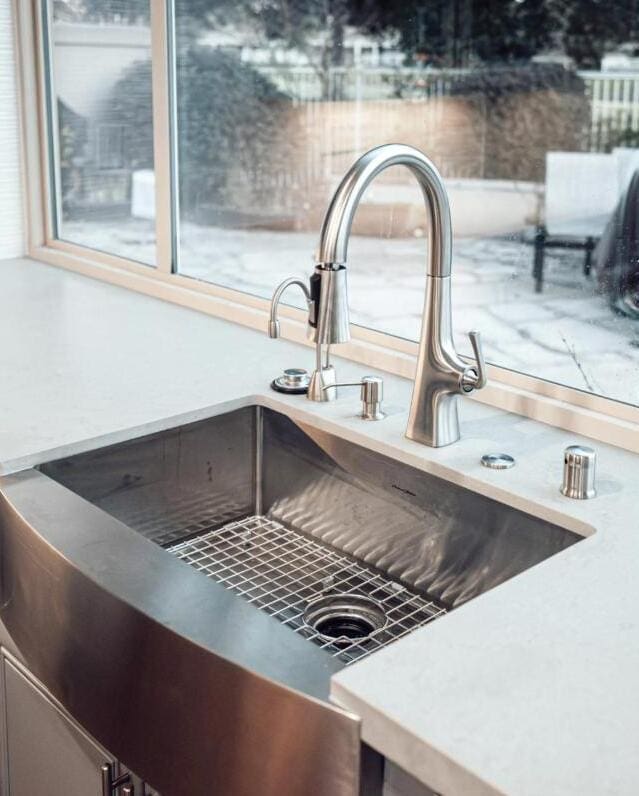
Even in a kitchen built around a desk nook, the farmhouse sink is usually what people mention first. The exposed apron front and deep, wide basin make it far more practical for washing sheet pans and stockpots than a standard undermount sink, and positioning it under a window, like this one looking out to the backyard patio, turns dish duty into the best view in the room instead of the worst chore.
High-End Built-In Appliances That Keep Up With a Busy Household
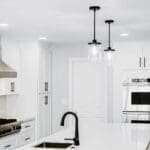
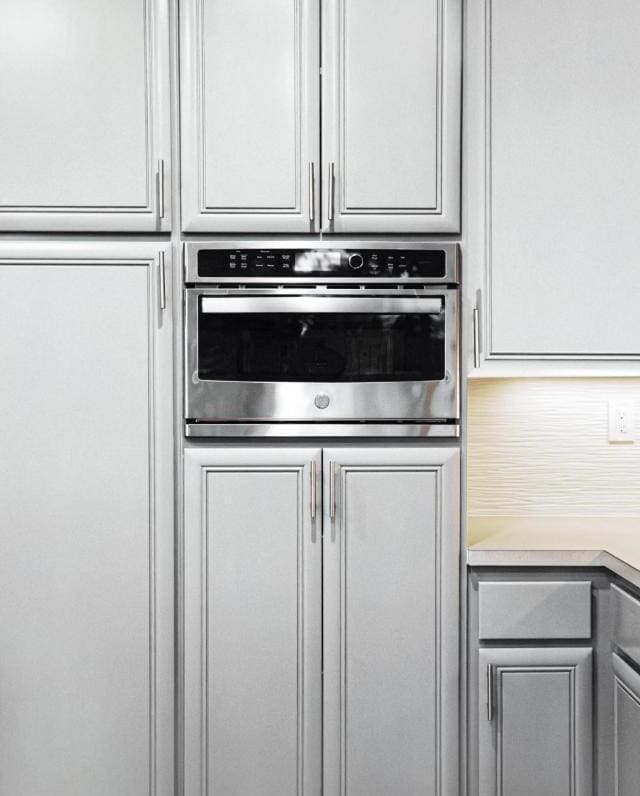
This kitchen also paired the nook and sink with a professional-grade built-in oven and microwave stacked into the same cabinet run, no countertop space lost to a bulky standalone unit. For households that cook and entertain often, a double wall oven adds real everyday capacity, not just a brand name; expect it to add $4,000 to $8,000 over a standard built-in oven, depending on the model.
Ready to Redesign Your Elk Grove Kitchen?
If you’re picturing a kitchen that works as hard as your family does, desk nook included, America’s Advantage Remodeling offers a free in-home consultation for Elk Grove homeowners. I’ll walk your kitchen with you and talk through what actually fits your space and budget.
Frequently Asked Questions
Q: What is a built-in kitchen desk nook, and do I actually need one?
A: It’s a dedicated counter-height workspace built into the kitchen cabinetry, usually without upper cabinets above it so there’s room for a laptop, mail, or a calendar. You don’t need one, but if your kitchen currently doubles as a bill-paying station, homework spot, or meal-planning hub with no real surface for it, a nook gives that activity its own footprint instead of competing with your prep space.
Q: How much does it cost to add a built-in desk nook to a kitchen remodel?
A: As part of a larger kitchen remodel, converting one run of base cabinets into an open desk nook typically adds $1,500 to $3,500, mostly cabinetry modification and an added electrical outlet or two. It’s a much smaller add-on than most people expect, since it reuses the same countertop material and cabinet line already being installed elsewhere in the kitchen.
Q: Do glass-front cabinets require more maintenance than solid cabinet doors?
A: A little, yes. Glass fronts show fingerprints and need occasional wiping, and whatever’s behind them needs to stay reasonably tidy since it’s visible. Most homeowners we work with use them for a few upper cabinets near a display-worthy spot, like above a desk nook or open shelving area, rather than the whole kitchen, which keeps the upkeep manageable.
Q: What’s the difference between a farmhouse sink and a standard undermount sink?
A: A farmhouse (or apron-front) sink has an exposed front panel that extends past the edge of the cabinetry instead of tucking underneath the countertop, and the basin is usually deeper than a standard sink. That extra depth and the wider basin make it easier to wash large pots, sheet pans, and mixing bowls, which is why it’s become a popular upgrade in kitchens with heavy everyday use.
Q: Is it worth upgrading to high-end built-in appliances like a Wolf double oven?
A: It depends on how much you cook and entertain. A Wolf or similar professional-grade double wall oven typically adds $4,000 to $8,000 over a standard built-in oven, but for households that regularly cook for a crowd, the extra capacity and even heat distribution are a real, daily difference rather than just a brand upgrade.
Q: How long does a kitchen remodel like this typically take?
A: This specific gourmet kitchen remodel took about 3 weeks, since the layout didn’t change, it was a full material and appliance refresh within the existing footprint. A remodel that also relocates plumbing, gas lines, or walls usually runs 6 to 10 weeks instead. Adding a desk nook where one didn’t exist before is typically an electrical-only change, so it doesn’t meaningfully extend a standard kitchen remodel timeline.
CONTACT US
Our Services
Areas We Serve
Certificate